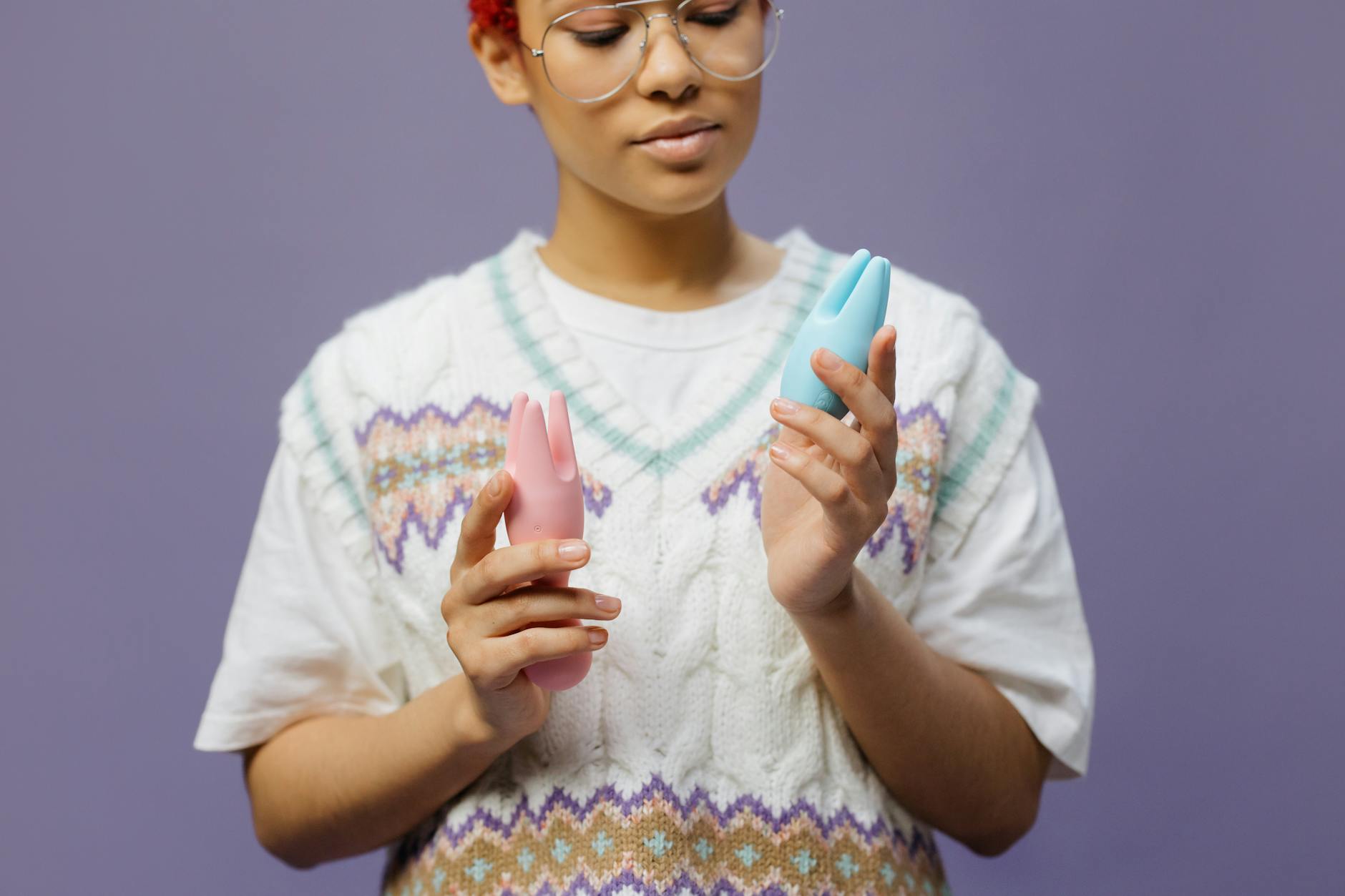
Here's the thing about orgasms and vibration
You've probably noticed that the same intensity setting doesn't feel the same every time. Sometimes it's electric. Sometimes it's meh. That's not a flaw in you or your lemon vibrator. It's actually the signal that your pleasure responds to context, rhythm, and what else is happening in your body and mind at the moment.
Most people find one setting on their clitoral vibrator that works and stick with it. Which is fine. But if you're curious about stronger, more varied, more interesting orgasms, combination techniques are your next move.
Why layering techniques produces different sensations
Your clitoris has around 8,000 nerve endings packed into a tiny area. That's roughly double the nerve density of your fingertips. A basic vibrator hits those nerves in one way: direct stimulation at a consistent frequency.
When you layer techniques, you're actually activating different nerve pathways simultaneously. Suction plus vibration hits differently than vibration alone. Movement plus pressure plus sound in your head plus anticipation creates a compound effect that your nervous system reads as "new." This is why people using lemon vibrators often report that combination approaches feel stronger or more dimensional.
The brain plays a massive role here too. Anticipation, attention, and arousal state all directly affect nerve sensitivity. You can't think your way into an orgasm, but you can certainly think your way out of one. When you're engaged and actively exploring, your nervous system is primed differently than when you're on autopilot.
The pacing layer: rhythm and breath timing
Let's start simple. Most lemon vibrators come with multiple intensity settings. Most people jump to the one that feels "right" and stay there.
Instead, try this: Start at intensity 2. Stay there for 30-45 seconds while you focus on your breath. Slow, deliberate inhales and exhales. Your nervous system is literally wired to arousal through the vagus nerve, and breath controls it directly. Once you feel the first wave of pleasure building, jump to intensity 3 or 4 for 20-30 seconds. Then back down to 2. Up again. The variation itself becomes part of the stimulus.
Why this works: Your nervous system adapts to constant input. It's called habituation. By varying the intensity, you're preventing that adaptation. Each step up feels fresher because your nerves haven't adjusted to the previous level yet.
The positioning layer: angle and pressure variations
How you hold your Hello Nancy lemon vibrator changes everything. Direct stimulation to the clitoral glans works for some people and is overstimulating for others.
Try angling the vibrator slightly so it's hitting the side or hood of your clitoris instead of dead-center. Many people find this creates a slower burn that builds more gradually. Then shift it back to direct pressure as arousal deepens. The variation in pressure creates a rhythm your body experiences as progression rather than repetition.
If you're using a suction-style clitoral vibrator like the Lem, the angle matters even more. Slight rotation or movement while it's suctioning creates different pressure points. You're not moving it rapidly in and out. Just gentle repositioning every 15-20 seconds. This creates what many describe as a "rolling" sensation rather than a flat pulse.
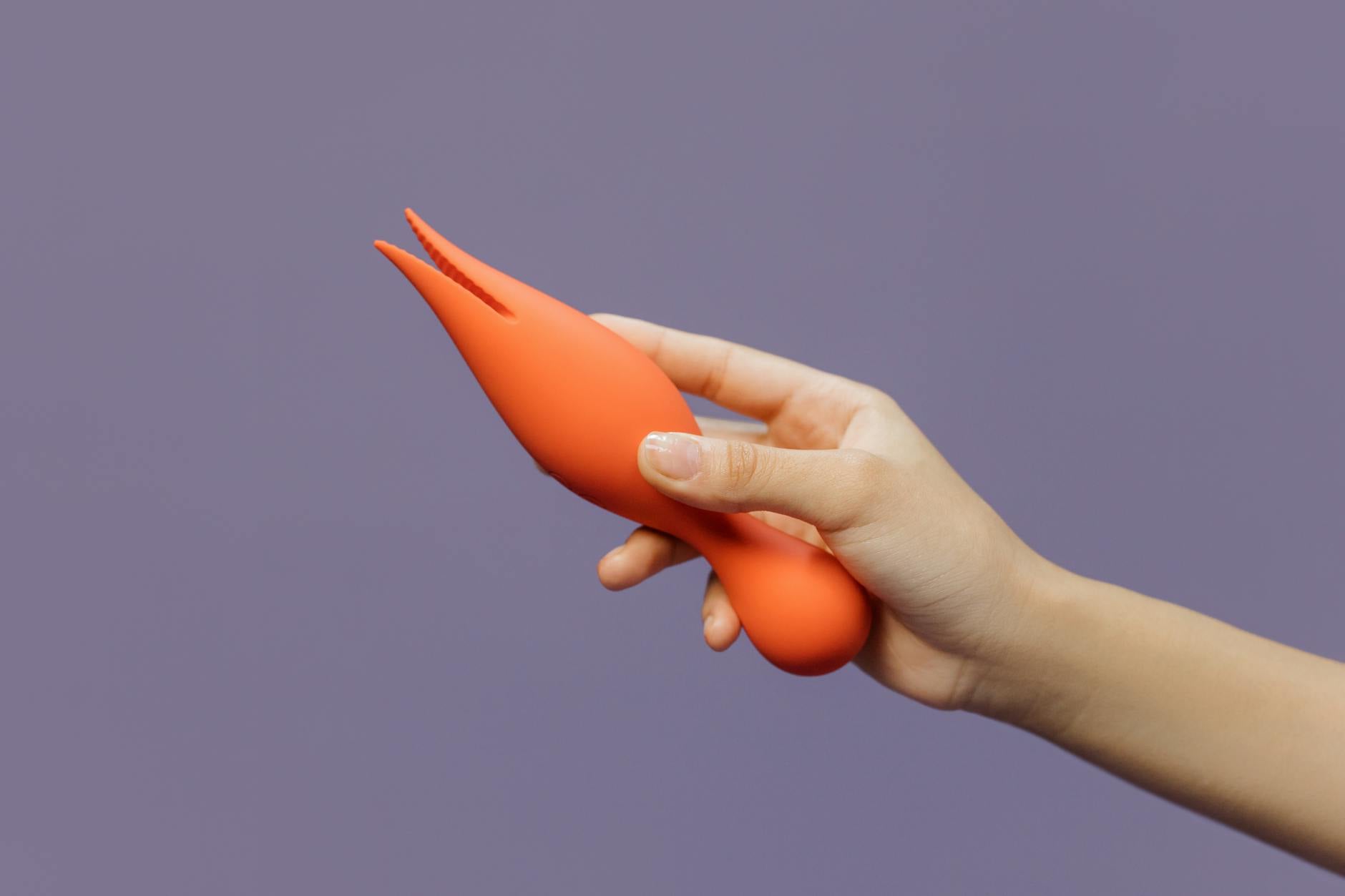
Photo by cottonbro studio on Pexels
The mental layer: focus, fantasy, and anticipation
This is where most guides get vague. Let me be specific.
Your brain's attention literally changes blood flow and nerve sensitivity in your genitals. When you're distracted, scrolling, half-engaged, your nervous system isn't fully available. That's not judgment. It's just biology.
For combination technique, create what I call "focused anticipation." Before you even pick up your vibrator, spend 2-3 minutes with no device, no input. Just lie there with your eyes closed and notice what thoughts, sensations, or fantasies come up naturally. Don't force it. Just observe. Let your mind settle into something that creates a slight hum of interest.
Then pick up your lemon vibrator and match the physical rhythm to that mental rhythm. If your fantasy or focus has a slow build, start slow. If it has moments of intensity, sync those moments with your intensity changes. You're not meditating. You're actively partnering your mind and body.
Many people find this produces orgasms that feel deeper or longer because the entire nervous system is engaged, not just the local nerve bundle.
The solo versus partnered layer
If you have a partner, combination techniques shift completely. This is where external stimulation becomes part of the equation. A partner's hands, mouth, or body pressure on other erogenous zones while you use a clitoral vibrator creates true multi-layer stimulation.
The research on this is clear: simultaneous stimulation of multiple zones produces stronger pelvic floor contractions and longer orgasms. If you're exploring this with a partner, communication matters. "I'm going to use my vibrator and I'd love if you touched me here" is way more effective than expecting them to intuit it.
If you're solo and curious about adding texture or pressure, fingers work beautifully too. One hand on your vibrator, the other on your body creating pressure or movement elsewhere creates that compound effect without complexity.
The timing layer: when you use them in your cycle matters
If you menstruate, your sensitivity to vibration shifts across your cycle. In the follicular phase (right after your period), nerve sensitivity is higher. Vibration that feels perfect mid-cycle might feel too intense or too dull right after your period. The arousal curve is also different.
If you're tracking your cycle, the "combination technique" approach makes even more sense. Post-ovulation, you might need longer warm-up and potentially higher intensity. Early follicular phase might be the sweet spot for nuanced, layered approaches because your sensitivity is already running higher.
You don't need to track obsessively. Just notice: "Oh, this setting feels different this week. Let me adjust." Your body is telling you something useful.
The recovery layer: what happens after matters
This isn't about technique during pleasure. It's about what you do immediately after. If you're chasing stronger orgasms, recovery actually shapes the next one.
After orgasm, stay still for 30-60 seconds. Let your nervous system settle. Don't immediately remove the vibrator, don't jump up, don't switch tasks. This pause allows your body to fully process the neurological event that just happened. The afterglow isn't sentimental. It's your nervous system integrating.
If you're exploring multiple orgasms, this pause also resets your sensitivity. Your clitoris becomes less responsive immediately post-orgasm, then regains sensitivity after a few minutes of rest. Honoring that cycle naturally creates space for a second or third if that appeals to you.
For people exploring lemon sexual toys or any clitoral vibrator, this recovery piece is often the missing layer that makes the difference between "that felt nice" and "that was genuinely transformative."
Common mistakes that flatten the experience
One: Jumping straight to maximum intensity. Your nervous system adapts fast. Start lower than you think you need.
Two: Staying completely static. Your body responds to novelty. Small movements, pressure changes, and positioning shifts keep sensation fresh.
Three: Using vibrators when you're mentally checked out or distracted. I'm not saying you need to be present for every sexual experience. But combination techniques specifically require your attention to work.
Four: Ignoring discomfort as information. If something feels uncomfortable, that's not a power through moment. Adjust pressure, angle, or intensity. Pleasure should build. If it doesn't, something's off.
When to try combination approaches
You don't need permission, but here's what usually signals readiness. You've had some time with a basic approach and you're curious. You're noticing that the same technique sometimes works beautifully and sometimes feels flat. You have enough body awareness to notice what feels different from moment to moment.
If you're new to vibrators, spend a few weeks with how to use a lemon vibrator for the first time first. Then come back to layering.
If you're dealing with specific challenges like sensitivity or anxiety, those are worth addressing before layering intensity. The foundation matters. You can read more about lemon vibrators and sensitive clitoral tissue if that's relevant.
If you're exploring with a partner, introducing lemon vibrators without awkwardness is worth doing first. The communication changes the experience entirely.
FAQ: Your questions about combination techniques
Can combination techniques work with any vibrator, or just lemon clitoral vibrators?
Any vibrator can be layered. The principles work the same way: rhythm variation, positioning shifts, mental focus, recovery time. That said, lemon vibrators and quality clitoral vibrators respond particularly well because the design is intentional. A cheap vibrator with one speed doesn't offer the intensity variation that makes layering interesting. If you're building toward combination work, a tool like the Lem that has multiple settings and a design that works with suction creates more options.
How long does it take to notice a difference with combination techniques?
Most people notice something different the first or second time they try intentional layering. That doesn't mean it's stronger or better. It just feels different, which is the point. Consistent, reinforced difference usually shows up over 3-4 sessions as your body learns what to expect and your nervous system calibrates. Some people unlock a completely new orgasm experience the first time. Others take weeks. There's no timeline.
What if combination techniques don't produce stronger orgasms for me?
Then they're not your thing, and that's completely fine. Pleasure isn't hierarchical. A focused, simple orgasm is not inferior to a complex, layered one. The point of learning techniques is choice and curiosity, not performance. If your baseline approach works brilliantly, that's success.
Is it normal to feel overstimulated when trying new techniques?
Very normal. Overstimulation means you went too high, too fast, or your nervous system wasn't fully ready for input. It's not a failure. Scale back one element: lower intensity, more time, less pressure, or shorter duration. Your clitoris will tell you what it needs if you listen.
Can I use combination techniques with a partner?
Absolutely. In fact, partnered combination work often produces more variation because your partner can handle some stimulation (touch, pressure, movement) while you focus the vibrator on one area. The key is communication. Say what you want. Ask what feels good. Adjust together.
If I'm looking for stronger orgasms with a partner, where do I start?
Start with honesty. Tell your partner what you're noticing about your pleasure and what you're curious about. Read how lemon vibrators help after relationship trauma if there's any hesitation or history. Then explore together. The conversation is half the work.
The bottom line
Stronger, more interesting orgasms don't come from a more powerful vibrator. They come from paying attention to what's actually happening in your body, creating variation, and partnering your mind with your physical sensation. Lemon vibrators give you the tool. Combination techniques give you the language to use it.
Your pleasure matters. It's worth exploring with intention and curiosity. Start with one layer. Add another when you're ready. Pay attention to what shifts. That's the whole toolkit.
If you're ready to go deeper into this work, especially with a partner, I'm here. Reach out at /contact and let's talk about what combination approach might unlock something new for you.