Let's talk about the orgasm clock
You're in the moment, and somewhere in your brain, a timer is running. It's been 10 minutes. Is that normal? 15? Should it have happened by now? Did something break? And then the panic kicks in, which makes it even harder, which makes the panic worse. Sound familiar? You're not alone, and it's not a personal failure. It's performance anxiety wearing a sexual disguise.
Orgasm pressure is one of the sneakiest pleasure killers I see in my practice. It's not about the physical mechanics (your clitoris works fine). It's about the story you're telling yourself while you're trying to feel good. And the moment you start watching the clock instead of the sensation, you've already lost.
The neuroscience of rushing versus receiving
When you're nervous about how long something is taking, your nervous system shifts into a sympathetic state. That's your fight-or-flight mode. Blood flow pools in your extremities, your pelvic floor tightens (yes, the exact opposite of what you need), and your brain stops registering subtle pleasure cues. You're essentially telling your body to get ready to run from a tiger instead of settle into sensation.
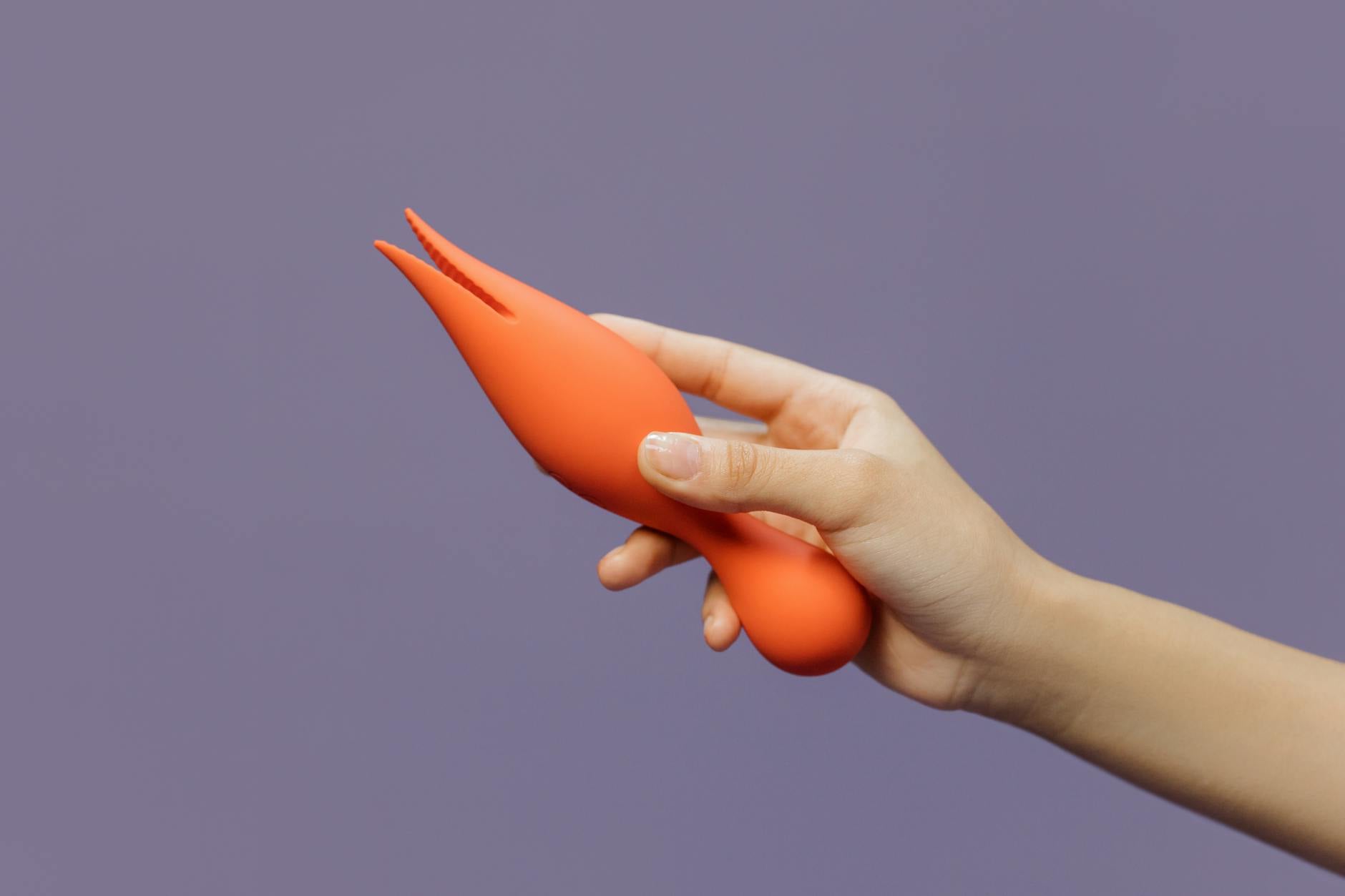
Orgasm is a parasympathetic response. Your system needs to feel safe, settled, and genuinely interested in what's happening. A lemon vibrator can actually help reset this because it gives your brain something to focus on that's not the clock. Instead of "Am I taking too long?", you're noticing "That's interesting. That feels different at setting 2 versus setting 3." The shift from self-judgment to curiosity is the whole game.
Why suction-based lemon vibrators work differently under pressure
Traditional vibrators work via oscillation (really fast vibration). They're great, but they require constant stimulation at a consistent intensity to build toward orgasm. If you're anxious, you tend to jump settings, change angles, and basically try to "achieve" your way through it. You're using force.
Lemon clitoral vibrators work via suction and gentle pulsing. The Lem uses air-pulse technology, which means it stimulates the entire clitoral complex, not just the external nub. Because of how the sensation spreads, you don't need to "chase" an orgasm the same way. The pressure (ironically) comes off because the sensations are happening to you, not something you're gripping toward.
Most of my clients report that when they switch from worrying about how long it'll take to noticing how different sensations feel across the Lem's five patterns, the orgasm arrives faster and feels more integrated. It's the opposite of what the anxiety predicted.
The settings strategy for anxiety-prone brains
If you're someone who feels rushed, here's what I recommend:
Start at pattern 1 or 2, never pattern 5. Jumping to high intensity is a dead giveaway that you're in achievement mode. It also makes it harder to feel nuance, which means you're more likely to lose the thread and have to start over. Patterns 1 and 2 feel subtle but they're doing real work on the nerve endings.
Spend 5-7 minutes at each setting before moving up. This isn't a rule carved in stone, but the rhythm matters. You're training your nervous system that this is not a sprint. Your body will relax more if it knows there's no finish line timer running.
If you feel the urge to jump settings, pause instead. Don't increase intensity. Pull the Lem away for 30 seconds. Breathe. Let the arousal settle slightly, then come back. This mimics what good partnered sex does naturally (the rhythm of approach and retreat). It also interrupts the anxiety spiral because you're the one choosing the pace, which gives you back a sense of control.
The mental game: shifting from performance to presence
Here's the honest part: a vibrator can't fix a thought pattern by itself. But it can create the conditions where a different thought pattern becomes possible. When you're using a lemon vibrator and paying attention to actual sensation instead of the timeline, you're literally rewiring the neural pathway between pleasure and shame.
Try this: the next time you use the Lem, set a timer for 30 minutes and then actively forget about it. I'm serious. Don't check it. Your job is not to orgasm before the timer goes off. Your job is to notice three things: how the sensation changes as you warm up, which pattern feels most interesting on a particular day (it changes), and what happens if you slow down instead of speed up.
If you orgasm in that 30 minutes, great. If you don't, that's fine too. The win is the shift in your nervous system from "I need to make this happen" to "I'm curious what happens if I stay here." That's the actual pleasure.
When your partner is watching
If you're using a lemon vibrator during partnered sex and there's an invisible audience in your head (your partner waiting, wondering how long, silently checking the clock too), that's a different layer of pressure. This is worth addressing directly.
The conversation isn't "Can you not watch?" (though that might be part of it). It's "I need us to reframe what's happening here." Solo orgasm via vibrator isn't performance art. It's information. You're learning what your body needs. If your partner can be present without expectation, that's incredibly intimate. If they can't, you might find help in resources about using lemon vibrators when partners feel threatened.
The role of lubrication in lowering pressure
One more practical layer: when tissue is dry, every sensation feels intense and urgent. Your body is essentially in mild fight-mode because there's friction. Water-based lube changes everything. With lubrication, sensations spread more evenly, the Lem can move with less resistance, and you feel more spacious rather than tight.
That spaciousness is permission. Your body relaxes, your pelvic floor doesn't grip, and pleasure can actually build instead of spike and collapse. Water-based lubricant with lemon vibrators isn't just comfort, it's a neurological shift. Worth remembering.
FAQ: Orgasm pressure and lemon clitoral vibrators
Why do I feel like I'm taking too long compared to what I see in movies or what partners have suggested?
Movies are fiction. Real orgasms vary wildly by day, mood, stress level, hormones, and a thousand other factors. Some days 5 minutes, some days 20, some days it doesn't happen and that's still a good session. The "normal" timeline you're imagining doesn't exist. Your timeline is the only relevant one.
Does using a lemon vibrator make it harder to orgasm with a partner later?
No. If anything, the opposite. Using a lemon vibrator and learning what actually feels good removes the mystery and the pressure. You know exactly what you need. That information is invaluable to share with a partner. And because you're not in anxiety mode anymore, partnered sex becomes less about "Will this work?" and more about connection.
I start to feel good, then I panic that I'm about to lose it. How do I stop sabotaging myself?
That panic response is your fight-or-flight kicking in. When you feel it, don't push harder (which is the instinct). Instead, slow down the Lem by one or two patterns and extend your exhales. Breathe out longer than you breathe in. This signals safety to your nervous system. You're not going anywhere. There's time.
My partner thinks I shouldn't need a vibrator if I really wanted to orgasm. Is that true?
No. That's shame talking, not science. Orgasm is a complex neurological event that involves arousal, sensation, safety, and absence of performance pressure. A lemon vibrator isn't a crutch. It's a tool. A person who wears glasses doesn't have "weak eyes." They have eyes that work better with support. Same principle.
Can I use a lemon vibrator if I'm on antidepressants or anxiety medication that affects sexual response?
Yes, and lemon vibrators are often particularly helpful in these cases. The suction-based stimulation works on different nerve pathways than traditional vibrators, which can make it easier to find sensation even when medications are affecting baseline arousal. That said, your specific situation is individual. If you want to optimize, a sex-positive therapist or your prescribing doctor can help you figure out timing and approach.
What if I orgasm really quickly with a vibrator but feel like it "doesn't count" if it's not from partnered sex?
It counts. Full stop. Orgasm is orgasm. The pathway to get there doesn't change its legitimacy. If you're finding that solo orgasms with a lemon vibrator happen faster than partnered ones, that's actually useful information. It tells you something about your nervous system (you relax more alone, or you're holding tension during partnered sex). That's data you can work with, not shame you should carry.
The deeper truth about pressure
Orgasm pressure usually isn't really about orgasms. It's about proof. Proof that your body works, proof that you're desirable, proof that you're not broken. All of that is understandable. And all of it is a burden that's too heavy to carry into the bedroom.
When you use a lemon vibrator in a pressure-free way, you're teaching yourself that pleasure is available whether or not the orgasm shows up. You're learning to distinguish between good sensation and the achievement of a specific outcome. That's genuinely transformative. Not because vibrators are magic, but because they create space for you to practice a different relationship with your own body.
Your nervous system will follow your attention. If you're watching the clock, it stays tense. If you're curious about sensation, it relaxes. The lemon vibrator is just the tool that makes that shift easier to choose.
Sources & Further Reading
- Basson, R. (2000). The female sexual response: A different model. Journal of Sex & Marital Therapy, 26(1), 51-65.
- Brotto, L. A., & Yule, M. A. (2011). Physiological and subjective sexual arousal in postmenopausal women with self-reported low arousal. Menopause, 18(8), 926-934.
- Taormino, T. (2018). The Ultimate Guide to Sex and Disability. Cleis Press.
- Nagoski, E. (2015). Come As You Are: The Surprising New Science that Will Transform Your Sex Life. Simon & Schuster.