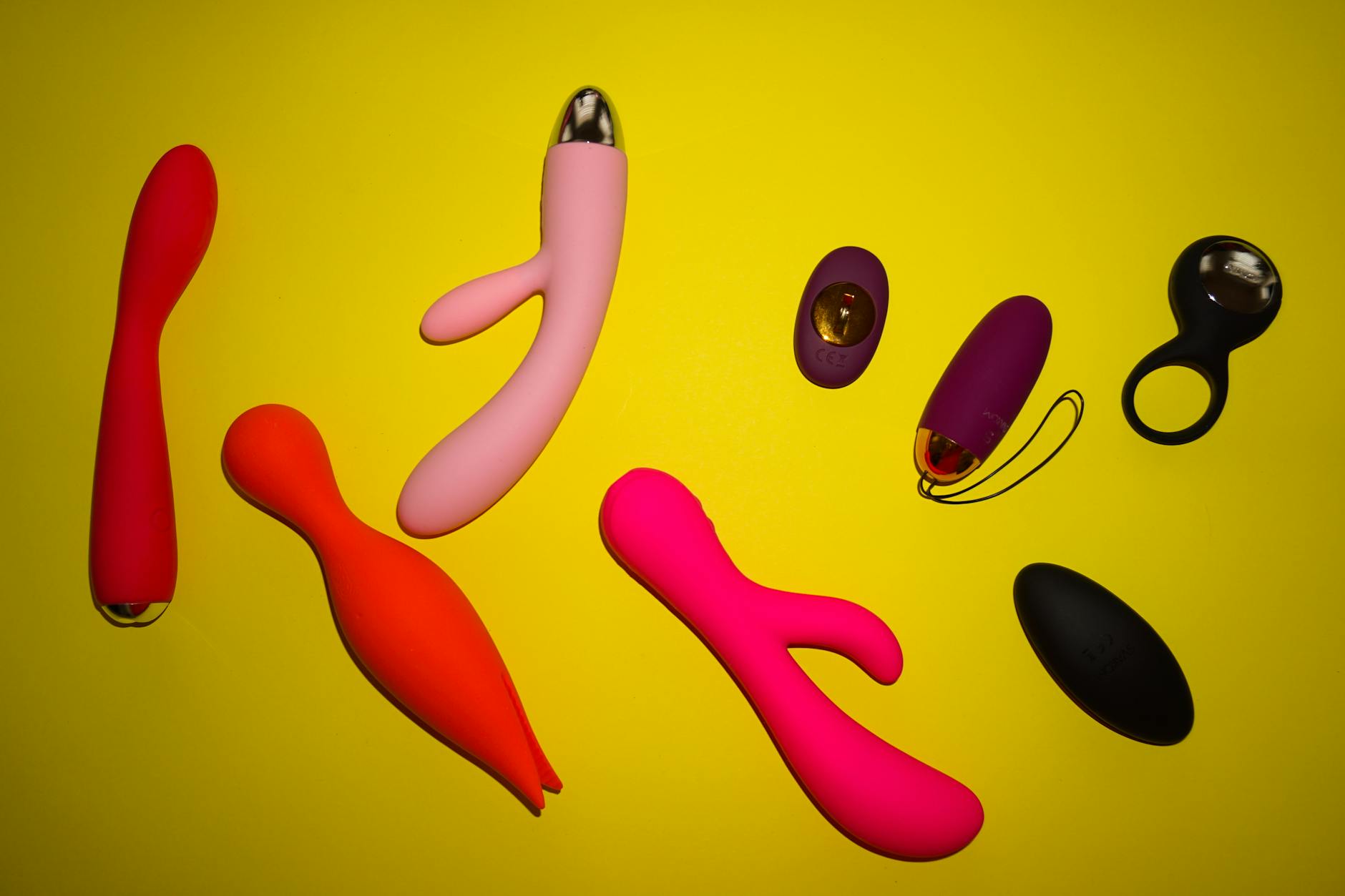
The moment it gets weird
You bring up wanting to try a Lem. Your partner's face changes. Suddenly it's "Do I not satisfy you?" or "Are you saying I'm not enough?" or worse, the silent treatment that says everything without words.
I've worked with hundreds of couples navigating this exact moment, and I can tell you: the problem isn't the vibrator. The problem is what they think the vibrator means about them.
What "threatened" actually translates to
When a partner resists a lemon vibrator or any clitoral toy, they're usually operating from one of three fears. Understanding which one matters because each needs a different conversation.
Fear One: "You're replacing me." This is the scarcity mindset. Your partner believes pleasure is finite—if you're getting satisfaction from a toy, that's pleasure not coming from them. It's zero-sum thinking. If they satisfy you fully, you won't need anything else. Therefore, a vibrator feels like a vote of no confidence.
Fear Two: "I'm supposed to know how to do this." This is performance anxiety dressed up as resistance. Somewhere they absorbed the idea that a good partner—a good lover—should be able to make you orgasm without help. A vibrator is proof they failed the test they didn't know they were taking.
Fear Three: "This is a rejection of me sexually." This one's deeper. They might be linking your desire for a vibrator to a lack of desire for them specifically. The toy becomes a symbol of how their attractiveness or sexuality isn't working anymore, or never worked.
All three are about them, not about you. All three are solvable with honest conversation.
Why the standard advice fails
Most guidance tells you to reassure your partner: "It's not about you, it's about me." Good instinct. Terrible execution.
Here's why: that statement, while true, feels like a dismissal. It doesn't address the fear. It just tells them their feeling is wrong. And defensiveness follows.
Instead, you need to go deeper. You need to separate two things your partner is probably conflating. Their role in your pleasure. And your capacity for pleasure, independent of them.
The conversation that actually works
Pick a time when you're both calm and clothed. Not during sex or immediately after. A random Tuesday afternoon works better than bedtime.
Start here: "I want to talk about something that matters to me, and I want you to actually hear what I'm saying, not what you think I'm saying."
Then get specific about your body, not about them.
"My body responds to different types of stimulation at different times. Sometimes direct pressure works. Sometimes rhythm. Sometimes I need something that my hands or your hands can't quite do. That doesn't mean your hands are bad. It means my body is more complicated than on-off. You know how you might want a massage on Monday and stretching on Friday? Same thing."
Listen for what they say next. If they immediately go to "Am I not enough," you respond with: "This isn't about enough-ness. This is about the fact that your body and my body are two different things. You get to want what you want. I get to want what I want. Those can both exist."
Then, the crucial part: "I want to explore this with you. Not instead of you. With you. You're not being replaced. You're being included in something I care about."
Notice what you're doing here. You're not asking permission. You're not apologizing for your body's needs. You're inviting them into the experience while being clear that your pleasure isn't contingent on their comfort.
How to actually use a lemon vibrator together
If your partner is willing, here's how to start without it feeling like proof of concept.
Step one: No pressure to perform. Hand them the Lem. Let them hold it. Let them see it's not some sci-fi replacement. It's a tool. Tools aren't threatening. A hammer isn't threatening because you own one.
Step two: Build arousal together first. Spend 15-20 minutes on foreplay without the vibrator. Kissing, touching, whatever your normal flow is. Get them invested in your pleasure before the toy appears. This prevents it from feeling like a substitution.
Step three: Introduce it as part of the experience, not the main event. They might use it on you while you kiss them. You might use it while they're inside you. The vibrator is a supporting player, not the headline.
Step four: Communicate in the moment. "A little faster" or "I love when you do that" tells them they're still part of what's happening. Silence feels like exclusion, even when it's not meant that way.
The solo conversation (different beast entirely)
If your partner is resistant to using a lemon clitoral vibrator together but you want to use one alone, that's actually a separate negotiation.
You might say: "I'm going to explore my own pleasure on my own time. This isn't about us. This is about me knowing my body. That makes me a better partner, not a less interested one."
If they still push back, you get to make a boundary. "My body, my choice. This is happening. You don't have to watch or participate, but you don't get to forbid it."
I know that sounds harsh. It isn't. It's clarity. And sometimes clarity is what partners actually need to move past the resistance. They've been living in a maybe-space where they could hope you wouldn't pursue it. Once it becomes real, they often adjust.
What happens if they don't adjust
Some partners dig in. They stay upset. They see the vibrator as a betrayal no matter what you say.
That's information. It's important information. It tells you something about how they handle your autonomy, your boundaries, your pleasure, and your body. Those are big things.
I'm not saying one resistance moment means the relationship is doomed. I'm saying a pattern of controlling your body, your choices, or your pleasure is a pattern worth addressing with a therapist. Not a couples' therapist yet. Individual therapy first. Because you need support figuring out whether this is a speed bump or a stop sign.
The reframe that sticks
Here's what I tell my clients: a vibrator isn't a threat to your relationship. Silence about your needs is. Resentment is. Faking orgasms is. Shrinking yourself to protect your partner's ego is.
A lemon vibrator is just a tool that helps you communicate what your body actually wants. That's good for your solo life and good for your partnership.
Your pleasure matters. Not as a secondary thing to your partner's ego. Not as a trade-off. As its own thing. A partner worth keeping gets that.
People also ask
Can I use a lemon vibrator if my partner doesn't know about it?
Technically, yes. Practically, I'd ask why you feel the need to hide it. If it's because they'd react badly, that's worth examining. A relationship where you feel you must conceal your own pleasure is a relationship lacking trust. That's solvable, but hiding usually makes it worse, not better. The discovery almost always hurts more than the upfront conversation would have.
Should I ask my partner's permission to use a lemon clitoral vibrator?
No. Permission implies they have authority over your body. They don't. You might say "I'm planning to try this and here's why." That's communication, not permission-seeking. There's a difference.
Will using a lemon vibrator with my partner change how sex feels between us?
Yes, often for the better. You're likely to have better orgasms, be more relaxed, and feel less pressure to perform. All of that tends to make sex better for both of you. If your partner can get past the initial resistance, they usually see that pretty quickly.
What if my partner wants to use the lemon vibrator on me but I find it awkward?
That's fair. You might suggest they start by watching you use it alone. That takes the pressure off them to "do it right" and lets them see what actually feels good. After a few times, they usually feel less awkward about joining in.
How do I know if my partner's resistance is normal anxiety versus a bigger control issue?
Normal anxiety usually softens with information and reassurance. A bigger control issue tends to harden. If you explain, invite them in, and offer compromise, and they still refuse to budge—or they get angry or dismissive—that's worth paying attention to. One difficult conversation is normal. Ongoing resistance to your autonomy is a pattern.
Can lemon vibrators help rebuild intimacy after my partner felt threatened?
Yes, but only if you've had the actual conversation first. Using the vibrator together—once they're genuinely on board—can be a way to explore pleasure as a team. That's rebuilding. But using it before you've addressed the fear underneath just proves their worst suspicion. Do the talking first.
The bottom line
Your partner's insecurity about a lemon vibrator isn't really about the vibrator. It's about what they believe it says about their desirability, their competence, or their role in your life. That's real, and it deserves to be addressed.
But it doesn't deserve to shrink your pleasure.
You can be compassionate about their fear and still refuse to abandon your needs. Those two things aren't opposites. You can invite them in, offer reassurance, and still maintain the boundary that your body belongs to you.
If you're ready to have the conversation, start with clarity about what you actually want and why. Skip the reassurance that sounds like apology. Move toward the kind of conversation that says: "I care about you and I care about my own pleasure, and here's how we make both of those real."
That's the setup for actually using lemon vibrators together without resentment. Everything else is just foreplay to that conversation.
If you're navigating this in real time and need more support, reach out. I'm here to help you think through the specifics of your situation.