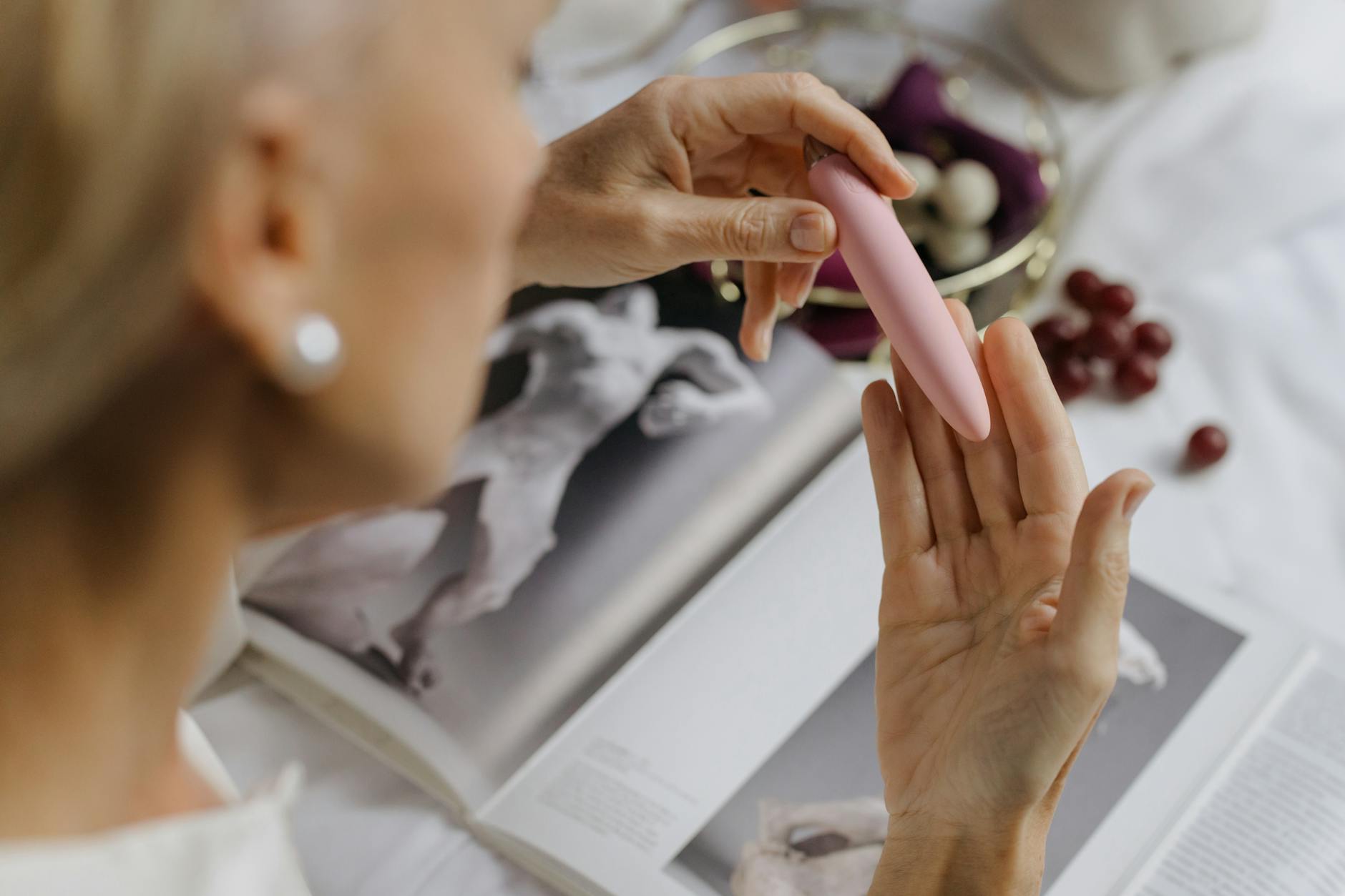
Let's talk about what you're actually experiencing
You've been using your lemon vibrator the same way for years. It worked. Then suddenly, somewhere between 40 and 50, the sensation changes. It feels duller. Or sharper. Or you need longer to reach climax. Or you're worried something's broken. Here's what's actually happening: your estrogen is dropping, and that shift changes how your nervous system responds to stimulation.
This isn't a failure. It's biology. And it's completely workable once you know why.
How estrogen changes clitoral sensitivity
Estrogen does more than regulate your cycle. It maintains the thickness of the tissue around your clitoris, keeps the nerve endings responsive, and helps regulate blood flow during arousal. When estrogen begins to fluctuate in perimenopause and early menopause, your clitoris actually becomes more sensitive in some ways and less reactive in others.
Here's the weirdly useful part: your clitoral nerves don't die or disappear. They're still there. But the tissue surrounding them gets thinner, which can make direct stimulation feel more intense or sometimes almost painful. That's why the same intensity setting on your lem vibrator that felt perfect at 35 might feel overwhelming at 45.
Your brain's arousal pathways aren't changing either. The signals still fire. But they're traveling through altered terrain. Think of it like a familiar route that suddenly has construction. You'll still get there, but the ride is different.
Why sensations shift differently for different people
Not everyone experiences the same changes. Some people report that their orgasms become more intense during this transition. Others find they fade. The variation depends on a few factors that matter more than you'd think.
Genetics play a role. If your mother had an easy menopause transition, you're statistically more likely to as well. Your baseline estrogen levels matter too. People who had naturally lower estrogen throughout their reproductive years sometimes experience less dramatic shifts. Stress, sleep, and relationship quality all influence how your nervous system responds to stimulation.
Medications matter as well. If you're on antidepressants, blood pressure meds, or antihistamines, those can layer on additional numbness or delayed response. That's not a reason to stop them, but it's worth naming when you're troubleshooting.
What changes and what doesn't during perimenopause
Your desire doesn't automatically vanish. Some people report it gets stronger once reproductive anxiety lifts. Your capacity for pleasure remains intact. The neural architecture is still there.
What actually changes: lubrication becomes less automatic, arousal takes longer to build, the tissue around your clitoris gets thinner, and orgasms might feel sharper or take longer to reach. These are manageable shifts, not endpoints.
This is exactly why tools like the lemon vibrator work better during this transition than they sometimes did before. Air suction stimulation doesn't rely on the same kind of deep friction that can become uncomfortable as tissue thins. It creates a pressure wave that stimulates the nerve endings without direct mechanical grinding.
How to adjust your lemon vibrator technique
Three concrete changes make an immediate difference.
Start lower on the intensity scale. If you used settings 4 or 5 before, begin with 1 or 2 and work up. Your tissues need less aggression now, not more. This isn't stepping backward. It's responsive adjustment.
Extend your warm-up phase. Arousal takes longer to build when estrogen is low. Budget 15 to 25 minutes of foreplay or solo warm-up instead of 5. That extra time lets your nervous system activate fully and your clitoris engorge with blood. That engorgement is your friend during this transition. It's what makes sensation come alive again.
Add lubrication intentionally. Even if you never needed it before, water-based lube becomes a non-negotiable now. It's not a sign of dysfunction. It's a tool that helps your body respond. Apply it liberally and reapply as needed. The lemon vibrator pairs beautifully with silky water-based lubricant because the glide feels luxurious and the suction still works effectively.
When estrogen changes affect arousal speed
One of the most frustrating shifts during perimenopause is the lag between mental desire and physical readiness. You want to have an orgasm. Your brain is interested. But your body takes 20 minutes to catch up instead of five.
This delay is real and measurable. Estrogen helps your vaginal tissue swell and your clitoris engorge. Without that hormonal support, the process is slower. The good news is that delay doesn't mean the destination is weaker. Once your body does engage, the pleasure often feels deeper.
Honestly? This is when a lot of people discover they actually enjoy the slower build. You get to experience arousal as a journey instead of a sprint. Many of my clients report that they have more satisfying orgasms during this phase of life than they ever did before, partly because they're finally taking time with it.
The role of partner communication during the shift
If you have a partner, the conversation matters. "My body is responding differently to stimulation" is different from "I don't want this anymore." Keep them separate.
Mostly, partners want to know that the shift isn't about them, that you still desire them, and that they can help. That might mean longer foreplay. That might mean trying your lemon vibrator together instead of solo. That might mean talking through what feels good now versus what used to.
The people who navigate this transition smoothly are the ones who name it directly and experiment together. Awkwardness disappears when you're both curious instead of both scared.
Tissue changes and what you can do about them
When estrogen drops, the vaginal and vulvular tissue becomes thinner. This is called genitourinary syndrome of menopause, or GSM. It's not cosmetic. It's real. And it's treatable.
If you're noticing pain with stimulation or sex, don't wait it out. A menopause-informed provider can prescribe topical estrogen cream that works locally without major systemic absorption. Most people see improvement within two to three weeks. That cream pairs beautifully with regular use of your lemon clitoral vibrator.
You can also support tissue health through routine. Regular stimulation, whether solo or partnered, increases blood flow to the area and keeps tissue more resilient. That's not a cute metaphor. It's literal physiology. Use it or lose it applies to arousal tissue just like it does to muscle.
Why this is often your best sexual decade
I know that sounds like I'm trying to spin a difficult transition into something positive. I'm not. I'm observing what actually happens in my practice.
People in perimenopause and early menopause often report that sex finally feels like it's for them instead of for anyone else. Performance pressure softens. The need to conceive disappears. Many experience more freedom to be vocal, to take longer, to ask for what they want.
Your lemon vibrator, used thoughtfully during this transition, can become the tool that bridges what your body used to do automatically and what it does now with intention. That's not a compromise. That's an upgrade.
FAQ: Common questions about vibrators and hormonal shifts
Will my sensitivity come back after menopause ends?
Maybe. Some tissue sensitivity stabilizes after the initial drop. Consistent stimulation helps. That said, accept the new baseline. Many people find they prefer how sensation feels now because they have more control over it. Your lemon vibrator will be useful either way.
Can I still have strong orgasms during perimenopause?
Yes, absolutely. The nerves are intact. The capacity is there. The pathway just requires different conditions. Longer warm-up, lower initial intensity, and patience usually deliver the same intensity you had before, just on a different timeline.
Should I switch to a different type of vibrator during this transition?
Not necessarily. What changes is how you use it. If you own a lem vibrator, the suction design actually becomes more comfortable during this phase because it doesn't rely on direct friction. Other styles might feel harsher now. But your existing tool usually still works. Adjust the settings and technique instead of replacing it.
Is vaginal dryness the only thing that changes?
No. Lubrication is just one factor. Tissue thinning, slower arousal, and shifted sensation are the bigger players. Some people experience all three. Others experience one. It's individual.
How long does the sensation shift last?
It varies wildly. Some people stabilize after a year. Others experience shifts across five to seven years of perimenopause and early menopause. The good news is that adaptation happens fast. By month three of adjusted technique, most people find their rhythm again.
Should I consider hormone replacement therapy to maintain sensation?
That's a conversation for your doctor, not me. HRT can help with sensation shifts for some people. It's not right for everyone. What matters is knowing it's an option if this transition feels unbearable. You don't have to white-knuckle through it.
What actually matters right now
Your body isn't broken. It's changing. The lemon vibrator you've relied on still works. Your capacity for pleasure is intact. What's shifted is the path to get there.
Adjust your expectations about timeline, lower your starting intensity, add lubrication, and extend your warm-up. Use your lemon sucker thoughtfully instead of automatically. Most importantly, stay curious about what feels good now instead of mourning what felt good before.
This transition is real. It's also manageable. And honestly? Many people look back on this decade as the one where sex finally became purely about their own pleasure. That's worth the adjustment period.
If you want to talk through what's happening in your body and how to navigate this shift with a partner, reach out to us at /contact.
Sources
Greendale GA, et al. "Estrogen and Serotonin Dysfunction in Perimenopause: A Systematic Review." Journal of Women's Health. 2019.
Nafziger AN, et al. "Estrogen as a Modulator of Sensory Experience: Clinical and Physiological Evidence." Menopause Review. 2020.
Lindsay R. "Hormone replacement and bone health." Nature Reviews Endocrinology. 2017.