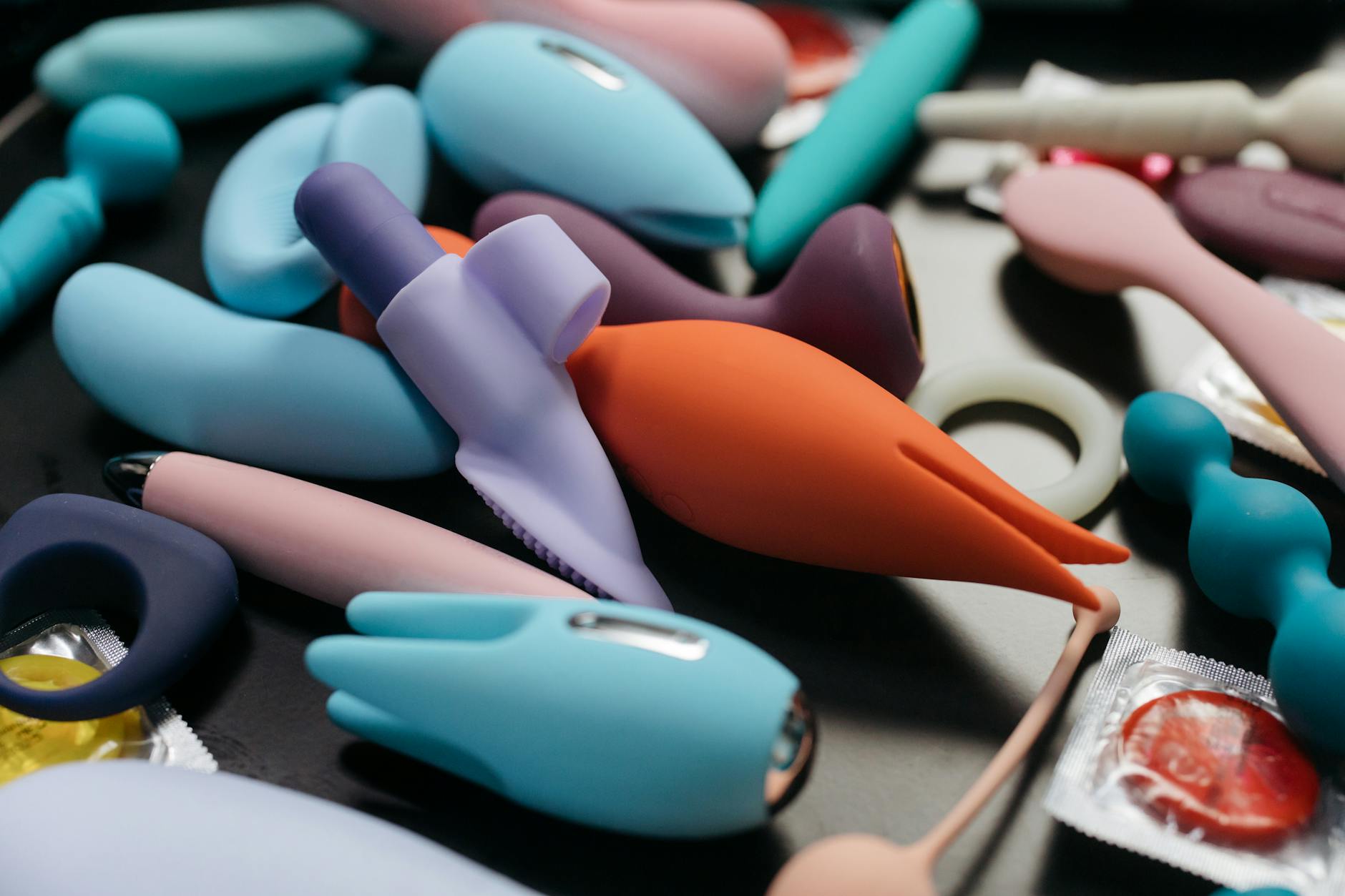
The myth that keeps people stuck
You have sensitive tissue. So naturally, you reach for the lowest setting on your lemon vibrator. It feels more controlled, more careful, less intimidating. But here's the thing: gentle speed often feels worse on sensitive skin than higher intensity does. The reason isn't psychological. It's physics.
How clitoral vibrators actually stimulate nerves
Your clitoris contains roughly 8,000 nerve endings packed into a space the size of a pea. These aren't all the same. Some respond best to sustained pressure. Others need frequency or rhythm to "fire" properly. When you use a lemon clitoral vibrator at a low speed, you're essentially stroking the tissue with irregular micro-movements. On sensitive skin, this can feel ticklish, uncomfortable, or overstimulating in the wrong way.
At higher speeds, something different happens. The vibration becomes so rapid that your nerve endings stop detecting individual oscillations and instead register a continuous, steady signal. This is called temporal summation. Your brain doesn't experience "on-off-on-off." It experiences "on."
For sensitive tissue, this steady signal is often less irritating than the variable micro-friction of low-speed movement.
Why lemon suction toys change the equation entirely
Lemon suckers and suction vibrators like the Lemon work differently than traditional vibrators. Instead of direct friction, they create a gentle seal and pulse. At low speeds, suction feels tentative. Your tissue is pulled in and released, pulled and released. Each cycle is distinct. For sensitive clitoral tissue, this pulsing can create micro-friction points that feel raw.
Raise the speed, and the suction rhythm accelerates past the point where your nerve endings can distinguish individual pulses. The sensation becomes more like a sustained lift, less like being plucked. Higher intensity on a lemon vibrator or suction toy often means the experience transitions from uncomfortable micro-friction to a smooth, enveloping sensation.
This is why so many people with genuine sensitivity report that they actually prefer patterns 3 or 4 on their lemon sucker to patterns 1 or 2.
The difference between speed and pressure
Here's where most advice gets it wrong. Speed and pressure are not the same thing. You can have high-speed, low-pressure stimulation. The lemon vibrator is specifically designed this way. At high speeds, the oscillations are shallow and rapid, not a grinding force pressed hard against tissue.
If you have sensitivity, what you actually want to avoid is sustained pressure. What you can tolerate, and often prefer, is frequency without force. A lemon clitoral vibrator turned up delivers exactly that. The highest settings on most Hello Nancy toys are still operating at a scale that's gentle on tissue while delivering the neurological clarity your nerves need to respond.
This is worth testing yourself. Start at pattern 2 for a few seconds. Then jump to pattern 4. Notice the difference in how the sensation registers. Most people with sensitive tissue find the higher pattern feels cleaner, sharper, easier to process.
What sensitivity actually means physiologically
Sensitive clitoral tissue usually falls into one of three categories:
First, you might have thinner epithelial tissue. This is common after hormonal shifts, extended periods without stimulation, or just genetic variation. Thinner tissue needs less pressure but actually responds better to clear, distinct stimulation. A lemon vibrator at higher speed gives your nerves a signal they can actually respond to without irritation.
Second, you might have a lower arousal baseline. This means your clitoris isn't as engorged or ready before you start. In this case, low-speed vibration can feel like poking at tissue that's not fully prepared. Higher speed, applied briefly with lubrication, can help bring blood flow and arousal online faster. Once you're aroused, the tissue itself becomes more resilient.
Third, you might have mild nerve sensitivity or allodynia, where light touch actually registers as uncomfortable. This is different from pain, but it's real. In these cases, light touch (low speed) can feel maddening while deeper, rhythmic stimulation (higher speed, lemon suction) feels grounding.
Knowing which category fits you changes your approach completely.
Why water-based lubricant matters at higher speeds
When you turn up a lemon vibrator, there's slightly more energy moving through the toy. That energy dissipates best when there's a buffer between the toy and your skin. A quality water-based lubricant doesn't change the vibration itself. What it does is distribute that energy over a slightly larger surface area and reduce micro-friction points.
At low speeds without lube, you might feel okay. At high speeds without lube, sensitive tissue can feel raw. Add lubrication, and suddenly the higher speed becomes not just tolerable but preferable. This is why I tell almost every client with sensitivity: "If you're going to use higher patterns, use lube." It's not because you're broken. It's because you deserve the experience to feel good.
Testing speed sensitivity: a protocol that works
Here's how to find your actual preference instead of defaulting to the lowest setting.
Start aroused. This is non-negotiable. Cold, non-aroused tissue behaves very differently from aroused tissue. Give yourself at least 10 minutes of foreplay, whatever that looks like for you.
Apply water-based lubricant generously. This isn't optional if you're sensitive.
Try pattern 1 for 15 seconds. Notice what you feel. Uncomfortable? Fine. Move on.
Now jump to pattern 3 or 4 (skip pattern 2 for now). Use it for 15 seconds. How does this feel? Clearer? More comfortable? Different?
If pattern 3 feels significantly better, you've just discovered something important about your nerve sensitivity. You likely prefer frequency to low-pressure stroking.
If pattern 1 genuinely feels better, that's valid too. But I'd encourage you to test this a few times before concluding. Many people default to low speed because they expect it to be "safer," not because it actually feels better.
The role of arousal in sensitivity
Your clitoris isn't a static organ. It changes size, sensitivity, and responsiveness based on your arousal level. At low arousal, the clitoral glans (the visible part) is smaller and often more sensitive in a raw way. Higher speed on non-aroused tissue can feel too intense.
As you become more aroused, the clitoris swells slightly. Blood flow increases. The tissue becomes more resilient and actually more responsive to vibration. This is when higher speeds on your lemon vibrator often feel best. The increased blood flow and tissue engorgement act as a natural buffer.
Some people interpret this as "I'm too sensitive," when what's actually happening is "I wasn't aroused enough before I started." Budget time for real arousal. Most people need 15 to 25 minutes of mental and physical stimulation before their clitoris is fully ready to handle direct vibration at higher patterns.
When to keep it low (and when that's fine)
There are genuinely situations where lower speeds feel better. If you're using your lemon sucker as background stimulation while focusing on a partner, lower patterns let you stay in the moment without overwhelming sensation. If you're exploring something new and want to go slowly, lower speeds give you control and feedback.
The point isn't that higher speeds are always better. The point is that sensitivity doesn't automatically mean you have to stay low. Test your actual response instead of following an assumption.
Many people discover that their sensitivity isn't a limitation. It's just information about how their nervous system prefers to be stimulated.
FAQ: Speed, sensitivity, and lemon vibrators
Why does my lemon clitoral vibrator feel uncomfortable at the lowest setting?
Low-speed vibration on sensitive tissue can create micro-friction that feels raw rather than soothing. At very low frequencies, your nerve endings detect each individual oscillation rather than a smooth, continuous signal. For some people, especially those with thinner epithelial tissue or heightened touch sensitivity, this actually feels worse than higher-speed stimulation. Water-based lubricant and higher patterns often feel significantly more comfortable.
Can I use a lemon sucker on sensitive skin?
Yes. Lemon suckers and suction vibrators like the Lemon are actually excellent for sensitive tissue because they avoid direct friction. At moderate to higher speeds, the suction becomes a sustained, gentle lift rather than a pulsing sensation. Start at pattern 2 or 3 with water-based lubricant, and adjust from there. Many people with genuine sensitivity prefer suction toys to traditional vibrators for exactly this reason.
Does higher speed mean more pain risk?
Not necessarily. Higher speed with lower pressure (like a lemon clitoral vibrator) distributes energy differently than sustained pressure. The key factors are lubrication, arousal level, and tissue readiness, not speed itself. That said, everyone's tissue is different. If higher speeds cause actual pain or irritation, that's information to respect.
What if I'm sensitive to texture, not just intensity?
Some people find the surface of certain toys uncomfortable regardless of speed. This is different from speed sensitivity. Look for toys made from medical-grade silicone (which is smooth and inert) like the Lemon vibrator. Avoid toys with texture, ridges, or porous materials if your sensitivity is tactile. Material matters as much as speed in these cases.
Is there a difference between vibration frequency and pulsing patterns?
Yes. Vibration frequency (measured in Hz) is the raw speed. Pulsing patterns are rhythmic variations in that speed. Some people find steady vibration at higher frequencies comfortable while variable patterns (even at lower base speeds) feel irritating. Experiment with both to see what your nervous system prefers. Many lemon vibrators offer both options.
How do I know if I'm too sensitive or just under-aroused?
Arouse yourself fully (15 to 25 minutes minimum) before testing. Add water-based lubricant. Then test your lemon vibrator at patterns 3 and 4. If these feel markedly better than pattern 1, arousal level was likely the limiting factor. If they still feel uncomfortable, you may genuinely have heightened touch sensitivity, and that's information to honor in how you choose toys and patterns.
Can sensitivity change over time?
Absolutely. Hormonal shifts, stress, relationship changes, and even hydration can affect how sensitive your tissue feels. What works one month might need adjustment the next. This is normal. The testing protocol outlined here works any time you notice a change. Your preferences aren't fixed.
The bottom line
Sensitivity isn't a barrier to pleasure. It's often just a different communication style from your nervous system. Your lemon vibrator, whether you're using a Lemon suction toy or a traditional clitoral vibrator, gives you the tools to find your actual preference instead of defaulting to what you think you "should" like.
Turn it up a little. Add lubrication. Give yourself time to become fully aroused. Then notice what actually feels good. Your tissue will tell you what it prefers, and it might surprise you.
If you want to explore how sensitivity changes across different toy types and techniques, <a href="/blog/why-lemon-vibrators-work-better-for-sensitive-clitoral-tissue">our guide on lemon vibrators and sensitive clitoral tissue</a> digs deeper into material science and nerve response. You might also find it helpful to read about <a href="/blog/lemon-vibrator-first-time-users-beginners">how to introduce a lemon vibrator for the first time</a> if you're just starting out with speed exploration.
Your pleasure matters. That includes getting the speed right.