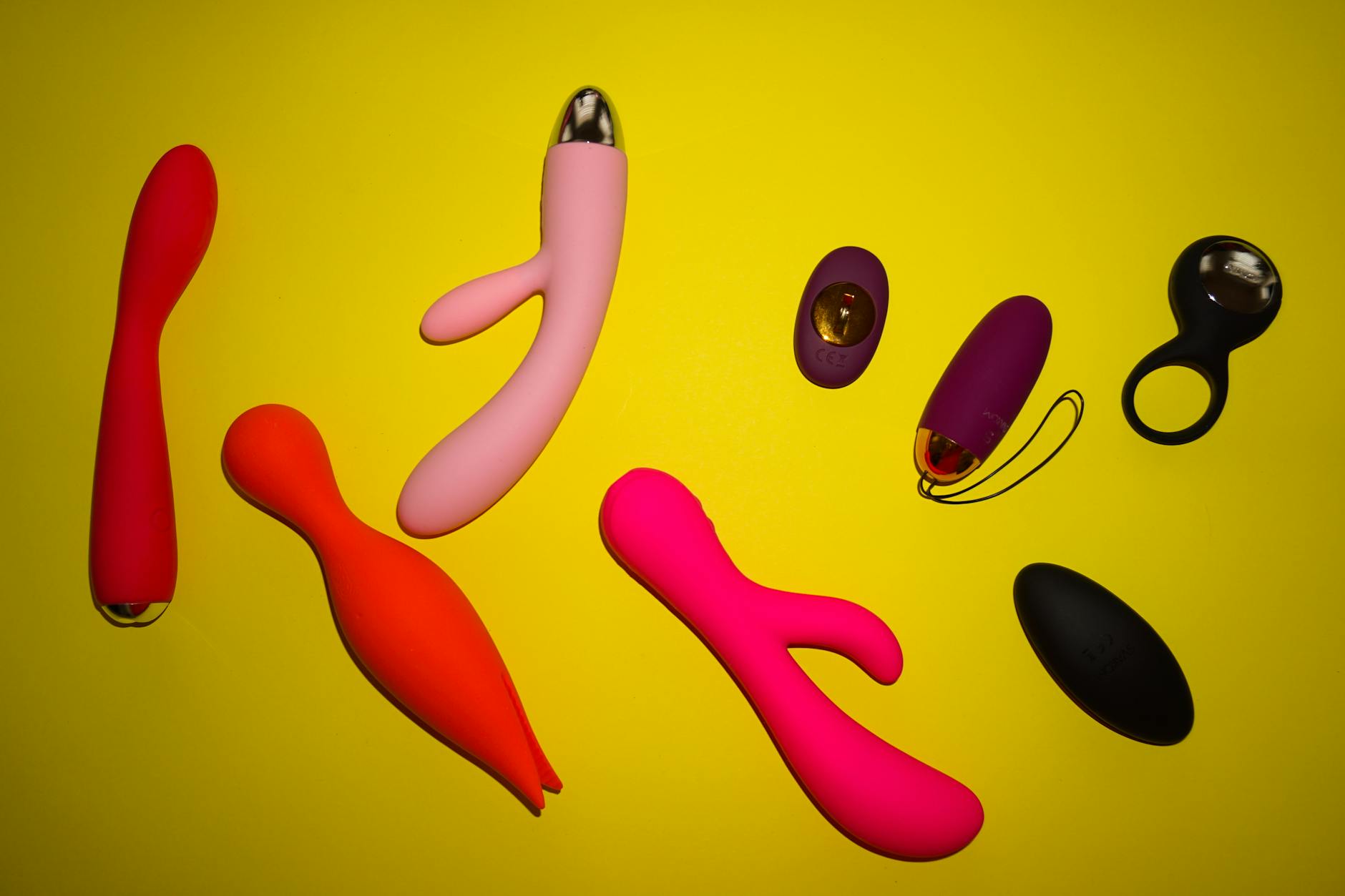
How Lemon Vibrators Help Couples Reconnect Without Performance Pressure
When performance anxiety kills arousal, lemon clitoral vibrators shift the focus from proving something to just feeling good. Here's what changes when you invite one into partner sex.
Here's the thing about couples sex. It starts as connection and somehow becomes a test. One person's worried about taking too long. The other's anxious about finishing too fast. Someone's self-conscious about their body, someone else is silently calculating whether this is "enough." And just like that, you've traded intimacy for a performance review happening in real time inside both your heads.
Lemon vibrators—specifically lemon clitoral vibrators—break that cycle in a way that almost nothing else does. They're not a solution to a broken thing. They're permission to stop pretending you were ever in charge of the mechanics.
It starts early. Women (and people with vulvas generally) grow up hearing that good sex means their partner's skills. Men and people with penises hear that they're supposed to "deliver" the orgasm, like it's a service they're providing. Neither story is true, but both are loud.
Then add the real-world friction: mismatched desire, different arousal speeds, bodies that change with age or stress or medication. One person's ready and the other needs another fifteen minutes. Or the opposite. One person comes easily and the other has never quite gotten there during partnered sex. These are wildly common. They're not failures. But when you're inside the moment, they feel like someone's doing something wrong.
Most couples respond by becoming more careful. Less playful. More goal-oriented. Which is exactly what kills pleasure.
The psychology shift is immediate. When you introduce a clitoral vibrator like the Lem or another lemon sucker device, you're saying out loud: "This isn't about your performance. This is about my pleasure, and we're both here for it."
That distinction matters wildly.
A lemon vibrator does one job beautifully—it provides consistent, targeted clitoral stimulation that doesn't depend on someone's arm strength or rhythm or mood that day. Which means the person penetrating (if that's what's happening) gets to focus on connection instead of mechanics. The person receiving gets to focus on sensation instead of timing. You're no longer on opposite sides of a transaction. You're on the same side of a sensation.
Physiologically, this is huge. When the person with a clitoris stops worrying about whether they're "taking too long," arousal actually builds faster. Cortisol drops. Blood flow increases. The body does what it's supposed to do. And the person inside gets the actual benefit of that—they're inside someone who's genuinely aroused, not someone who's performing arousal.
Don't make it a bigger conversation than it needs to be. "I want to try using a lemon vibrator together" is enough. You don't need to diagnose a problem or pretend this is a solution to some crisis. It's just a tool.
Start with it during solo foreplay. One partner uses it while the other watches, or while they're both touching each other. Let it become just another thing your bodies do together, not a big symbolic turning point.
If penetration is part of what you're doing, the clitoral vibrator stays on the clitoris while you move around it. Some people prefer it at the side. Some prefer it directly on top. Some want their partner to hold it steady. Some want to direct it themselves. There's no one way.
The key is that once the vibrator's running, you get to stop thinking about technique and just be present. Which is probably why so many couples say it's the first time they've felt actually connected during sex in months.
The deepest shift isn't about orgasms (though those often get better). It's about what happens when you stop protecting yourself from the idea that your partner's pleasure isn't your responsibility.
For years, couples operate from this unspoken belief: "I should be able to make this happen." And when they can't, shame builds. A lemon clitoral vibrator removes that completely. It says clearly: "Your pleasure is a collaboration, not a performance." Your partner isn't failing you. The old story is just wrong.
People who use lemon vibrators together often report that the anxiety disappears after the first time. Not because the toy fixed anything broken, but because the conversation shifted. Now when you're together, you're both trying to feel good, not prove anything. That's the actual turn-on.
Introducing a vibrator sometimes surfaces something that was already there. Maybe one person felt inadequate. Maybe the other felt guilty for not finishing. Maybe desire had faded because trying felt like failing.
A lemon vibrator doesn't heal relationship wounds on its own. But it does create space for honesty. "I want us to feel good together" is different energy than "Something's wrong with us." The first one opens a conversation. The second one closes it.
If you're using a lemon sucker or other clitoral vibrator and it's bringing up weird feelings, pause and actually talk about it. What's coming up for you? For your partner? Sometimes the vibrator is just the vibrator. Sometimes it's a doorway to admitting that you've been carrying performance pressure for years and you're exhausted.
Lube helps—water-based is best with silicone toys. Some people like the vibrator on skin directly. Some prefer the sensation is different through underwear or through a thin fabric. You get to find out.
Battery life matters more than you'd think when you're with a partner. Nobody wants to pause mid-flow to hunt for batteries. Rechargeable lemon vibrators solve that completely.
Clean it before and after, same as you would any toy. It takes two minutes and keeps everything healthy.
Timing varies. Some couples use it every time. Some save it for when they want something different. Some use it when one person's running behind and you want to even out the experience. None of those is more "real." You're just experimenting with what works.
Maybe you're worried it means your partner doesn't find you attractive enough. Or that you're not enough on your own. Neither of those is true, and they're common enough that it's worth saying out loud.
A lemon clitoral vibrator is a tool. Your partner's attraction to you didn't decrease. Your bodies didn't break. You're just using technology the same way you use literally everything else in your life to make things easier or better.
Couples who reconnect using lemon vibrators often say the same thing: "We remembered why we liked having sex together." Not because the toy did magic. Because removing the performance pressure let pleasure back in.
Not if you frame it as collaboration instead of substitution. The vibrator does one thing—provide consistent clitoral stimulation. Your partner does everything else: kissing you, touching you, being present. Those are different. Including a vibrator actually increases connection because neither of you is trying to be something you're not.
Yes. It works during penetration, during manual stimulation, during oral sex, during everything. Some positions make it easier to manage than others. The vibrator stays where it works best for the person using it.
Ask directly. "Would you actually want to try this together?" is the question. Watch their response. Enthusiasm looks different than obligation. If they're hesitant, ask what the hesitation is. Maybe it's self-consciousness. Maybe it's something else. Either way, you'll know more than you did five minutes ago.
Then you've learned something about what works for your body. Try a different pattern, different intensity, different position. Or try it again another time. One attempt isn't a diagnosis. If you've never orgasmed during partnered sex and this doesn't change that, a conversation with a sex therapist or gynecologist is worth it—something like lemon vibrators can help, but sometimes there's something else happening too.
It's only weird if you decide it is. Most people find it incredibly hot to watch their partner pleasure themselves. You're not performing. You're genuinely doing what feels good. That's the opposite of performance sex.
There's no timeline. Some people use it the whole time. Some use it for foreplay and stop once things are rolling. Some use it intermittently. The goal isn't to graduate away from it. The goal is pleasure. Use it exactly as long as it's serving that.
Couples who introduce lemon vibrators together often find that the biggest change isn't physical. It's permission. Permission to stop trying to be enough and start trying to feel good. Permission to ask for what works instead of guessing. Permission to see your partner's pleasure as separate from your own performance.
That's not a small thing. That's the difference between sex as obligation and sex as connection. And once you've had that, it's hard to go back.