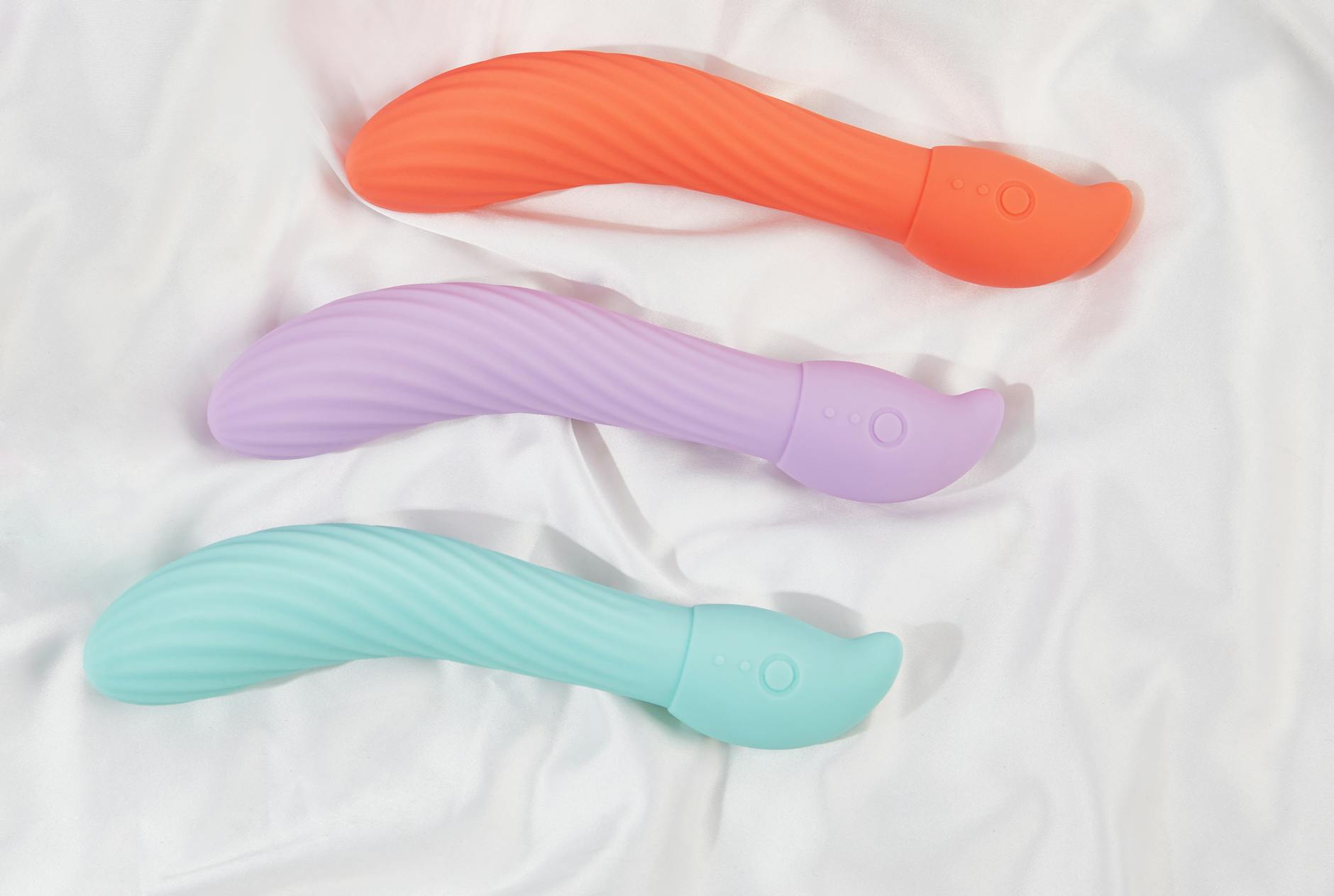
How to Keep Pleasure Alive in Long-Distance Relationships With a Lemon Vibrator
Distance doesn't have to mean disconnection. Here's how couples use lemon vibrators to build anticipation, maintain intimacy, and stay genuinely close across the miles.
Long-distance relationships are not romantic comedies. They're logistical puzzles with emotional weight. You lose the casual touch. You lose the spontaneity. You lose the ability to read each other's body in real time. And if you're not intentional about it, you lose the physical part of the connection altogether. That's real. That's also fixable.
Here's what I've learned working with couples navigating distance: pleasure doesn't have to be synced to the same bedroom. But it does need intention, communication, and tools that actually work. Lemon vibrators, specifically clitoral vibrators designed around suction rather than vibration, bridge that gap in ways that traditional toys can't.
When you're together, physical intimacy is partly about presence. Your partner is in the room. You can touch each other. Spontaneity happens. Distance strips that away. But here's the counterintuitive part: sometimes that pushes couples toward deeper communication and more deliberate pleasure.
Instead of reaching for sex as the default 11 p.m. ritual, distance forces the conversation. "What do you actually want right now?" becomes a real question instead of an assumption. That's not loss. That's actually a reboot.
Lemon vibrators fit into this landscape because they create sensation that's independent of a partner's body but still relational. You can use one solo while your partner watches on video. You can use one in the morning and tell your partner about it later. You can build anticipation across days. The toy becomes a kind of communication device, not a replacement.
Let me be specific about why suction-based clitoral vibrators work better than traditional vibrators for couples managing distance.
Vibration is direct stimulation. It's efficient, it's intense, and it works fast. For many people, that speed is exactly the problem in a long-distance scenario. You want the session to last. You want time to build anticipation, to text, to slow down. You want the experience to feel relational even though you're apart.
Lemon vibrators use suction and pulsing patterns instead of pure vibration. This means the sensation builds more gradually. The patterns are more complex. It takes longer to reach orgasm, which gives you and your partner more time to stay present with each other during the experience.
There's also a practical detail: suction patterns feel different at each intensity level. You're not just turning a dial from "weak" to "strong." You're moving between different sensation profiles. That variation is useful when you're trying to extend an experience and stay engaged with someone across a screen.
One of the most underrated elements of long-distance intimacy is anticipation. When you're together, spontaneity is the standard. When you're apart, anticipation becomes your actual tool.
Here's how this works in practice. Your partner texts you in the morning: "I want you to have an experience tonight at 9 p.m. my time. I'll be free to watch." That text alone shifts your nervous system. You're waiting. You're thinking about it. By 9 p.m., you're genuinely aroused before you even touch anything.
A lemon vibrator is ideal for this because it's designed for intentional, extended use. You can spend 20 or 30 minutes with it. You're not rushing to a finish line. You can have a video call with your partner, talk about what you're experiencing, pause, adjust, respond to what they're saying. The rhythm is collaborative, even if your bodies aren't in the same place.
I've worked with couples who schedule these sessions weekly. Not because they need to, but because the structure protects intimacy in the same way date nights do. It's intentional. It's nonnegotiable. It matters.
Introducing any toy to a long-distance relationship requires the same conversation you'd have about introducing it in person, but with lower stakes because there's no immediate vulnerability happening in front of them.
Start simple. "I've been thinking about how we can stay closer while we're apart. I read about these clitoral vibrators that are designed differently. Would you be interested in exploring that together, even from a distance?" That's it. You're naming the gap, offering a solution, asking for consent.
The response you get tells you a lot. If your partner says yes immediately, great. If they say yes but with hesitation, check in. "What would make this feel more comfortable?" Maybe they want to research together. Maybe they want to start with you solo and them watching. Maybe they want to talk about it more before anything happens.
If they say no, that's also data. It might not be about the toy. It might be about feeling pressured, or about their own discomfort with toys in general, or about the dynamics of your long-distance setup. Don't skip over that. Solve the actual problem, not just the toy problem.
Here's the pattern I see in couples who successfully maintain intimacy across distance: they talk more, not less. They talk about desire. They talk about what they're experiencing. They talk about timing and logistics and comfort.
When you're using a lemon vibrator solo with your partner present (on a video call or even just knowing they're available to text), the communication becomes part of the experience. "How does this pattern feel?" "What are you thinking about?" "Tell me what you're experiencing right now." That conversation IS the intimacy, even if the physical sensation is solo.
Many couples report that this actually deepens their connection more than in-person sex does. Because you're forced to articulate what you want. You can't just sync up physically. You have to say it out loud.
One thing to note: technology is imperfect. Video calls drop. Time zones are annoying. Sometimes you're both tired and it doesn't happen. This is normal. The structure protects the intention, but it doesn't guarantee perfect execution every time. Flexibility matters more than consistency.
If you're in a temporary long-distance situation, the work looks different than if you're settling in for years.
Temporary distance (six months, a year) works well with a planned, rhythmic approach. You schedule sessions. You count down. There's an end date in sight. Lemon vibrators work really well here because they create reliable pleasure on a schedule.
More indefinite distance requires something else: spontaneity within structure. You might have a standing weekly session, but you also need moments of randomness. A text at 2 p.m. on a Tuesday. An unexpected video call. A toy you can grab without major planning. The goal shifts from "bridge the gap" to "build a sustainable intimate life that's just different, not lesser."
With either timeline, the toy is not the solution. Communication and intention are the solutions. The toy is just the vehicle.
If you're new to lemon vibrators and you're shopping for a long-distance scenario, look for something that works at multiple intensities and has varied patterns. You want complexity because that complexity extends the experience. The Lemon Clitoral Vibrator is designed exactly for this: it has different sensation profiles at each level, so you're not just turning up power, you're shifting the whole experience.
Start with one device, not a collection. You're testing whether this works for your relationship before you invest in variety. Waterproof is useful because you might want flexibility about where and when. Noise level matters if you're in a shared living situation. Charge time matters if you're planning sessions and you need the toy ready.
Then actually use it. Consistently. The couples I work with who succeed don't buy expensive toys and use them once. They buy something reasonable, they integrate it into their rhythm, and they talk about it with their partner. That's the difference between a novelty and a tool.
Start by separating two conversations. One is about toys. One is about long-distance intimacy and what you're both missing. Sometimes hesitation about toys is actually hesitation about the vulnerability of the long-distance setup, or about feeling replaced or inadequate. Check which conversation you're actually having. Then frame the toy not as "you need this" but as "I want to stay connected to you and this is a tool that might help." Give them time. Let them research. Offer to explore it together solo first before any partnered use.
Then you adjust the framework. Instead of simultaneous experiences, you might have asynchronous ones. You use a lemon vibrator solo in the morning and tell your partner about it later. They do the same on their timeline. You text about it. You share photos or voice notes. This is less "together" but it's still connective. Some couples find this actually suits their dynamic better because there's less logistics stress.
Absolutely. And it can be a really lovely way to bring the long-distance skills you've developed back into in-person intimacy. Because you've been talking so explicitly, you know each other's preferences better. You've built anticipation differently. That often translates into more satisfying in-person sex, not less. The toy doesn't disappear. It just changes context.
There's nothing wrong. Long-distance relationships require intention that proximate ones don't. Using a toy is evidence of that intention, not evidence of inadequacy. Some of the most connected couples I work with are long-distance couples who've built explicit intimacy practices. The ones who struggle are usually the ones pretending distance doesn't change anything.
Ask yourselves: are you curious about each other's experience? Are you learning things about what your partner wants that you didn't know before? Are you both initiating, or is it one-sided? Is there communication outside of the intimate moments? Those are the real markers. If you're using a toy but never talking about what it felt like, that's going through the motions. If you're regularly asking questions and adjusting based on what you learn, that's connection.
Stop. Pressure kills intimacy faster than distance does. If one person is fundamentally uncomfortable with toys, or with video intimacy, or with scheduled sex, forcing it will damage the relationship. Instead, ask: what would feel good to both of us? What does intimacy mean in a long-distance context for both of us? You might find a different rhythm that works. Or you might decide that long-distance intimacy looks like phone calls and letters and very occasional visits. That's valid too.
Distance doesn't kill relationships. Disconnection does. And you can be physically proximate and completely disconnected, or miles apart and deeply connected. The difference is always communication and intention.
A lemon vibrator is a tool that can support that intention. It's not a fix. It's not a replacement for being together. But it's also not cheating or settling or a sign that something is wrong. It's a way of saying "I want to stay close to you even though we're far apart, and I'm willing to be creative and vulnerable about what that looks like."
If you and your partner are trying to navigate long-distance intimacy, start with conversation. Then, if it feels right, explore tools that support that conversation. The pleasure is secondary. The connection is the whole point.
Ready to take the next step? Reach out to Hello Nancy if you want guidance on integrating intimacy practices into your long-distance relationship. We're here to help couples stay connected, no matter the distance.
For couples navigating long-distance dynamics, The Gottman Institute offers evidence-based research on maintaining emotional intimacy during separation. For questions about intimate wellness and toy use, Hello Nancy's care guide and safety information provide detailed guidance on product maintenance and healthy practice.