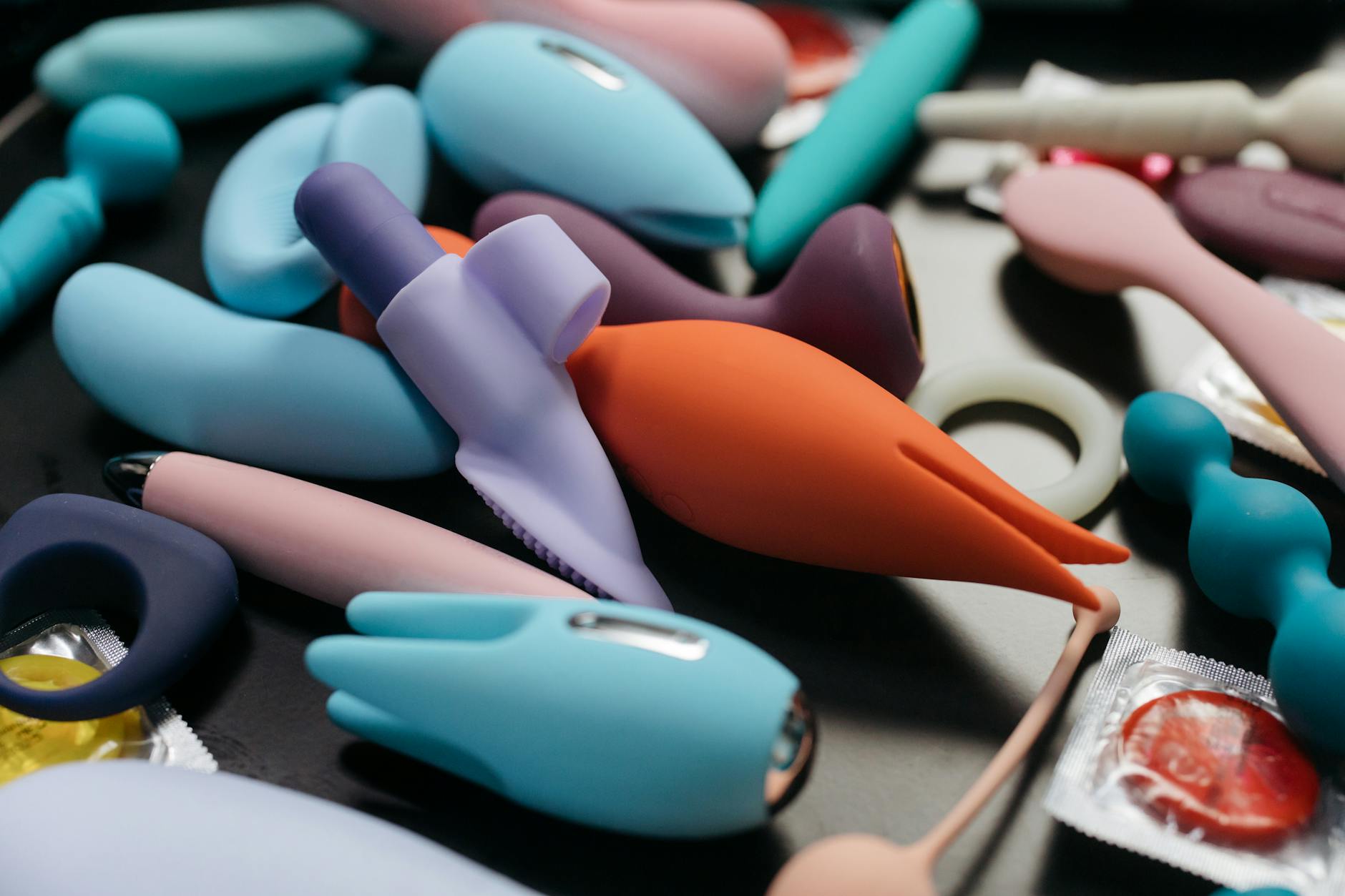
Let's name what's actually happening
You feel exposed with your partner. Not physically exposed, though maybe that too. You feel psychologically naked. Like if they really knew what turned you on, what you wanted, what you needed to feel good, they'd see something in you that changes how they see you. That fear is real. And it's almost always stronger than the desire itself.
Here's what I've learned working with couples over two decades: vulnerability isn't optional for real pleasure. But it doesn't have to happen all at once, and it doesn't have to happen the way you think it does. Lemon vibrators, specifically, create a path into that vulnerability that feels safer than most other options. That matters.
Why shame about pleasure stays hidden
Three roots to this one.
First, childhood messaging. Most of us grew up with the message that wanting pleasure. wanting anything that badly. is selfish or shameful. You're still carrying that voice. Your partner didn't put it there, but they can trigger it.
Second, power dynamics. If you've ever felt sexually dependent on a partner, or like your pleasure was a favor they were doing for you rather than something they wanted to give, exposure feels dangerous. Showing what you need means admitting you need it. And need, historically, has been used against people.
Third, the gap between fantasy and reality. Most of us consume sexual content alone, where we can feel whatever we feel without judgment. Bringing that into the room with another person feels like a translation error. Like something will be lost or misunderstood or held against you later.
None of that is irrational. But it does shut down pleasure.
Why lemon vibrators make this different
A lemon clitoral vibrator is not a magic wand. But it has three properties that make vulnerability feel more manageable.
First, it's not a request. A vibrator is a tool you're using. It's not asking your partner to do anything differently or be anyone different. That removes the activation energy from the conversation. You're not saying "you don't turn me on enough." You're saying "I want to explore this alone, and I want you here while I do." Those are wildly different sentences.
Second, it changes where the focus lives. If you're lying there and your partner is trying to touch you in the "right" way, all your attention goes to whether it's working, whether they're getting frustrated, whether you're taking too long. That's performance anxiety, dressed up as intimacy. A lemon sucker, with its concentrated suction, pulls your attention inward. Your partner's job becomes witnessing, not performing. That shift is enormous.
Third, it gives you proof. Here's what happens: you use a clitoral vibrator alone and have a really good orgasm. Then you're scared to use it in front of your partner because surely they'll judge you. But then you do it, and they don't judge you. They actually respond to you. And the next time you feel exposed, you have actual evidence that it was safe. Shame loses ground.
This is not about replacing your partner or creating distance. It's about rebuilding trust in your own body, and in their ability to witness it without harm.
The practical setup that makes it feel safer
If you're starting from a place of real shame, jumping straight to "let's watch me use a vibrator together" can feel too exposed. Build toward it.
Step one: solo use, no announcement. Use your lemon vibrator alone. Get comfortable with the sensation, find what patterns feel good, practice without an audience. This takes the novelty out of the equation. You're not discovering it for the first time while they're watching.
Step two: mention it casually. "I've been using a vibrator on my own and I really like it." Not during sex, not during a deep conversation. Just... over breakfast. Normalize it through repetition and low stakes. Your partner's response matters, but it's less likely to be judgment if you're not asking for anything yet.
Step three: create permission together. "I'd like to use it while we're together, but I need to know you're okay with that first." If they're not okay with it, that's information you need. It might be their own shame, their own fears about what it means. That's a conversation. But it's a conversation that happens with boundaries, not in the middle of vulnerability.
Step four: start clothed or partially clothed. You don't have to be fully naked. You don't have to be in the bedroom. You could be on the couch, mostly dressed, while they sit next to you. The exposure increases in layers.
Step five: go slower than you think. If you can orgasm in 3 minutes alone, give yourself 10 minutes with your partner present. Slowness is a form of presence. It says "I'm not rushing through this because I'm ashamed." It actually rewires the nervous system.
What to do if shame shows up mid-pleasure
You're using your lemon vibrator and suddenly you feel that familiar tightness. That voice that says you're being too loud, too needy, too much.
Don't try to push through it. You can't shame-spiral your way to good sex.
Instead: slow down or pause. Breathe. Notice what the voice is actually saying. Is it your voice or someone else's? Is it protecting you from something real or just running an old program?
Then decide. If you want to keep going, keep going. If you want to stop, stop. If you want to ask your partner to hold your hand while you try again, ask. The point is you're making the choice, not your shame.
This is why how to use lemon vibrators when you feel guilty about solo pleasure matters so much. You can't bring vulnerability into partnered sex if you're still fighting yourself when you're alone.
When your partner's shame gets in the way
Here's the thing that often doesn't get said: your vulnerability is only half of this equation. Your partner's ability to witness it without their own shame, judgment, or insecurity getting in the way is the other half.
Some partners will say "I want you to feel good" and actually mean it. Others will say it and feel emasculated or inadequate. Others will feel aroused. Others will feel nothing. The exact response doesn't determine whether this works. Honesty does.
If your partner can't be present without judgment, or if they make your pleasure about their own worth, that's a relationship problem that a lemon vibrator can't fix. That's where how to use lemon vibrators when you and your partner have conflicting arousal timelines comes in. Different struggles, same root: two nervous systems learning to trust each other again.
Sometimes couples therapy or sex therapy is the actual first step. A vibrator is the second step.
The permission your body actually needs
Vulnerability with a partner isn't about them seeing everything at once. It's about gradually expanding the circle of what you'll allow yourself to feel and express while another person is in the room.
A lemon vibrator is a tool for that expansion. It's proof that your pleasure doesn't have to disappear when someone you trust is watching. That your body isn't something you need to hide or perform. That exposure, in small doses and at your own pace, can feel safe.
Your partner's job is to witness. Not to perform, not to fix, not to judge. Just to be present while you reclaim something that was always yours. A good partner can do that. And often, they're waiting for permission too.
People also ask
Should I tell my partner before I introduce a lemon vibrator into our sex life?
Yes. Communication about pleasure tools isn't a mood killer. It's actually the opposite. Secrets make exposure feel more dangerous. Honesty gives your nervous system permission to relax. You don't need a formal conversation. "I want to try something and I'd like you to be there" is enough. Their response will tell you what you need to know about whether this relationship has room for your pleasure.
What if my partner feels threatened by a lemon vibrator?
That threat is usually not actually about the vibrator. It's about inadequacy, or changing roles, or their own relationship with pleasure. Those are real feelings that deserve attention. But they're not your responsibility to fix, and they shouldn't stop you from exploring your own pleasure. You can say something like: "This isn't about you not being enough. This is about me learning what I like." If they can't move past the threat, that's information about your relationship, not about the vibrator.
Can using a lemon vibrator with my partner actually rebuild trust after infidelity or betrayal?
Not directly. Trust rebuilding is slow and requires consistent follow-through, honesty, and sometimes professional help. But shared vulnerability, done slowly and honestly, can be one piece of that. It shows your partner that you're willing to be exposed again, and that you're willing to let them witness something intimate. That's a starting point, not a destination.
Is it normal to feel more vulnerable with a vibrator than without one?
Completely. A vibrator makes the pleasure visible. Your body's response becomes undeniable. You can't hide behind performance or pretend you don't care as much. That visibility is actually what makes it healing. You're not hiding anymore.
How do I ask my partner to help me feel safer if I'm ashamed during sex?
Before it happens, if you can: "Sometimes I get in my head. If that happens, I might need you to just hold my hand or remind me that it's okay." During, if shame shows up: "I need a pause. Can we just breathe for a second?" After: "Thank you for staying with me." Small acts of permission and presence compound over time.
What if I can only feel pleasure when I'm alone, not with my partner?
That's usually a sign that you don't feel safe enough yet. Alone, you're not watching yourself or managing anyone else's emotions. With a partner, you're trying to do both. That's a lot of cognitive load. Some of this gets better with time and consistency. Some of it requires addressing the relationship itself. Start with solo use, build trust slowly, and get professional support if the gap doesn't close.
Your pleasure matters. Your vulnerability matters. And you deserve a partner who can witness both without making it about themselves. A lemon vibrator can't give you that partner, but it can help you practice being seen. That's where healing starts.