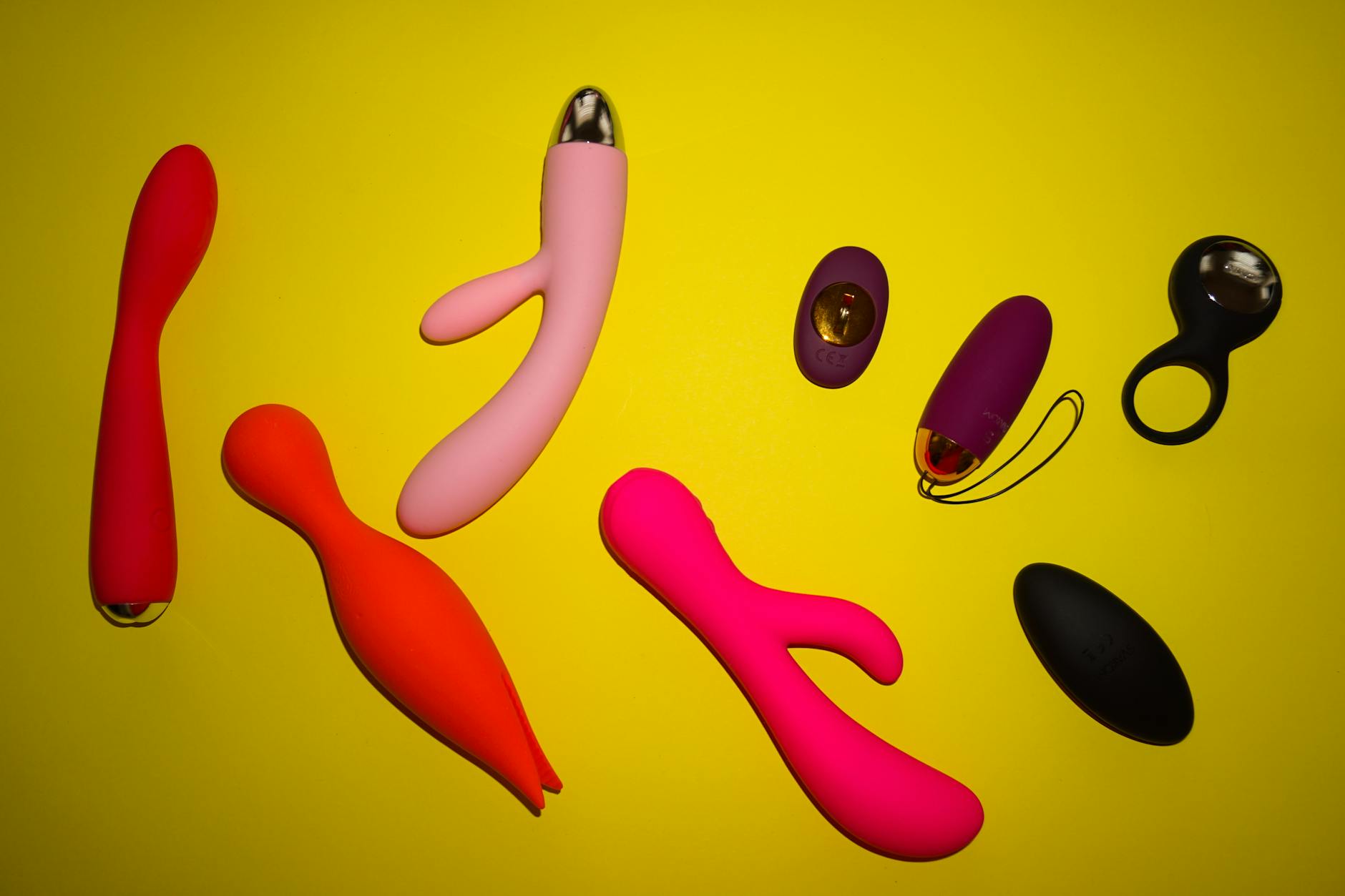
How to Use Lemon Vibrators When Recovering From Vaginismus or Painful Intercourse
Let's talk about what vaginismus actually is
Vaginismus isn't a choice, a sign of low desire, or a character flaw. It's a reflex. When the pelvic floor muscles perceive a threat, they involuntarily tighten. That tightness blocks entry, which feels like pain or a wall, which triggers more fear, which causes more tension. You're stuck in a loop your nervous system created to protect you, and no amount of willpower gets you out of it alone.
The crucial part: vaginismus is a penetration response. It's triggered by anticipated or attempted insertion. Clitoral pleasure, though, uses a completely different neural pathway. That's where lemon vibrators come in.
Why external stimulation breaks the pain cycle
When you're recovering from vaginismus, the goal isn't immediately to have penetrative sex again. That's not the goal yet. The goal is to convince your nervous system that pleasure is safe, that sensation doesn't have to hurt, and that your body can feel good without activating the protective reflex.
Lemon clitoral vibrators work for this because they're external. They don't trigger the pelvic floor guard response. You get to experience arousal, orgasm, and intense sensation while your pelvic floor stays relaxed. That's the whole game. Your body learns: stimulation equals pleasure, not pain. After weeks of this, your nervous system updates its threat assessment.
The suction-based design of lemon vibrators is especially useful here. Unlike traditional vibrators that use direct friction, suction works through rhythmic pressure changes. For people recovering from trauma or pain, suction often feels gentler, less invasive, more about sensation than mechanical stimulation. It's a qualitatively different experience, and that difference matters for retraining.
Building arousal without pressure
One of the biggest mistakes people make in early recovery is thinking they have to be ready for more stimulation than they actually are. You're not training for endurance. You're training your nervous system to relax.
Start with the lemon vibrator on its lowest setting. Pattern 1 or 2. Use water-based lubricant on the external area, even though there's no penetration happening. Lubrication helps sensation feel smooth rather than abrasive, and it signals to your body that this is a safe, intentional experience, not an emergency.
Give yourself 20 to 30 minutes. Not because you need that long to orgasm, but because slow arousal gives your nervous system time to downregulate. You're teaching it that pleasure unfolds gradually, with no rush, with no pressure to perform or progress.
Many people in vaginismus recovery spend years associating arousal with dread. Your body expects pain when things start heating up. Slow, external, consequence-free pleasure rewires that expectation. It takes repetition. That's not a flaw. That's how nervous system re-education works.
Managing fear responses and intrusive thoughts
Even with a clitoral vibrator, you might notice your mind going to worst-case scenarios. If you've had painful intercourse, your brain has learned to catastrophize during arousal. That thought pattern is a symptom, not a sign that you're doing something wrong.
When the intrusive thought arrives, acknowledge it without judgment. "My brain is trying to protect me. That's its job." Then gently bring your attention back to physical sensation. What does the suction feel like right now? Is it warm? Rhythmic? What body sensations are you noticing besides the vibrator itself?
This is grounding, and it works. It interrupts the thought-fear-tension cascade and keeps your parasympathetic nervous system engaged. Some days it'll be easier than others. Both are fine.
If you're working with a partner, tell them you need them to be completely hands-off during this phase. No checking in, no "how does this feel" commentary, no attempt to help or guide. Solo exploration is the path. It removes the performance pressure that often fuels vaginismus in the first place.
When to introduce partners back into the picture
After 4 to 8 weeks of consistent solo pleasure with your lemon vibrator, your nervous system will have logged thousands of repetitions of "arousal without pain." That's when you might start bringing a partner in, but with clear boundaries.
The boundaries are: your partner watches, doesn't touch, and doesn't pressure you. You use the vibrator the same way you've been using it alone. The only difference is someone else is present. This step teaches your body that arousal is safe even when someone else is there, removing the association between partner presence and anticipated pain.
After another few weeks of that, you might move to your partner touching you non-genitally while you use the vibrator. Hands on your back, holding you, whatever feels good. Still no genital touching from them. Still no penetration attempts. You're systematically proving to your nervous system that progressive intimacy doesn't trigger the pain reflex.
This timeline sounds long because it is. Vaginismus recovery isn't a six-week project. It's a three-to-six-month commitment, sometimes longer. But the payoff is a body that trusts pleasure again, and partners who understand what safety actually means.
The role of lubrication and tissue care
Some people recovering from vaginismus have a secondary problem: tissue sensitivity or mild atrophy from months or years of avoiding stimulation. Using a generous amount of water-based lubricant protects the tissue while you're rebuilding normal blood flow to the area.
Consider a long-chain hyaluronic acid or glycerin-based lube. These feel naturally lubricated rather than slippery, and they maintain consistent glide throughout a longer session. If you find yourself getting irritated, switch to a simpler formulation or reduce session length.
Many people also benefit from a topical estrogen cream if they're post-menopausal or on hormonal medications that lower estrogen. This isn't a universal prescription, but it's worth asking a gynecologist about. Thin or fragile tissue responds better to stimulation when estrogen levels support tissue resilience.
Staying grounded in progress, not perfection
Vaginismus recovery doesn't look like a straight line. You'll have sessions where the vibrator feels amazing and sessions where you feel disconnected. You'll have weeks of progress followed by a setback triggered by stress or a difficult conversation. That's normal. Your pelvic floor is deeply wired to your emotional state. When anxiety spikes, the muscles tighten, regardless of how many weeks you've been practicing.
The metric isn't flawlessness. It's direction. Are you able to use the vibrator more comfortably than you were a month ago? Can you stay engaged longer? Is your post-session anxiety lower than it was? Those are the questions that matter.
Many people find that using a lemon vibrator becomes a form of self-trust rebuilding. You're showing your body, repeatedly, that you're in control, that pleasure is possible, and that sensation doesn't automatically mean harm. That's profound neurological work, and your nervous system needs consistent repetition to believe it.
Recovery from vaginismus is possible, and it often hinges on permission to enjoy something that used to terrify you.
When professional support is necessary
If you're experiencing vaginismus alongside trauma symptoms, severe anxiety, or relationship conflict around sex, a therapist trained in both trauma and sexual health can be transformative. Cognitive behavioral therapy and somatic experiencing have strong evidence for vaginismus recovery. A pelvic floor physical therapist can also help, because sometimes the nervous system needs both top-down (therapy) and bottom-up (physical) intervention.
The lemon vibrator isn't a substitute for professional care. It's a tool that works best inside a comprehensive recovery plan that might also include therapy, partner communication, and sometimes medical intervention.
If you're in a relationship, couples therapy can also help, particularly if your partner developed anxiety or avoidance around sex due to repeated painful experiences. Both of you are often recovering from the same trauma, and having professional support to navigate that together can prevent resentment from calcifying.
FAQ: Vaginismus recovery and lemon vibrators
How long does it typically take to recover from vaginismus using external stimulation?
Recovery timelines vary widely, but most people see meaningful progress within 8 to 12 weeks of consistent, intentional use of external stimulation. Some recover in 4 to 6 weeks. Others take 6 months or longer, especially if trauma is involved. The key is consistency, not speed. Your nervous system needs repeated proof that pleasure is safe. That takes time, but it works.
Can I use a lemon vibrator if I've had negative experiences with other sex toys?
Yes. If previous toys felt too intense or triggering, the suction-based design of a lemon clitoral vibrator often feels qualitatively different. The sensation is less about friction and more about rhythmic pressure. Starting on the lowest pattern and taking time to acclimate matters more than the specific toy. That said, if any toy triggers panic, stop, let yourself settle, and try again another day. Forcing it defeats the purpose.
Should I tell my partner I'm using a vibrator for vaginismus recovery?
That depends on your relationship. If you have an honest, communicative partnership, transparency helps. Your partner understanding that you're actively working on recovery, using tools designed for that, and need solo space to do it often builds compassion rather than insecurity. If your relationship involves control dynamics or you don't feel safe disclosing, that's a separate and more urgent issue to address, potentially with a therapist.
What if I still feel pain even with external clitoral stimulation?
External clitoral stimulation shouldn't cause sharp pain. Some pressure sensitivity is normal, especially early on, but pain is a sign to stop, adjust, or talk to a healthcare provider. If your pelvic floor is extremely tense, even light clitoral touch might trigger referred pain in the pelvic region. A pelvic floor physical therapist can teach you how to relax those muscles in preparation for using a vibrator.
Can vaginismus come back after recovery?
Vaginismus can return if stress, trauma, or significant relationship conflict resurfaces. However, having recovered once, you understand how to do it again, and the process is usually faster the second time. Your nervous system has proof that recovery is possible, which itself is powerful.
How do I know when I'm ready to try penetration again?
Readiness isn't about a specific number of weeks. It's about your body's response. If you can use a lemon vibrator without pelvic floor tension, if arousal doesn't trigger fear, and if you genuinely want to try penetration rather than feeling pressured, those are the green lights. Start with something small, patient, and completely optional. Penetration should feel like a choice you want to make, not a milestone you have to reach.
Moving forward: pleasure as recovery
Vaginismus teaches your nervous system that pleasure is dangerous. Recovery teaches it something different. It teaches your body that arousal is safe, sensation is neutral, and climax doesn't require pain to be real.
Using a lemon vibrator in recovery isn't indulgent. It's medicine. It's neural rewiring. It's reclaiming a part of yourself that vaginismus stole. And it works.
If you're navigating this, you deserve support that sees recovery not as a burden but as a return to yourself. That's what reaching out to Hell A Nancy Lem is for. We're here when you're ready.
Sources and further reading
Bruggemann, A. J., et al. (2020). Vaginismus and dyspareunia: relationship with pelvic floor hypertonicity. Current Sexual Health Reports, 12(4), 19-30.
Weertman, A., Blanker, M. H., & Dekker, J. H. (2006). Treatment of vaginismus: cognitive-behavioral therapy versus physiotherapy. Journal of Sex & Marital Therapy, 32(2), 99-111.
Sprague, S., Buchbinder, M., Ehlers, S. L., & Bachmann, G. A. (2018). Sexual function in women with physical disabilities. Current Sexual Health Reports, 10(4), 168-182.
Petersen, C. D., et al. (2016). Vaginismus and dyspareunia: clinical presentation and classification. Current Sexual Health Reports, 8(3), 38-45.