Let's talk about what nobody tells you
Postpartum pleasure doesn't work like it did before. And I don't just mean you're exhausted (though you are). I mean your body feels like it belongs to someone else. You've spent nine months having almost zero autonomy over your own skin. Labor was involuntary. Breastfeeding (if you're doing it) is borrowed time. Then everyone expects you to just slot back into desire like you're a vending machine.
You're not broken. But the disconnect is real, and it's worth taking seriously.
What happens to sensation and desire postpartum
Here's the physical part first. Vaginal tearing (or surgical cuts from cesarean), swelling, stitches, and hormonal shifts all reduce the nerve sensitivity in the first 6 to 12 weeks. Oxytocin spikes when you're holding your newborn. Prolactin (if you're breastfeeding) stays elevated. Both of those suppress desire. Your pelvic floor is exhausted, sometimes traumatized. Your brain is in survival mode.
But here's what doesn't get talked about: the psychological piece is often bigger than the physical one.
Your body has been public property. Your breasts have been examined by midwives, lactation consultants, maybe photographers. Your vulva has been looked at by doctors. You've been touched, stretched, and handled. Then a partner touches you for pleasure, and your nervous system reads it as another intrusion.
This is not rare. This is not weakness. This is what happens when your body has been in service mode.
Why disconnection feels different than low libido
Low libido is the absence of desire. Disconnection is the presence of numbness. You might feel nothing. Or you might feel something and immediately recoil from it. Touch that would have felt good four months ago now feels itchy, overstimulating, or just... wrong.
Some people describe it as dissociation. Some say their own body feels unfamiliar. Others report that their clitoris doesn't respond the way it used to, almost like the nerve pathways got rerouted during labor.
The good news: this is temporary. The better news: you don't have to white-knuckle through it solo.
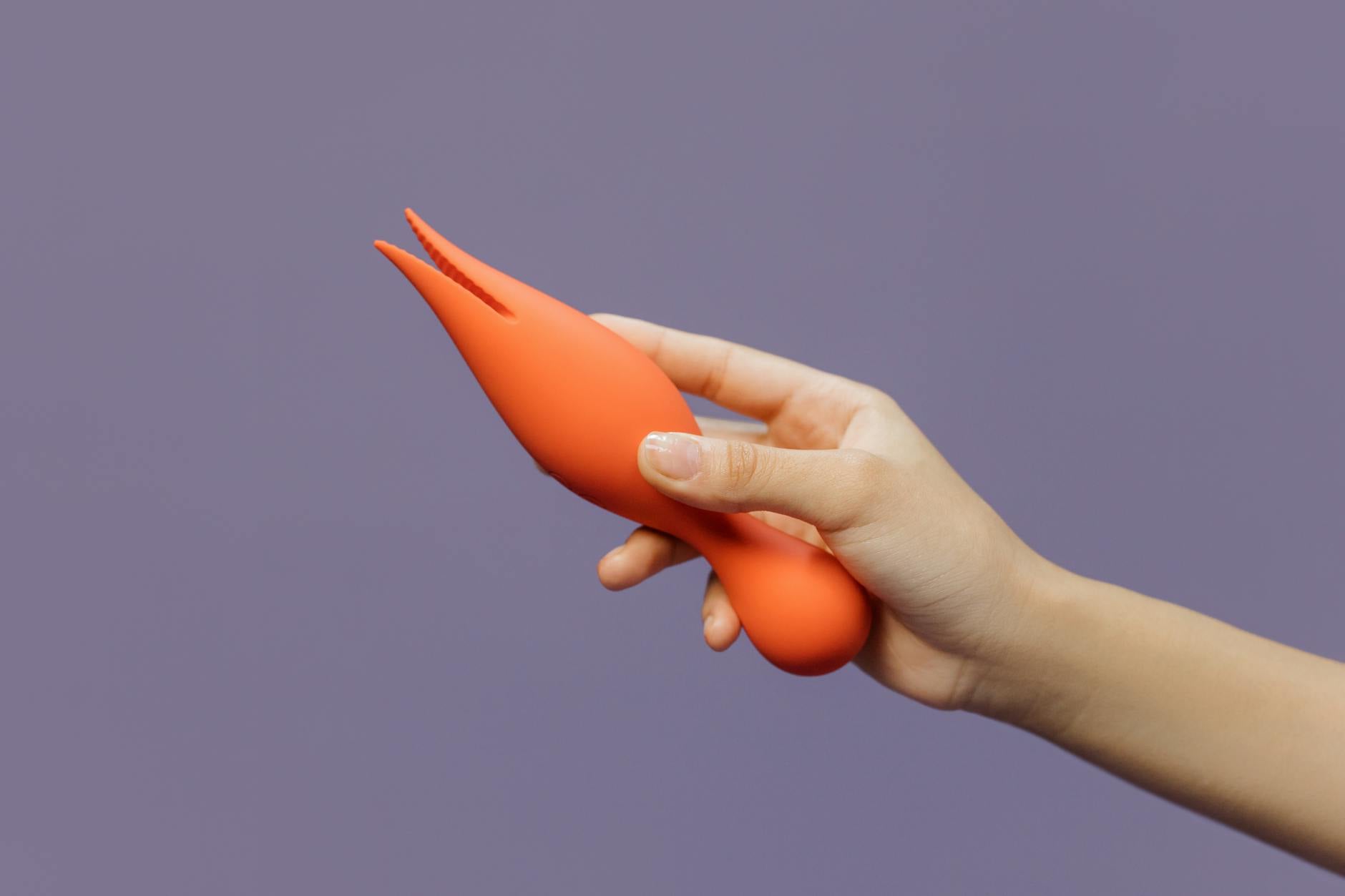
Lemon vibrators (and specifically air-suction devices like the Lem) work differently than traditional vibrators in this context. They don't require the same kind of direct contact that can feel invasive. The suction is something your body can ease into. It's gentler. It puts you in control of how much stimulus you're taking in, which is neurologically crucial when you're rebuilding a sense of safety in your own skin.
Reconnecting with your body on your timeline
Start this solo. Not because partner touch is wrong, but because you're relearning what pleasure even is without the variable of someone else's needs.
Pick a time when the baby is truly asleep and you have at least 30 minutes. You're not trying to orgasm. You're trying to remember what sensation feels like that isn't medical, parental, or obligatory.
Start with the lowest pattern on a lemon vibrator. Pattern 1 on the Lem, for example, is subtle. You can sit with it for as long as you need. The first session might feel like nothing. That's fine. The second might feel like mild pins and needles. Also fine. By the third or fourth, some of your nervous system might actually recognize pleasure again.
The suction design matters here. Unlike traditional vibrators that press directly against tissue, air-suction draws the clitoris gently upward. That creates stimulation without the sensation of being touched, which is neurologically different. For people rebuilding a sense of agency over their body, that distinction is huge.
When to reintroduce partner touch
After you've spent a week or two reconnecting alone, you can start inviting a partner back in. But the approach matters.
Tell your partner exactly what you're working on. "I'm reconnecting with my own body right now. I'm not ready for partnered sex, but I want to relearn pleasure on my terms." That clarity prevents misinterpretation. It's not rejection. It's active reconstruction.
If you want partner involvement, they can be in the room while you use your lemon vibrator. They watch. They don't touch. They're present but not demanding. Some people find that their partner's presence, without any expectation, is actually calming. Others need complete solitude. Both are legitimate.
When you do reintroduce partner touch, start with something that mirrors what the solo process felt like. Not sex. Not intercourse. Maybe partner-applied lemon vibrator use, where your partner holds the device and you direct it. You control the pressure. You control the pace. You control the off button.
Managing the psychological weight
Honestly, the physical recovery is often the easier part. The psychological part is where people get stuck.
You might feel guilty for needing this space. Guilt is a classic postpartum emotion and it has almost zero useful information in it. Ignore it.
You might worry your partner feels rejected. That's a conversation worth having directly, not a burden you absorb silently. Most partners would rather know what's happening than guess and feel confused.
You might feel grief about your body being different now. That's also legitimate. It was different before pregnancy too, and it'll be different in five years. Bodies change. That doesn't make them wrong.
Some people benefit from talking to a postpartum therapist, not because something is broken but because having a neutral third party validate what you're experiencing is legitimizing. You're not overreacting. Your body's response to nine months of borrowed autonomy is completely rational.
The timeline nobody talks about
Physical healing is six to eight weeks. That's when you're cleared for sex. But emotional reconnection often takes longer. Some people regain desire at eight weeks. Some take six months. Some don't feel fully themselves for a year or more.
All of those timelines are normal.
Using lemon vibrators during this phase isn't a rush to get back to normal. It's a way to rebuild sensation gradually, without pressure or speed. You're not training your body to respond on someone else's schedule. You're remembering how to respond on yours.
If you're four months postpartum and still feeling disconnected, that's not a sign something is wrong with you. It's information that you need more time, possibly more support, and definitely more self-directed exploration before partnered touch feels good.
What to expect when you start
First sessions with a lemon vibrator postpartum often feel underwhelming. You might feel almost nothing. Some people worry this means sensation is permanently damaged. It's not. It means your nervous system is still in protective mode.
Keep showing up anyway. Use the lowest settings. Let your clitoris remember that touch can come from you, be controlled by you, and stop whenever you want it to stop. That agency rebuilds the neural pathways pretty fast once you start.
By session three or four, many people report that sensation starts to register. By week two, some feel the first genuine spark of something that resembles pleasure. By four weeks of solo use, most people feel noticeably reconnected.
Then you have options. You can continue solo. You can invite a partner back in. You can use lemon vibrators as partnered foreplay. The beauty of doing the foundational work alone is that whatever comes next feels like choice rather than obligation.
When to check in with a doctor
If you're more than six weeks postpartum and experiencing pain during any kind of touch or stimulation, mention it to your OB-GYN or midwife. Sometimes scar tissue needs attention. Sometimes there's infection or inflammation that's still lingering. That's not failure. It's just information that your body needs a different kind of support.
If you feel completely numb and it's been more than four months, that might also be worth mentioning. Postpartum depression and postpartum anxiety can show up as anhedonia (the inability to feel pleasure). That's very treatable, and honestly, talking to someone can be the most useful thing you do.
The short version
Postpartum disconnection from pleasure is not rare, not permanent, and not something you have to feel ashamed about. Using lemon sexual toys to rebuild sensation slowly, solo, and on your timeline is actually a really evidence-based way to reconnect. Start with the lowest settings. Give yourself permission to feel nothing for the first few sessions. By week three or four, your nervous system usually starts remembering what pleasure is. Then you can decide what comes next. No timeline. No pressure. Just you and your body relearning each other.
Photo by FounderTips on Pexels
FAQ: Postpartum pleasure and lemon vibrators
How soon after giving birth can I use a lemon vibrator?
Wait until you're cleared for sexual activity, which is typically six to eight weeks postpartum (or longer if you had complications or a cesarean). Before that, your body is actively healing and introducing any stimulation can interfere with that process. After clearance, you can start with solo exploration using the lowest settings. Listen to your body. If something hurts, stop.
Can I use a lemon vibrator if I'm breastfeeding?
Yes. Breastfeeding doesn't contraindicate using vibrators. However, prolactin (the milk-production hormone) naturally suppresses sexual arousal. You might notice desire is lower than it was before pregnancy. That's not a problem with the vibrator. It's your body's normal postpartum neurobiology. If you're also exclusively breastfeeding and sleep-deprived, your libido might be genuinely absent. That's also completely normal and usually resolves once you start sleeping longer stretches.
Will using a lemon vibrator help with postpartum depression symptoms?
Vibrators can help reconnect you with pleasure, which is part of addressing anhedonia (the numbness that comes with depression). But vibrators are not treatment for depression. If you're experiencing postpartum depression, talk to your doctor. Therapy, sometimes medication, and often a combination approach actually address what's happening in your brain. Vibrators are a nice addition to that work, not a substitute.
Should my partner be involved in my postpartum pleasure recovery?
That's entirely your call. Some people benefit from their partner being present but not touching while they reconnect solo. Some need complete solitude. Some want a partner to apply the lemon vibrator after they've done solo work for a few weeks. Have that conversation with your partner without shame. Most people appreciate clarity over guessing.
What if I still feel disconnected at six months postpartum?
That's when it's worth checking in with a therapist or doctor. Six months is still within the normal range of postpartum adjustments, but if sensation hasn't started returning by then, there might be something physical (scar tissue, nerve damage, hormonal imbalance) or psychological (postpartum depression, trauma from birth) that needs professional support. That support might include pelvic floor physical therapy, therapy with a postpartum specialist, or both.
Can using a lemon vibrator too early cause damage?
Using a vibrator before you're physically healed (before six weeks, or before you're cleared by your doctor) can interfere with healing. But after clearance, starting slowly with the lowest settings on a lemon vibrator is actually quite gentle. Air-suction devices like the Lem are less aggressive than traditional vibrators, making them a good choice for early reconnection. Just start slow and pay attention to what feels okay.
Is it normal to feel nothing the first few times?
Completely normal. Your nervous system has been through a lot. It's protective and cautious. Sensation often returns gradually over several sessions of solo exploration. By the third or fourth time, many people report feeling something. By week two, something closer to actual pleasure. Consistency matters more than intensity in these early weeks.
Resources and support
If you're navigating postpartum recovery and pleasure reconnection, these resources can help:
Postpartum Support International (PSI) offers support for postpartum mood and anxiety disorders and maintains a referral network of specialized therapists.
The American College of Obstetricians and Gynecologists has evidence-based guidelines on postpartum sexual health and recovery timelines.
Consider finding a pelvic floor physical therapist if you're experiencing pain or persistent tension. Many insurance plans cover this, and it can make a significant difference in how your body feels.
If you're working through relationship shifts postpartum, a couples counselor or marriage and family therapist can help you and your partner navigate the changes together. Your ability to reconnect with pleasure is connected to how safe and supported you feel overall.
Your body will remember pleasure again. It just needs time, permission, and the right tools to get there.