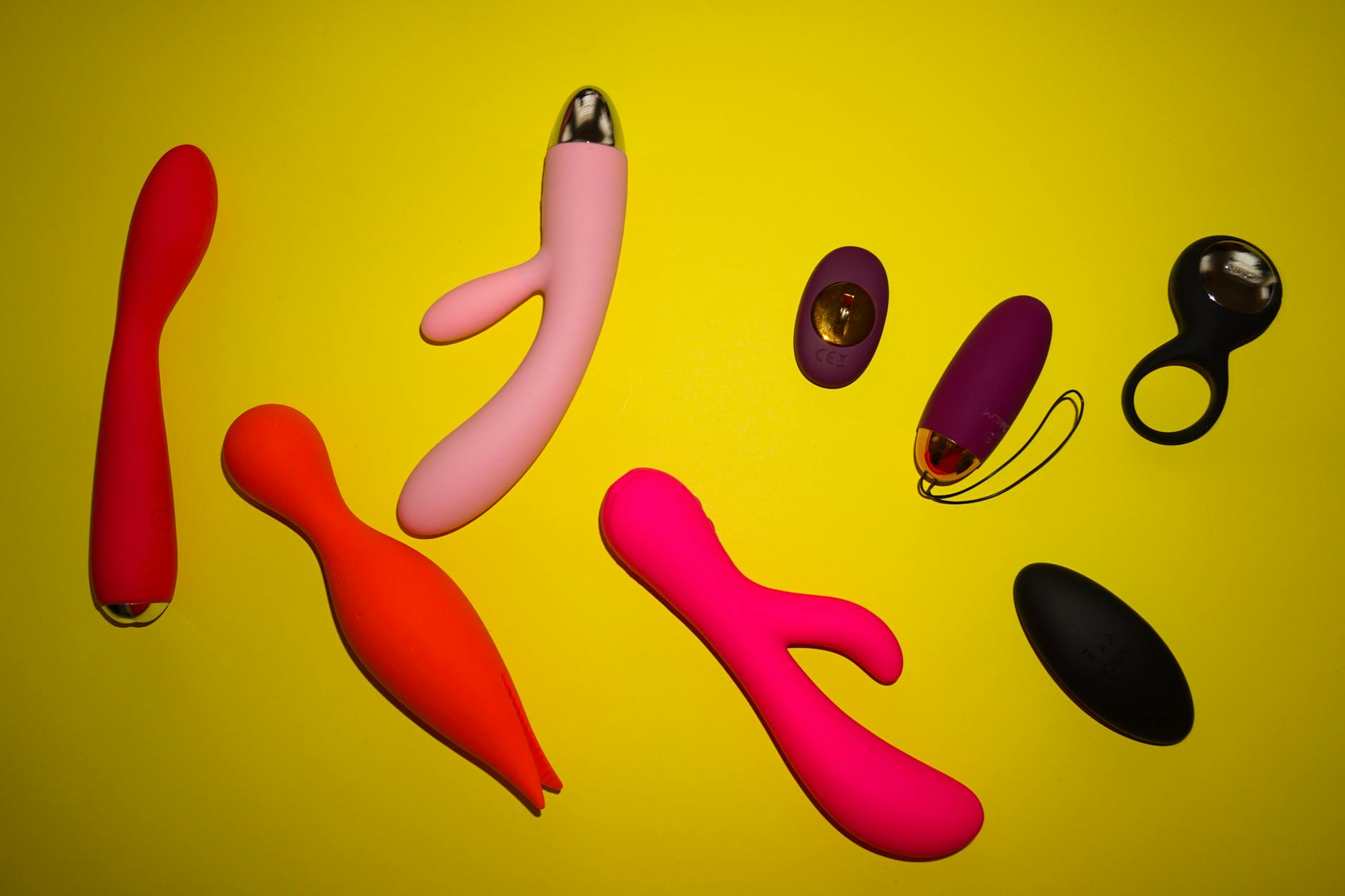
Let's talk about the clitoris you didn't know you had
Your clitoris is not just the external bump. It's a network. The visible part (the glans) is dense with nerve endings, but the internal structure branches into a wishbone shape that extends several inches inside your body. When someone says clitoral stimulation feels "too intense," what they usually mean is the glans is firing on all cylinders while the internal structures aren't engaged yet. The result: overstimulation without satisfaction.
This is wildly common. And it's not a problem with your body. It's a mismatch between the tool and the anatomy.
Why direct vibration can feel overwhelming
Traditional vibrators buzz directly against the glans at high frequency. For some people, that's pleasure. For others, it's sensory overload. The nerve density is so high that direct contact at intensity levels 7 or 8 can actually shut down pleasure rather than amplify it. Your nervous system hits a ceiling and says "enough."
Lemon clitoral vibrators work differently. They use suction and gentle pulsing to stimulate the entire clitoral network, not just hammer one spot. The sensation builds gradually instead of arriving all at once. This is why people with hypersensitivity often report that lemon vibrators feel more pleasurable than traditional toys.
But even suction can feel like too much if you're not approaching it strategically.
Start with the lowest setting and stay there longer
Here's the instinct you need to unlearn: turning up the intensity. Don't. Instead, use the Lem vibrator at pattern 1 or 2 for 15-20 minutes. Let your body acclimate. Sensitivity often feels intense because your nervous system is surprised, not because there's actual discomfort.
The suction builds arousal gradually. You'll notice the sensation changing over time. What felt intense at minute 2 often feels pleasurable by minute 10. Your brain catches up. Your nerve endings learn the rhythm.
If it still feels overwhelming after 10 minutes at the lowest setting, pause. You're not broken. You might just need a different entry point.
Use indirect contact when direct feels raw
The glans is the sensitive bit. The hood (the tissue covering it) is less so. When you're starting out, position the Lem vibrator so it's applying suction to the hood rather than the glans itself. This gives you all the pleasure of clitoral stimulation with a gentler gateway.
You can shift position as you warm up. Many people find that after 5-10 minutes of hood stimulation, direct glans contact becomes pleasurable rather than overwhelming. Your body's ready. The arousal is there.
Lubrication changes everything
Dry tissue feels more intense than well-lubricated tissue. That's not metaphorical. When there's friction without slip, nerve endings fire harder. Add a water-based lubricant to the Lem vibrator opening and the surrounding tissue. This cushions the sensation and makes everything feel smoother.
You're not adding lubrication because something's wrong. You're adding it because it transforms the sensation from sharp to rich. It's the same reason you'd use conditioner on hair.
The pacing strategy that actually works
Instead of long continuous sessions, try interval pacing. Use the Lem vibrator for 3-5 minutes at the lowest setting, then pause for 1-2 minutes. During the pause, breathe, notice what you're feeling, maybe touch yourself elsewhere. Then return to it.
This prevents sensory fatigue. Your nervous system stays engaged rather than tuning out. And weirdly, the pleasure often peaks during the pauses, when your body's anticipating what comes next.
Many people find that 3-4 intervals at low intensity produces better orgasms than 20 straight minutes at high intensity.
Partner involvement (when you want it)
If you're reconnecting with a partner after time apart, telling them about intensity is key. "My clitoris is sensitive right now" is not a complaint. It's information. Sensitive doesn't mean broken. It means your nervous system is alert.
Have them use the Lem vibrator at the lowest setting while you're in control of depth and angle. You can guide their hand or the device to find the sweet spot. This keeps intensity manageable while building intimacy.
Or use it solo first until you know what feels good, then bring them in. There's no timeline.
Sensitivity changes (and what to expect)
Clitoral sensitivity shifts across your cycle, with hormonal birth control, after medication changes, and with age. What felt perfect last month might feel intense this month. That's not inconsistency. That's your body being honest.
If you're noticing a sharp increase in sensitivity, it's worth checking in with a healthcare provider. Hormonal shifts, pelvic floor tension, or vulvodynia (chronic vulvovaginal pain) can all show up as heightened sensitivity. A few sessions with a pelvic floor physical therapist can sometimes resolve it entirely.
If the sensitivity is new and accompanied by pain, don't push through. Using lemon vibrators when arousal feels physically painful requires a different approach, and it's worth getting support.
The mental piece (which matters more than you think)
Sensitivity is often wrapped up in anxiety. You're worried it will be too much. So your nervous system braces. That bracing actually creates more intensity. It's like the difference between a muscle that's relaxed versus tensed.
Before you use the Lem vibrator, spend 2-3 minutes just breathing. Deep inhales, longer exhales. Tell yourself: "My body is safe. I'm in control. If this feels like too much, I can stop."
Then start at the lowest setting. Most of the time, by the time sensitivity would have felt overwhelming, you're already experiencing pleasure instead.
When to adjust your approach
If after 2-3 tries at the lowest setting with indirect contact and lube, it still feels overwhelming, consider these:
Your pelvic floor might be holding tension. Tension always reads as hypersensitivity. Try some gentle stretching or pelvic floor relaxation before you use the Lem vibrator.
You might need external stimulation only. Some people find that clitoral suction is better combined with penetration or partnered touch elsewhere. The Lem vibrator isn't the only tool.
Or you're not actually ready yet. That's fine. Come back in a week. Sometimes your nervous system just needs time.
What high sensitivity actually signals
Higher sensitivity often means you have more nerve density in that area. That's a feature. With the right approach, you'll likely experience more intense orgasms than people with lower baseline sensitivity. You're not broken. You're just finely tuned.
The goal is matching your tools and technique to that tuning, not forcing your body into an ill-fitting mold. Lemon vibrators, used strategically, do exactly that.
People also ask
Can you use a lemon vibrator if you have vaginismus or pelvic floor dysfunction?
Yes, but carefully. Vaginismus is involuntary tension in the pelvic floor muscles, often triggered by anticipation of pain. A lemon vibrator's gentle suction can actually help people with vaginismus relax into sensation, but only if you're working at very low intensity and with zero pressure. Start with external stimulation only (hood, not glans). If pain occurs, stop immediately. A pelvic floor physical therapist can often work alongside toy use to make it more comfortable. Some people find that external-only pleasure with the Lem vibrator is exactly the reset their nervous system needs.
Does sensitivity decrease over time as you use a lemon vibrator more?
Not usually in the way people fear (permanent numbness). What does happen is habituation. Your nervous system learns the sensation, so it stops feeling like a surprise. That first-time intensity fades, and pleasure deepens. It's like the difference between hearing a song for the first time versus hearing a song you love 100 times. The novelty passes, but the pleasure stays. If you're worried about numbing, take breaks. A week without the Lem vibrator resets your sensitivity.
What's the difference between sensitivity and pain?
Sensitivity is intensity that might feel overwhelming but isn't harmful. Pain is sharp, burning, or stinging sensation that signals something's wrong. If the Lem vibrator creates pain (not just intensity), stop. Pain means tissue irritation, insufficient lubrication, or an underlying condition like vulvodynia. Sensitivity is your baseline. Pain is a red flag. Know the difference.
Can hormonal birth control make you more sensitive to clitoral stimulation?
Yes. Hormonal contraceptives lower androgen levels, which can increase tissue sensitivity. Some people experience heightened clitoral sensation on the pill or implant; others experience the opposite (numbing). If you started birth control and noticed sensitivity changes, it's real. Your body's chemistry changed. Adjusting your approach with the Lem vibrator (lower intensity, longer warm-up) often helps. If it persists uncomfortably, talk to your provider about alternatives.
Is it normal for sensitivity to change throughout your menstrual cycle?
Completely normal. Estrogen and progesterone fluctuate, and so does clitoral sensitivity. Many people find the week before menstruation feels more sensitive; others notice sensitivity dropping right after ovulation. Track your sensitivity over a few cycles and you'll likely see a pattern. Use the Lem vibrator accordingly. High-sensitivity days might call for lower intensity and longer warm-up. You're not changing how you use the toy because something's wrong. You're being responsive to your body's natural rhythm.
Can sensitivity improve with practice and relaxation?
Yes. Much of what feels like "too intense" is actually nervous system bracing. As you practice relaxing into sensation with the Lem vibrator at low intensity, your nervous system learns that it's safe. Gradually, what felt overwhelming becomes manageable, then pleasurable. Progressive exposure (starting low, staying consistent, building trust in your body) works. The key is patience and zero pressure to "get over it" quickly. Some people need weeks. That's normal.