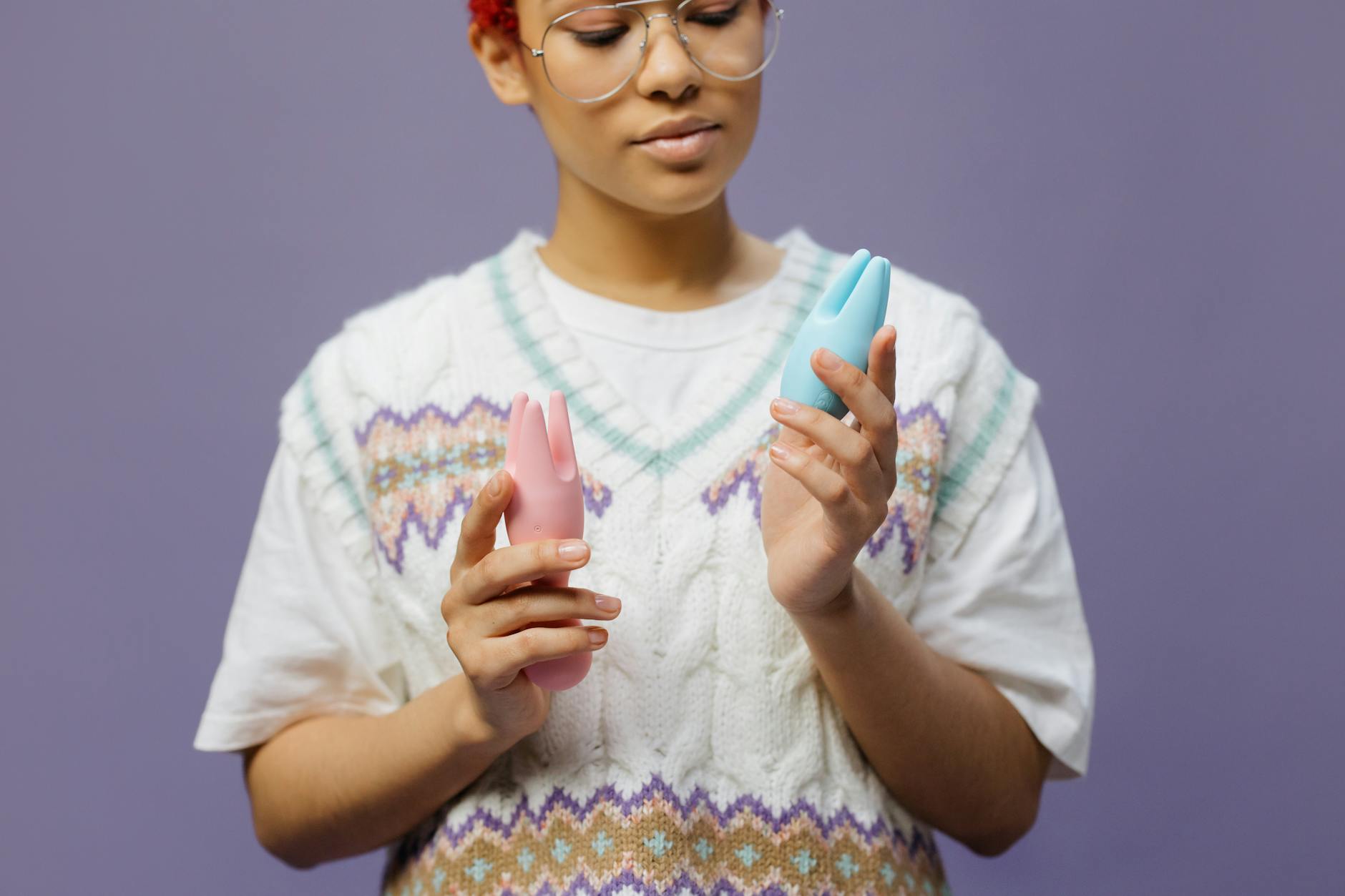
How to Use Lemon Vibrators to Regain Pleasure After Sexual Assault
Let's be real. Sexual trauma rewires what pleasure feels like. Your body doesn't just remember what happened to it. Your nervous system stays on guard, your mind disconnects from sensation, and the idea of touching yourself for pleasure can feel unsafe, impossible, or foreign.
But here's the thing. Reclaiming pleasure after assault isn't about forcing yourself back into old patterns. It's about rebuilding your relationship with sensation on your terms, at your pace, with tools that give you complete control.
That's where a lemon clitoral vibrator comes in.
I work with survivors regularly, and I've watched people use devices like the Lem to gently rewire their nervous system's response to touch. Not through willpower or positive thinking. Through small, repeated moments of safety and choice.
Why lemon vibrators work differently for trauma recovery
Most vibrators use buzzing or high-frequency vibration. They're powerful, they're fast, and for someone rebuilding trust in their body after assault, they can feel overwhelming.
Lemon clitoral vibrators, by contrast, use suction and gentle pulsing patterns. Here's why that matters for survivors.
Pattern over intensity. The lemon's air-suction technology lets you start with the gentlest setting. No aggressive vibration. No sudden jolts. Just a rhythm you can control at the very first touch. Your nervous system doesn't interpret this as intrusion. It interprets it as choice.
Emotional distance from penetration. Many survivors carry deep discomfort around any form of penetration or intrusive sensation. Lemon clitoral vibrators work purely on external tissue. There's no fantasy of invasion. Just you, your clitoris, and a sensation designed for pleasure alone.
Sensory recalibration. Trauma often dulls sensation. Survivors report feeling numb, disconnected, or "checked out" during sex. Suction-based stimulation works differently than vibration on your nerve endings. It can help retrain the nervous system to recognize pleasure as distinct from pain or threat.
The rebuild: starting small and staying in control
Forgive me, but I'm not going to tell you "just relax and enjoy it." That's useless and it puts responsibility on you for something your nervous system can't switch on through willpower.
Instead, here's the practical framework I use with my clients.
Week one: desensitization without expectation. Hold the lemon vibrator. Don't use it. Sit with it. Feel the weight, the texture, the coolness of the silicone. This is about your brain learning that this object is yours, it's safe, and nothing happens to you without your choice. Do this for a few minutes every other day.
Week two: touch on low settings. Use pattern 1 on the lemon for 30 seconds. That's it. Place it against your inner thigh, your hip, your lower belly. Anywhere except your genitals. The goal is for your nervous system to learn: "This sensation is in my control, I can stop it anytime, and it doesn't escalate."
Week three: move toward your clitoris, still on low. Start at the outer labia. Spend several sessions just there. Your vaginal tissue is deeply connected to trauma memory. Moving slowly means your nervous system has time to update its threat assessment from "this could hurt me" to "this is my choice."
Week four and beyond: allow pleasure. Only when you've done the work above should you begin exploring higher settings or longer sessions. Even then, set a timer. Give yourself an endpoint so your brain knows this experience has a defined boundary.
Does this sound slow? It is. And that's exactly the point.
Creating a trauma-informed ritual around solo pleasure
After assault, pleasure often gets tangled with shame, guilt, or the fear that you're doing something "wrong."
Building a ritual changes that. A ritual is something you choose, control, and repeat. It rewires trauma's message from "your body isn't safe" to "this is mine."
Here's what I recommend.
Set a time and space. Not random. Choose a day and time when you feel safe, rested, and unlikely to be interrupted. The predictability itself is healing. Your nervous system relaxes when it knows what's coming.
Clean the lemon vibrator first. Use warm water and a gentle soap. This isn't just hygiene. It's a deliberate, tactile act that grounds you in the present moment and reinforces your agency.
Dress intentionally. Some survivors find it helpful to wear clothes they chose specifically for this time. Not underwear. Not something triggered by a partner or past experience. Something new, soft, and purely yours.
Use a mantra or grounding phrase. As you begin, silently tell yourself something simple: "This is my body." "I choose this." "I'm safe right now." Your rational brain knows this is true, but your nervous system needs to hear it repeatedly.
Set a timer. Give yourself permission to stop anytime, but also give yourself an endpoint. "I'm doing this for ten minutes, and then I'm done." Boundaries make safety feel real.
When numbness doesn't go away
Some survivors find that even with the right device and the right ritual, sensation is hard to locate. You may feel nothing, or you may feel something but struggle to interpret it as pleasure.
This is not failure. This is dissociation, and it's your nervous system's job.
In this case, the lemon vibrator becomes a tool for sensation mapping rather than orgasm chasing.
Place the device on pattern 1 at different points: the clitoral hood, the clitoral head, the inner labia, the perineum. Ask yourself honestly: where does the sensation feel most present? Not best. Most present. Over weeks, you'll find micro-zones of responsiveness. Your body is learning to talk to you again.
If numbness persists for months, talk to your therapist or doctor. Sometimes trauma therapy paired with somatic work (like Somatic Experiencing or Sensorimotor Psychotherapy) helps rewire the disconnect faster than solo work alone.
Navigating guilt and shame
Many trauma survivors carry a belief that they "shouldn't" enjoy sex or use toys or prioritize their own pleasure. This belief often predates the assault. The assault just locked it in place.
Using a lemon clitoral vibrator for yourself is not indulgence. It's repair.
Your clitoris has thousands of nerve endings designed entirely for pleasure. That's not a design flaw. That's not sinful. That's anatomy doing its job. Assault tried to convince you your body was dangerous or unworthy. Solo pleasure with a device you control is the antidote.
Let yourself feel that. The pleasure and the rightness of it.
When you're ready to involve a partner
Some survivors eventually want to rebuild partnered intimacy. This is valid. But there's a prerequisite: you need to have reclaimed your own pleasure first.
Why? Because if your partner is your only gateway to pleasure, you're giving them back the control that trauma took from you. That's exactly backward.
Once you've spent time with the lemon vibrator and your nervous system has learned that touch can be safe and pleasurable, you can choose to share that with someone. You can show them exactly how you like to be touched. You can set boundaries. You can stop anytime.
If your partner shames you for using a lemon vibrator or any sexual tool, that's a red flag. Healing requires a partner who sees your pleasure as valid and your autonomy as non-negotiable.
The role of professional support
I want to be clear: a lemon vibrator is a helpful tool. It is not a replacement for trauma therapy.
If you're rebuilding after assault, please work with a trauma-informed therapist. Ideally someone trained in EMDR, Somatic Experiencing, or Cognitive Processing Therapy. These modalities help your nervous system actually update its threat assessment. A vibrator helps you practice new sensations. Therapy helps your brain believe it's safe.
Both together move the needle.
Pleasure as an act of reclamation
This is what I want you to hear: Your body survived something it shouldn't have had to survive. Your pleasure is not a luxury you have to earn back. It's your birthright, waiting for you to claim it.
A lemon clitoral vibrator is just a tool. But tools matter when you're rebuilding something important. It gives you structure. It gives you control. It gives your nervous system repeated evidence that touch can be safe.
Start small. Stay consistent. Be patient with your nervous system. And if you stumble, that's not failure. That's healing.
Your pleasure matters. Use the tools that help you find it.
FAQ: Rebuilding Pleasure After Trauma
How long does it typically take to feel pleasure sensations again after trauma?
There's no standard timeline. Some survivors report micro-improvements within two to four weeks of consistent, low-pressure practice with a lemon vibrator. Others need several months of work, especially if dissociation is strong. The important thing is consistency, not speed. Your nervous system doesn't rush. It updates its threat assessment gradually, through repetition and safety cues. If you're not noticing any shift after three months of regular practice, that's a sign to bring a trauma therapist into the picture.
Can I use a lemon vibrator if I have vaginismus or pelvic floor tension from trauma?
Yes, but carefully. Lemon clitoral vibrators work entirely on external tissue, so they don't trigger the same reflex contraction as penetrative stimulation. That said, if your pelvic floor is severely tensed, even gentle external vibration might cause discomfort. Start with the device fully clothed. Let your nervous system get used to the sensation without the added threat of genital contact. Once you're comfortable there, move inward slowly. And if pain appears, stop. Work with a pelvic floor physical therapist who specializes in trauma. They can help your muscles actually relax, which then makes pleasure devices feel better.
What if I feel guilty or ashamed using a lemon vibrator for myself?
That guilt is likely inherited. From family messages, religious upbringing, or shame that came before the assault and then got weaponized by it. Here's the truth: your clitoris is an organ of pleasure. Using a device designed for that is not selfish, sinful, or wrong. It's literally what your body is designed for. When shame comes up, name it out loud: "That's old programming. My pleasure is valid." Say it again. Your rational brain will eventually convince your nervous system.
Can my partner be in the room while I use a lemon vibrator during recovery?
Some survivors find having a partner present helps with safety and reassurance. Others find it adds pressure or surveillance energy that blocks pleasure. Ask yourself honestly: does their presence help me feel safer, or does it feel like performance? If it's the former, yes, have them sit quietly in the room, non-intrusively. If it's the latter, save partnered sessions for later. Right now, this is about you reclaiming your own body. Solo practice is the foundation.
Is it normal to feel nothing the first time I use a lemon vibrator?
Completely normal. Your nervous system might be too activated to register pleasure. Your brain might be dissociating as a protective reflex. Or you might just be in your head too much, waiting for something to happen. Pleasure after trauma isn't always a lightning bolt. It often starts as a small shift in sensation, a moment of "oh, I felt that," and nothing more. Celebrate that. That's your nervous system learning to trust again.
Should I tell my trauma therapist that I'm using a lemon vibrator for healing?
Absolutely. A good trauma therapist will see this as a positive step toward reclaiming your body. They can help you process emotions that come up during the practice. They can also troubleshoot if things aren't moving forward. If your therapist shames you for using a sexual device, that's a sign to find a new therapist. Healing requires non-judgment and full support.
Your body is worth the time
Healing from sexual assault is not linear. Some days you'll feel strong and capable. Other days you'll feel set back. That's normal. Your nervous system is rewiring. That takes patience.
A lemon vibrator gives you a way to practice safety, choice, and pleasure on your own terms. It's a small tool. But in the context of trauma recovery, small tools matter.
If you're struggling with where to start or how to move forward in your healing journey, reach out. Contact Hello Nancy or seek a trauma-informed therapist who can guide you through this process.
Your body deserves to feel good again.