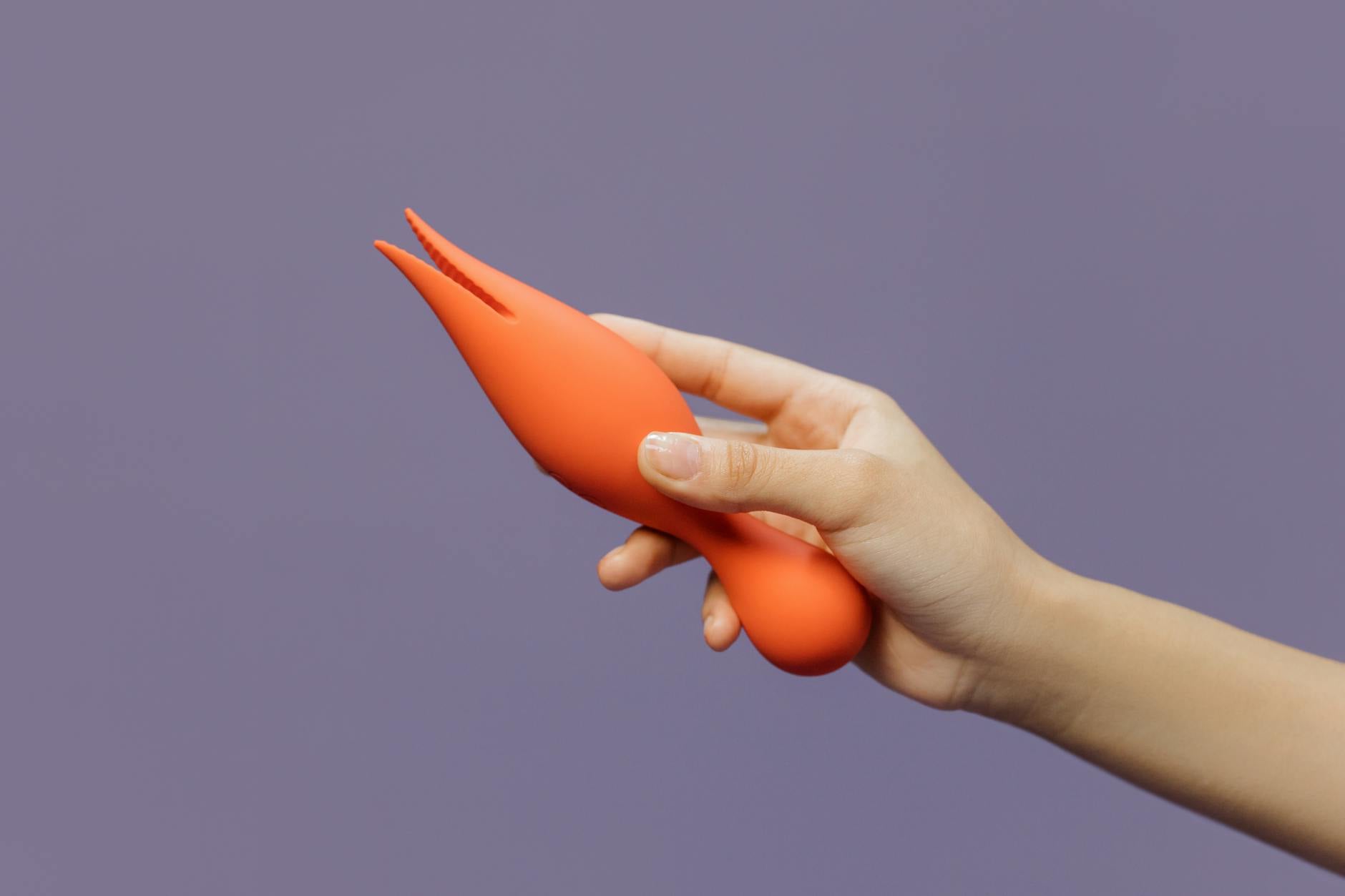
The honest truth about your first try
You bought a lemon vibrator, turned it on, held it where you thought it should go, and... nothing happened. Or worse: it felt uncomfortable, numb, or weirdly intense. Then you put it away and wondered if you're just one of those people vibrators don't work for.
Here's what I've learned after working with hundreds of people navigating this exact moment: you're not one of those people. You're probably just holding it wrong, using it at the wrong intensity, or approaching the moment with expectations that don't match how your body actually responds. All three are fixable.
Why lemon vibrators feel so different from what you expected
There's a gap between how we think vibrators should feel and how they actually feel. Most people imagine deep, rumbly vibration. The reality is more precise. Lemon clitoral vibrators use air-suction technology that targets the clitoris with waves of gentle pressure instead of traditional buzz. It's not the same sensation as fingers, and it's not the same as a wand vibrator.
This difference is the entire point. It's also why your first attempt might have felt strange.
The clitoris has thousands of nerve endings, but they're not evenly distributed. The most sensitive spots are concentrated around the opening of the clitoris, not the tip. Most people, on their first try, either aim directly at the tip (which can feel numb because there are fewer nerves there) or they grip the device too tightly, which dampens the suction effect entirely. Both lead to the same conclusion: "This doesn't work for me."
The positioning mistake almost everyone makes
You need to think about the clitoris like a flower. The visible part is the glans. Below that is the body and crura—the parts that extend internally. The most pleasurable sensation comes from stimulating the edges of the clitoral glans and the area just around it, not the tip itself.
Here's the practical adjustment:
Instead of centering the lemon vibrator directly over the clitoral tip, angle it slightly so the opening sits against the left or right edge of the glans. You should feel a seal form, but not a death grip. If your hand is shaking from tension, you're holding it too tight.
Once you've found that sweet spot, you don't move the device much. Let the suction do the work. People used to traditional vibration often want to move things in circles or up and down. With a lem vibrator, staying still is the answer.
Intensity: start lower than you think you need to
Lemon vibrators usually have multiple intensity levels, and this is where most first-timers go wrong. They assume low intensity is too weak and jump straight to level three or four. Then when nothing happens, they crank it higher.
The opposite approach works better. Start at level one. Spend three to five minutes there, even if it feels like almost nothing is happening. Your body needs time to learn what this new sensation is and to wake up to it. Arousal builds slowly, especially if you're anxious about whether this is going to work.
After five minutes at level one, move to level two. Stay there for another five minutes. Only after you've given your nervous system time to adjust should you experiment with higher levels. Most people find their sweet spot somewhere in the middle range, not at maximum.
The mental block that kills the moment
Somewhere between "this isn't working" and "maybe I'm broken" lives the thought that's actually preventing the orgasm. When you're focused on whether you're doing this right or whether it's ever going to happen, your parasympathetic nervous system—the one that handles arousal and pleasure—takes a back seat to your sympathetic nervous system, which is all about threat assessment.
You can't think your way to an orgasm. You have to feel your way there.
This is where the positioning and intensity adjustments matter so much. Once you've found the right angle and speed, your job is to let go of the outcome and just notice what's happening in your body. Pressure building. Heat. Tingling. Deepening sensation. The impulse to squeeze your thighs or move your hips.
These small shifts are signals that your body is responding. You're not failing. You're just in the early stages.
Lubrication changes everything
Your clitoris doesn't need lubrication the way a vagina does, but adding a small amount of water-based lubricant around the external clitoris can change the sensation dramatically. It helps the suction seal feel smoother and can reduce any friction or discomfort.
Use just enough to lightly coat the area. Too much and the suction breaks. The goal is glide, not slip.
Let your body warm up for at least 10-15 minutes before you introduce the lemon vibrator. Arousal takes time. Blood needs to flow to the area. Your clitoris will swell and become more sensitive. Then introduce the device.
What your body might feel instead of "orgasm"
Here's something no one tells you: orgasm doesn't always feel like a dramatic explosion. Sometimes it's a wave of release. Sometimes it's a series of pulses. Sometimes it's a moment of stillness where everything in your body stops and then softens all at once.
If you're waiting for the movie version of an orgasm, you might miss the real version happening in your body right now. Pay attention to moments of intensified sensation, involuntary muscle contractions, a pause in your breath, warmth spreading through your pelvis, or a sudden relaxation of tension you didn't know you were holding.
Many people have their first vibrator orgasm and don't immediately recognize it because it doesn't match their expectation. Then they think it didn't work. Weeks later, they realize what happened.
The partner-present scenario and why it matters
If you're exploring a lemon vibrator with a partner present, the pressure multiplies. You might worry about how you look, whether your partner is bored, or if you're taking too long. All of that tension gets in the way.
A conversation beforehand helps. Tell your partner that you're still learning how your body works with this device and that there's no timeline. You're not trying to perform an orgasm. You're exploring sensation. If your partner understands that, they can take the pressure off by engaging with the moment in a way that feels supportive, not evaluative.
Some people find it easier to explore alone first, figure out what works, and then invite a partner into that knowledge. There's no rule about this. Do what takes the pressure off.
Troubleshooting the specific sensations that feel wrong
If the device feels numb, you're probably pointing it at the tip of the glans. Shift the angle. If it feels too intense or almost painful, drop the intensity level and reposition slightly toward the side of the glans. If you feel no sensation at all, make sure the seal is forming. You should feel the suction engage.
If your body feels tense and nothing is happening after 20 minutes, stop. Take a break. Your nervous system might be in overthink mode, which kills arousal. Try again when you're less focused on the outcome. Sometimes the best orgasms happen on the second or third attempt after your body knows what to expect.
How soon should you expect results
Some people orgasm with a lemon vibrator on the first try after repositioning and slowing down their intensity. Others need three to five attempts before their body figures out what's happening. Both are completely normal. Your body isn't broken. It's just learning a new language.
The key is approaching it with curiosity instead of judgment. What sensation did I notice that time? Where exactly does it feel best? What intensity keeps me interested without overwhelming me? When did my breath change?
These observations matter more than the orgasm itself, because they teach you what your body actually wants. That knowledge carries forward into every other intimate moment, with or without a device.
People Also Ask
Why does my lemon vibrator feel numb?
You're likely aiming the suction directly at the tip of the clitoris, where nerve density is lower. Shift the device so the opening targets the side or outer edge of the glans instead. You should also check that a proper seal is forming. If your hand is too tense, the suction breaks and sensation drops dramatically.
Can you orgasm with a lem vibrator if you've never orgasmed before?
Yes. Many people have their first orgasm with a lemon vibrator because the air-suction sensation is so different from fingers or partners. That difference can actually help your nervous system recognize what pleasure feels like. Start at low intensity, give yourself at least 10-15 minutes, and focus on noticing sensation rather than chasing an outcome.
How long does it take to orgasm with a lemon clitoral vibrator?
There's no standard time. First attempts might take 20-30 minutes while your body learns the sensation. Once you've figured out your positioning and intensity preference, many people orgasm in 5-10 minutes. Stress, how aroused you are beforehand, and where you are in your cycle all affect timing.
What if a lemon vibrator just doesn't work for my body?
Some people genuinely prefer other types of stimulation. But before you decide that, try adjusting three things: positioning (move to the side of the glans, not the tip), intensity (start at level one and wait), and mindset (let go of the outcome and notice sensation instead). If you've done all three and spent time experimenting across multiple sessions, then it might not be your thing. That's okay. Other approaches might work better.
Is it normal to feel self-conscious the first time using a vibrator?
Completely normal. You're doing something new, alone or with a partner, and there's often shame or uncertainty layered on top. That discomfort makes your nervous system tense, which makes arousal harder. Give yourself permission to feel awkward. The awkwardness usually dissolves after the first or second attempt, once your brain realizes nothing bad is happening.
Why does my orgasm with a lemon vibrator feel different from other orgasms?
Air-suction vibrators create a different type of stimulation than fingers, partners, or traditional vibrators. The sensation is more concentrated and precise. Some people describe it as waves instead of throbs. You might feel it spread differently through your body. That difference is the feature, not the bug. Your body is responding to a new type of input, and over time, you'll learn what that sensation means and how to amplify it.
The bigger picture
Learning how a lemon vibrator works with your specific body is less about the device and more about learning yourself. You're gathering data about where you're most sensitive, what intensity feels good, how much time your body needs to warm up, and what helps you drop into pleasure instead of staying in your head.
That information is valuable whether you use a vibrator or not. It carries into partnered sex, solo exploration, and everything in between. You're not fixing a broken mechanism. You're learning your body's language.
If you're still stuck, reach out. We're here to help you figure this out.