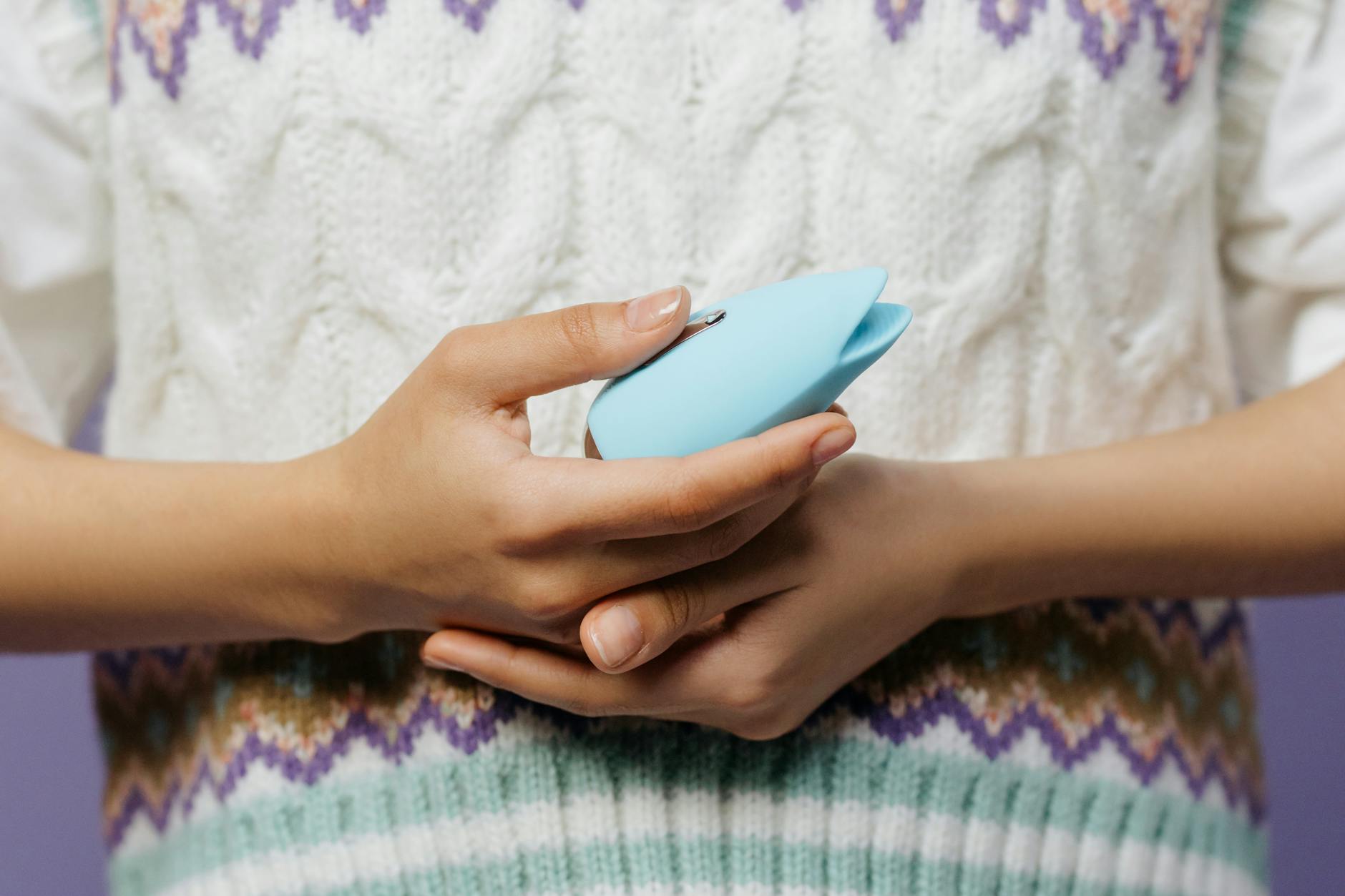
Let's talk about what solo really means
Solo pleasure sounds simple on paper. You, yourself, and whatever tool you choose. But here's what most conversations skip: the moment a partner exists in your life, solo stops being truly solo. Their preferences ghost into your experience. Their timing, their comfort level, their opinions about toys or techniques. Even when they're not in the room, they're in your head.
I've worked with countless clients who swear they can't orgasm alone, only to discover they can once they stop performing for an imaginary audience.
The weight partners unknowingly carry into your pleasure
This isn't about blaming partners. Most don't even realize they're shaping the conversation. But the dynamics are real. Some partners worry that a vibrator means they're not enough. Others suggest specific techniques or intensity levels based on what they've read. Some create a schedule around shared sexuality that leaves no room for spontaneous solo exploration. These things pile up.
When you use a clitoral vibrator alone, you're not just avoiding judgment. You're creating permission to be inefficient, messy, selfish about what feels good. You can take twenty minutes warming up. You can switch between patterns without explaining why. You can orgasm once and keep going, or stop after three minutes because you're bored. None of this requires defense.
The lemon clitoral vibrator works particularly well for solo practice because it offers precision without pretense. There's no power dynamic, no performance element, no one else's expectations in the equation.
Why solo pleasure matters more than you think
Research consistently shows that people who have a regular solo practice report better partnered sex, clearer communication about what they want, and lower rates of sexual dysfunction. This isn't accidental. When you spend time alone discovering your own pleasure, you build a baseline of what actually works for your body. No guessing. No adjusting to someone else's rhythm.
For people in relationships, solo practice also creates autonomy. Your pleasure isn't dependent on a partner's availability or mood. This takes pressure off the relationship and, paradoxically, often improves it.
Solo pleasure is also the fastest way to understand your own response patterns. Without a partner, you have no one to please but yourself, which sounds obvious until you realize how many people have never actually done that.
How to set up a solo practice that works
First: schedule it or forget it. I recommend once weekly minimum, ideally twice. Put it on your calendar if you need to. This isn't rigid obsession. It's permission. Your nervous system needs to know this time is protected.
Second: location and atmosphere matter. Locking a bedroom door is not dramatic. It's essential. Your brain needs to trust that you won't be interrupted. Soft lighting, comfortable temperature, clean space. The lemon vibrator sits on a nightstand beautifully, which sounds trivial until you realize you're not hiding it under the bed anymore. Visibility = ownership.
Third: start without pressure. Many people approach solo time like they're testing equipment. The goal isn't to orgasm. The goal is to explore sensation. Use your lemon vibrator on different patterns, different speeds, different areas. Spend fifteen minutes simply noticing what feels good versus what feels obligatory.
The mental work (which is actually the hard work)
Your brain is louder than your lemon clitoral vibrator. Most people's first barrier isn't physical. It's the internal voice saying you shouldn't take this time, or you're being selfish, or you should be doing something productive instead.
I tell clients to name this voice and then dismiss it. That's my productivity brain. That's my people-pleaser. That's my worry about what others think. None of those are me right now. This practice is about your body learning what it needs, separate from anyone else's expectations.
Some people find it helpful to set an intention before starting: I'm here to feel good. I'm here to learn what my body enjoys. I'm not performing for anyone. Repeat it quietly. Your nervous system is listening.
Common barriers and how to move through them
Guilt. You might feel like solo pleasure is selfish, especially if you're in a relationship. It's not. It's maintenance. You wouldn't skip brushing your teeth because your partner also has teeth.
Distraction. Your mind wanders to work, family, the shopping list. That's normal for the first few sessions. Gently return your attention to sensation. You're not failing. You're practicing focus.
Numbness or delayed response. If you've spent years adjusting your pleasure to a partner's pace, your body might feel slow to respond. This changes over weeks, not days. Patience matters. A lemon sucker vibrator is forgiving here because it works with your body's natural rhythm rather than forcing it.
The pressure to orgasm. This is the most common trap. Remove the orgasm as a goal. Some sessions you'll have one. Some you won't. Both are fine. Pleasure without orgasm is still pleasure, and it's often what your body actually needs.
Deepening the practice over time
After a few weeks of consistent solo time, you'll notice something shifts. You know your body better. You know what texture, speed, and rhythm actually feels good, separate from what you think should feel good. You might discover you prefer longer warm-up than you thought. Or that you enjoy patterns you previously dismissed. This data is gold.
When you're ready, you can bring this knowledge into partnered experiences. You know exactly what to ask for. You're not guessing. Many clients report that this alone transforms their partnered sex because they're no longer silently wishing their partner would do something different. They know what they want and can communicate it clearly.
Your lemon vibrators become tools for deepening your own understanding, not escapes from partnership.
What changes when you prioritize solo pleasure
Over time, you'll likely notice that you feel more connected to your own desire. That might sound obvious, but many people lose that connection early and never rebuild it. Solo practice rewires your relationship with pleasure as something that belongs to you, not something you perform for approval.
You'll also probably feel less resentful in relationships. When you're not silently wishing your partner would meet a need they don't even know exists, the whole dynamic softens. Communication becomes possible instead of impossible.
Most importantly, solo pleasure teaches you that you deserve time, attention, and intention focused solely on what feels good in your body. Not eventually. Not when the kids are older or work is less busy. Now.
Common questions about solo pleasure and lemon vibrators
Is using a vibrator solo better than using it with a partner? Neither is better. They're different experiences. Solo gives you control and self-knowledge. Partnered sex gives you connection. Both matter.
How long does it take to feel comfortable with solo practice? Most people report a shift by week three or four of consistent practice. Your nervous system needs time to trust that this is safe and allowed.
Should I tell my partner about my solo practice? That depends on your relationship. In healthy partnerships, this conversation usually happens naturally and goes well. If you anticipate resistance, talking to a therapist first might help you prepare.
What if I feel weird using a lemon clitoral vibrator alone? That's completely normal. Weirdness is often just unfamiliarity. Sit with it for a few sessions. It usually passes.
Can solo practice affect my partnered sex negatively? Quite the opposite. Research shows it improves partnered sex significantly. You become more confident, more communicative, and less dependent on your partner's performance to feel good.
How often is too often for solo practice? There's no ceiling. Some people prefer daily. Others prefer weekly. Listen to what feels sustainable and pleasurable, not obligatory.
Moving forward
Solo pleasure isn't about rejecting partnership or becoming self-sufficient in ways that damage connection. It's about building a relationship with your own body that doesn't require outside approval or validation. When you know what feels good, when you've taken time to understand your own desire, you show up differently in every other relationship in your life.
Start small. Twenty minutes once a week. No goals except presence. Your lemon vibrator is just a tool. The real work is permission. Give yourself that first, and everything else becomes possible. If you're navigating more complex relationship dynamics around pleasure and autonomy, reaching out can help you untangle the patterns that keep pleasure feeling forbidden or dependent.