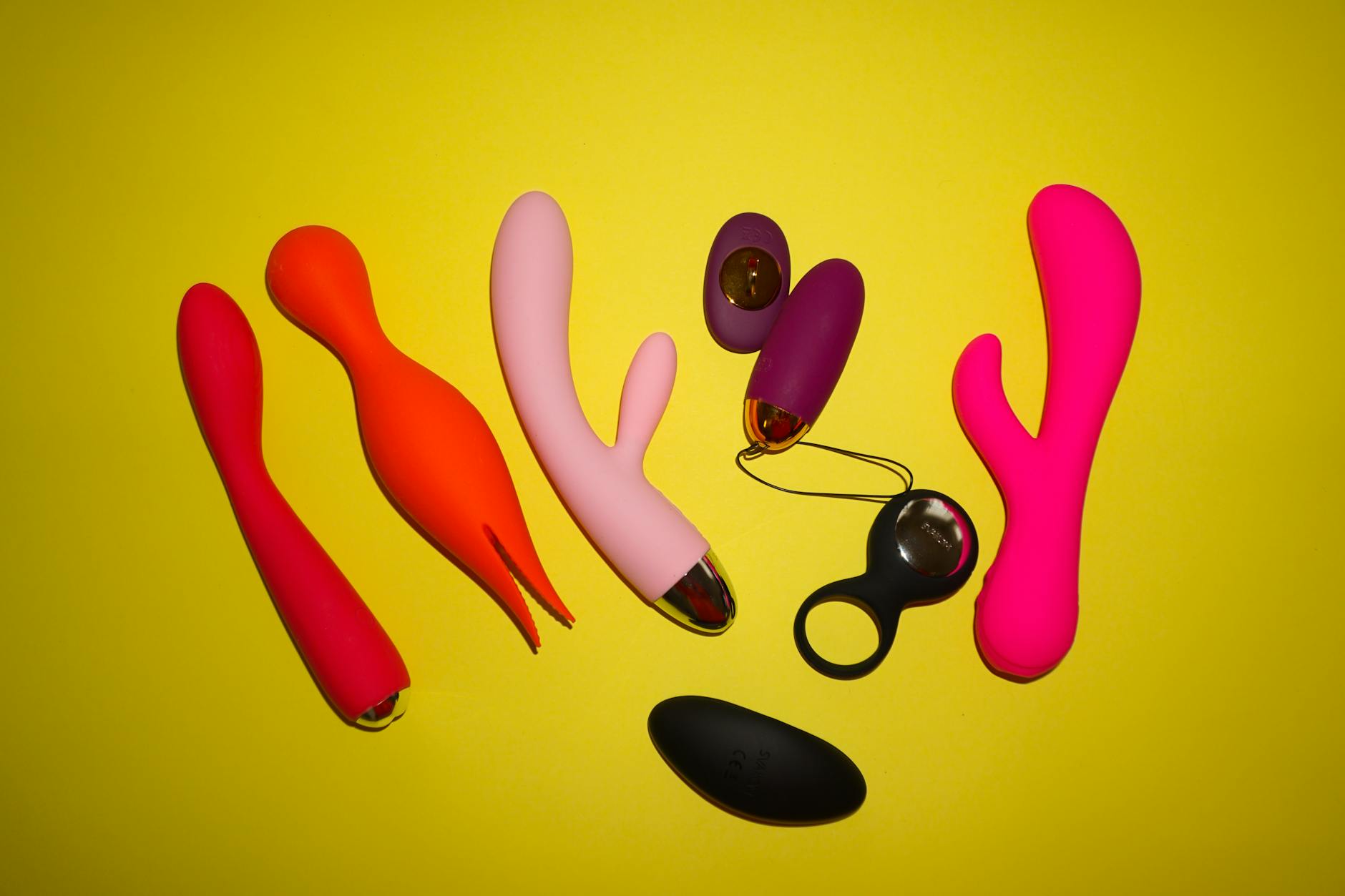
Here's what anxiety actually does to your body
Let's be real. Anxiety doesn't just live in your head. It lives in your nervous system, and it absolutely hijacks your capacity to feel pleasure. When you're stuck in fight-or-flight mode, your body deprioritizes sensation. Blood flow pulls away from your extremities and your genitals. Your brain gets noisy with threat-detection. Touch that should feel electric feels distant, muted, like you're experiencing your body through a fog.
This isn't a character flaw. It's neurobiology.
The problem is that pleasure requires what's called "parasympathetic activation." That's the rest-and-digest branch of your nervous system. Anxiety keeps you locked in the sympathetic branch, the alert state. And when those two systems are competing, parasympathetic always loses.
But here's the part nobody tells you: certain types of stimulation can actually override that stuck pattern. And lemon vibrators, specifically their suction-based approach, work differently on an anxious nervous system than traditional vibrators do.
Why traditional vibrators sometimes make anxiety worse
A standard vibrator sends constant, predictable stimulation. For a calm nervous system, that's rhythmic and grounding. For an anxious one, it can feel repetitive, almost irritating. Your brain is already in scan mode, looking for threats. Predictable buzz can feel like background noise your system decides to filter out entirely.
Worse, if you're anxious about "performing" or reaching orgasm (which anxiety loves to do), the pressure of a vibrator grinding away can actually deepen that sense of disconnection. You're waiting for something to happen instead of actually feeling what's happening.
Lemon suction vibrators change the equation. Instead of constant vibration, they create waves of pressure and release. That dynamic, changing rhythm actually catches your nervous system's attention in a good way. It's not predictable, so your brain can't tune it out. It's also less likely to trigger performance anxiety because the sensation itself is novel and interesting.
How the lemon approach rewires sensation
Think of your clitoral nerves like a radio frequency that anxiety has been scrambling. Suction stimulation works like tuning into a clearer frequency. The pressure-release cycle mimics the way your body naturally builds arousal. It's closer to how manual stimulation feels when you're relaxed, but with more consistent intensity and control.
When you're numb from anxiety, you need stimulation that cuts through the fog without adding pressure. Lemon clitoral vibrators do this by delivering concentrated, rhythmic pressure in a way that feels active and engaging rather than passive and waiting-for-it-to-happen.
Here's what happens neurologically: the novel sensation draws your prefrontal cortex (the thinking, worried part) away from threat-detection. Simultaneously, the pressure signals activate touch receptors that feed directly into pleasure pathways. You're literally redirecting neural traffic away from anxiety and toward sensation.
The practical setup that actually works
Start by separating pleasure from outcome. This matters more with anxiety than anything else. You're not going for an orgasm yet. You're going for reconnection.
First, pick a time when you feel slightly calmer than your baseline. Not zen. Just not mid-panic. A weekend morning, after a walk, after a shower. Anything that's dropped your heart rate a notch.
Second, create actual physical safety. Close the door. Silence your phone. Make the temperature comfortable. Anxiety is acutely aware of vulnerability, so your environment needs to signal "I'm not at risk of being interrupted."
Third, start with external only. Lie back. No performance goal. No timer. Bring the lemon vibrator to the external area around your clitoris, not directly on it. Start on the lowest setting. Your nervous system is already suspicious. It needs time.
This is where lemon vibrators shine for anxious bodies. The suction sensation itself is distracting in the best way. It gives your brain something specific to track that isn't "Am I doing this right?" or "Why isn't anything happening?"
The sensation-first approach
Anxiety thrives on goal-orientation. So kill the goal. Instead, do a three-minute scan.
Notice where you feel the stimulation most intensely. Usually it's in the clitoral head itself, sometimes in the surrounding area. That's your body telling you where it's waking up first. That's your entry point.
Once you've found it, stay there. Don't move around. Don't chase sensation. Let your body learn that it's safe to feel. Stay at that lowest or second-lowest setting for five to ten minutes. Yes, that's longer than feels productive. That's exactly the point. Anxiety hates patience, so patience is the antidote.
Many people with anxiety report that after five minutes of this, something shifts. Not an orgasm. Just a felt sense of being present in their body. That's the parasympathetic system starting to wake up. That's the entire win at this stage.
Building from sensation into pleasure
Once you've spent a few sessions just getting reacquainted with sensation, you can add progression. This is where you move from "I can feel this" to "I want more of this."
Increase intensity by one notch. Not to the max. Just one notch. Do another five to ten minutes. Your body is learning that it's safe to turn up the volume without spinning into overwhelm.
Then, if you want, introduce very gentle movement. Side to side, not pumping. Slow circles. The idea is that you're combining the lemon vibrator's steady pressure with tiny navigations. This gives your brain an active role (you're steering, not just receiving) which often helps anxious nervous systems feel more in control.
Several sessions into this progression, your body usually starts asking for more on its own. Arousal begins flowing. That's when lemon clitoral vibrators really shine for anxious folks. Because the stimulation is already working, your brain doesn't have to white-knuckle trying to make something happen. You're just riding what's already building.
The pacing piece that changes everything
Anxiety often rushes to climax because the body is so disconnected it needs maximum intensity to feel anything at all. Lemon vibrators actually help you slow down, because the sensation is already significant at lower settings.
This matters because deeper orgasms require parasympathetic activation. And parasympathetic activation requires that you actually stay present for what's building instead of abandoning ship when the intensity gets uncomfortable.
With a lemon suction vibrator, you can build very slowly and stay interested because the sensation keeps shifting. It's not monotone. Your nervous system stays engaged. That engagement is what allows for deeper release.
When you do reach orgasm, it's often qualitatively different. Not necessarily longer, but more textured. More present. Because you've been training your nervous system to stay in sensation mode instead of checking out.
When to bring a partner in
If you're in a relationship or with a regular partner, timing matters. Don't try to integrate lemon vibrators into partnered sex until you've done the solo groundwork. You need to prove to your nervous system that sensation is safe first.
Once you've had a few sessions alone where things felt good, you can tell your partner what you've been exploring. The specific framing helps: "I've been learning how my body responds when I slow down. I'd like to keep doing that, and I'd like you in the room with me."
Then, you do exactly what you've been doing solo. They just watch at first. Or sit next to you. Presence, not performance. This teaches your nervous system that you can be vulnerable and safe simultaneously. That's the opposite of what anxiety usually believes.
Only after a few sessions of that do you start to invite more active partner participation. And even then, you're leading. You're showing them what pressure, what rhythm, what pacing works.
This scaffolding feels slow. It is slow. But it's also the fastest way to actually rewire an anxious nervous system around pleasure because you're building from the foundation up instead of fighting your system into compliance.
When your numbness is also dissociation
There's a difference between anxiety-numbness and dissociative-numbness. They overlap, but they're not identical.
If you're noticing that you check out entirely during sex, that you can't remember the middle part, that your body feels truly unfamiliar to you, or that you go somewhere else mentally, you might be dealing with dissociation. That requires different support. A therapist or somatic practitioner trained in trauma can help you establish grounding first. A lemon vibrator can absolutely be part of that toolkit, but it's not the only tool you need.
For pure anxiety around pleasure, the lemon vibrator works as a bridging device. For dissociation, it works best when paired with professional support and grounding techniques.
The consistency part nobody wants to hear
Your nervous system doesn't rewire in one session. Three sessions. Or ten. It's more like a practice, the same way therapy or meditation are practices.
Using a lemon vibrator to reconnect sensation when anxiety is numbing you requires showing up multiple times. Two to three times a week for at least a month before you'll notice real shifts. Your brain is literally building new neural pathways. That takes repetition.
The upside is that each session gets easier. Your nervous system becomes more trustful. The numbness starts to lift not just during sex, but in your daily life too. Because you're training your system that sensation is safe and available.
Honestly, that's bigger than the orgasms. Though you'll probably get better ones of those too.
People also ask
Can anxiety completely kill the ability to orgasm?
No. But it can make orgasm feel distant or require so much intensity that it's exhausting. Your nervous system isn't broken. It's just protective. Lemon clitoral vibrators work well for anxiety because they provide interesting, novel stimulation that can redirect your nervous system's attention away from threat-scanning and toward pleasure. The key is patience and building sensation gradually instead of chasing outcome.
How long does it take to feel less numb?
Some people report changes within two to three sessions. Others take four to six weeks of regular practice. Nervous systems are individual. What matters is consistency, not speed. If you're using a lem vibrator two to three times weekly and creating a calm environment, you should notice shifts in sensation within a month.
Is this numbness permanent?
No. Numbness from anxiety is your nervous system's protection mechanism, not a permanent change to your body. With the right approach and tools, sensation comes back. Lemon vibrators help because they provide consistent, engaging stimulation that your brain can't easily tune out or dismiss, which helps break the pattern of disconnection.
Should I use a lemon vibrator if I'm also in therapy for anxiety?
Yes. In fact, pairing this with therapy is ideal. If you're working with a therapist on anxiety, you're addressing the root. A lemon vibrator is a somatic tool that helps your body learn pleasure is safe. They support each other. Just mention it to your therapist so they can help you integrate it into your broader anxiety work.
What if the vibrator itself triggers anxiety?
Then start slower and smaller. Some people do better with external-only first, no insertion. Some do better with the lowest settings for longer than feels natural. Others need to start with manual touch and work toward the vibrator weeks later. There's no wrong pace here. Your nervous system's comfort is the only metric that matters.
Can lemon vibrators help if I have trauma history?
They can be part of healing, but trauma work needs professional support. A trauma-informed therapist or somatic practitioner should help you establish grounding and safety before you integrate any new sensation. Once you have that foundation, lemon vibrators can be a tool for reconnecting with your body. Don't skip the professional part.
The real shift
Using a lemon clitoral vibrator when anxiety has numbed your sensation isn't about forcing pleasure. It's about creating the conditions where your nervous system feels safe enough to let pleasure through. That's slower and less dramatic than blasting yourself with maximum intensity. But it's also the path that actually sticks.
Your body isn't broken. It's just protective. And protection can shift when you prove to your system that sensation and safety can coexist. That's what this practice does.
If you're interested in exploring this further or want to talk through what approach might work for your specific situation, reach out to us. We're here to help you figure out what serves your body and your peace of mind.