Let's talk about what nobody tells you about pleasure after divorce
Divorce rewires more than your living situation. Your nervous system has learned, over months or years, to associate intimacy with conflict, obligation, or flatness. Your body might feel like a stranger's instrument now. And honestly? That's completely normal.
Rebuild doesn't mean jumping back into what used to work. It means starting from zero with curiosity instead of expectation. A lemon clitoral vibrator is not a magic fix. But it is a tool designed specifically for reconnecting with sensation without pressure, which is exactly what you need right now.
Why lemon vibrators work particularly well during this transition
Lemon vibrators use suction technology, not friction. That matters because your body has spent the last phase of your marriage (or longer) in a stress state. The pelvic floor tightens. Tissue sensitivity shifts. Arousal doesn't build the way it used to. Suction stimulation works differently than traditional vibration.
Here's the practical difference: traditional vibrators require a baseline of arousal and comfort to feel good. Suction devices like the lemon work on the principle of creating gentle, rhythmic sensation that doesn't depend on you being "ready" first. It's not about friction or depth. It's about nerve activation and blood flow.
That's huge when you're rebuilding.
Beyond the mechanics, lemon clitoral vibrators are intentionally designed to feel like something new. You're not trying to recreate the past. You're learning your body in a different way, with a different tool, in a different chapter of your life. That psychological separation is more powerful than the vibration itself.
The mental reset you need before you begin
This is the most important part, and I say this as someone who's spent twenty years helping people navigate relationship transitions.
You need permission to explore solo pleasure without guilt, without trying to fix anything, and without measuring it against what came before. Divorce often leaves us feeling broken. Solo pleasure feels like admitting defeat or indulgence. It's neither. It's biological maintenance and emotional reclamation at the same time.
Set a boundary with yourself: this time is for sensation, not for reaching a goal. Not for proving you still work, not for achieving an orgasm, not for "healing through pleasure." Just sensation. Temperature, pressure, rhythm, how your body responds when the stakes are zero.
If you find yourself feeling numb or flat, that's not failure. That's information. Your nervous system needs time. Some people rebuild pleasure in weeks. Others take months. Both are fine.
How to actually start using a lemon vibrator post-divorce
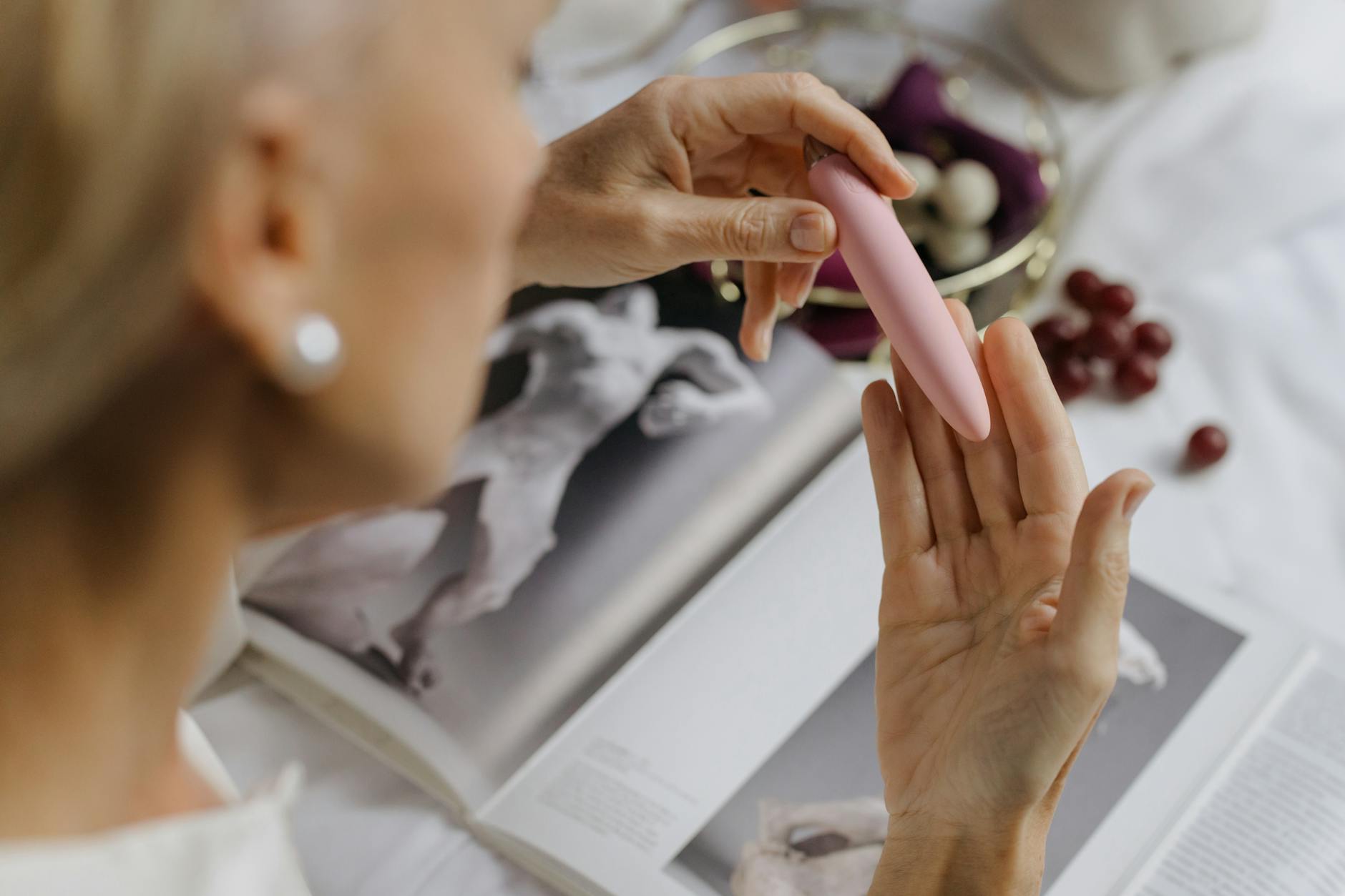
Step one: Become familiar with it outside the bedroom. Hold it. Look at how it's designed. Charge it (check the manual). Run your thumb over the opening. This sounds basic, but your nervous system needs to recognize this as a tool, not a weapon or a reminder of loneliness. Familiarity kills the weird.
Step two: Start with no expectations. Not during a moment when you're trying to feel sexy or when the kids are asleep and you've blocked time for "self-care." Just when you're showering or lying in bed and you have five minutes. Wet your finger, experiment with how the suction feels on your forearm first. Get used to the sensation on neutral skin.
Step three: Begin on the lowest setting. Most lemon vibrators have multiple intensity levels. Start at level one. The goal isn't intensity. It's reconnecting with the sensation of touch that's intentional and designed for you.
Step four: Give yourself a minimum of three sessions before you decide how you feel. One session means nothing. Your body is gathering information. After three, you'll know if it resonates.
The emotional part nobody talks about
You might cry. You might feel rage. You might laugh out of nowhere. You might feel absolutely nothing, which can be more unsettling than any emotional response.
All of these are normal during post-divorce intimacy rebuilding. Your body is releasing something. Whether it's tension or grief or disconnection, it needs to move through you. Don't pathologize it. Let it happen.
If pleasure feels genuinely impossible after several weeks of trying, talk to a therapist or doctor. Depression, trauma, or hormonal shifts can all suppress arousal. A lemon vibrator can't fix those. But recognizing you need other support is wisdom, not weakness.
When to bring a partner into the process (if that's on the horizon)
Don't. Not yet. This rebuilding is for you.
If you're dating or in a new relationship, the worst thing you can do is invite a partner into your pleasure discovery before you've reconnected with yourself. You'll fall back into the pattern of calibrating your experience around someone else's response. That's exactly what you're trying to unlearn.
Use this time to learn what actually feels good to you, independent of an audience or a partner's timeline. Once you know that, sharing becomes a choice, not a default.
The practical care side (it matters)
Lemon clitoral vibrators are usually silicone, which means:
Wash with warm water and mild soap after each use. Air dry completely before storing. Keep it away from extreme heat. Store in a cool, dry place. If it's rechargeable, don't let the battery drain completely before charging.
This isn't just hygiene. It's respect for the tool and for your body. Caring for something intentionally is part of the ritual of reclamation.
The timeline is yours alone
Divorce steals a lot from you: security, routine, identity, sometimes financial stability. Pleasure should be the one thing you get to define entirely on your terms. No rush. No comparison to anyone else's timeline. No judgment if it takes time or if it feels weird or if some days feel impossible.
You're not trying to prove anything. You're just reconnecting with sensation in a new body, in a new life, at your own pace. A lemon vibrator is a tool for that. Not a solution. Just a tool.
Frequently Asked Questions
Can I use a lemon clitoral vibrator right after my divorce is finalized?
Physiologically, yes. Emotionally, that depends entirely on where you are. Some people need time to process before they want to reconnect with pleasure. Others find it grounding. There's no right timeline. If you're curious and the idea doesn't feel activating in a bad way, there's no harm in exploring gently. If the idea brings up shame or dread, wait. Your gut is telling you something.
Will a lemon vibrator help if I feel completely numb down there?
Numbness is often a sign that your nervous system is still in protection mode. That's not a flaw in the vibrator. It's your body's way of managing. A lemon vibrator might help you gently wake up sensation, but it's not a guarantee. If numbness persists beyond a few weeks, talking to a pelvic floor physical therapist or a sex-positive therapist can help identify what's underneath it. Sometimes it's trauma. Sometimes it's depression. Sometimes it's just time.
Is using a lemon vibrator solo considered weird or unhealthy after divorce?
Not by any clinical standard. Self-pleasure is normal across every life stage and relationship status. If you're experiencing shame around it, that's usually internalized messaging, not reality. Your nervous system needs to know that pleasure is for you. Solo exploration, with or without a tool, is one of the healthiest ways to send that message to yourself.
How often should I use it while rebuilding?
There's no prescription. Some people find once or twice a week feels good. Others prefer spontaneous, whenever-the-mood-strikes. Others don't use them regularly at all. The goal isn't frequency. It's reconnection. If you find yourself using it as avoidance (escaping emotions instead of feeling them), that's worth noticing. If you're using it as a genuine source of body reconnection and pleasure, use it as often as feels right.
Can I use a lemon vibrator if I'm taking antidepressants or anti-anxiety medication?
Yes, though some medications can suppress arousal or make orgasm harder to reach. That's a medication side effect, not a vibrator failure. If you've noticed dampened sensation since starting a new medication, talk to your prescriber. They might be able to adjust timing, dosage, or the medication itself. In the meantime, exploring sensation with a lemon vibrator (without the pressure of reaching an outcome) can help you stay connected to your body even if arousal feels different.
What if I use it and feel guilty or ashamed afterward?
That's often residual conditioning from the marriage, or sometimes from family-of-origin messages about sexuality. Shame after solo pleasure is not about what you did. It's about what you were taught to believe about your own body. Work on that belief, not on the pleasure. A therapist who specializes in sexuality or relationship recovery can help you untangle it. The vibrator didn't cause the shame. It just surfaced something that was already there.
You're not starting over. You're starting fresh
There's a difference. Starting over means going backward, trying to replicate what worked before. Starting fresh means building something new with what you know now.
A lemon vibrator is a small tool for a big job: telling your body that it belongs to you now. That pleasure is allowed. That you're worth the time, the care, and the gentle reconnection.
If you have questions about how to integrate pleasure back into your life after major relationship transitions, we're here to talk. Reach out anytime at /contact.
Sources
- Gottman Institute. (2023). Rebuilding Trust and Intimacy After Separation.
- American Association of Sexuality Educators, Counselors and Therapists. (2022). Sex-positive mental health framework.
- Pelvic Health and Rehabilitation Center. (2024). Nervous System Recovery and Sexual Response.
- Nobre, P. & Pinto-Gouveia, J. (2006). Emotions during sexual activity. Journal of Sexual & Marital Therapy, 32(3).