Here's the thing about vibrator intensity
When you first open a lemon vibrator, you're usually thinking about one question: does it work? What most people miss is a second, equally important question: at what intensity does it work best for you specifically?
Intensity isn't one-size-fits-all. Your tissue sensitivity, arousal level, hormonal phase, and what you're doing with your partner all change what feels good. Picking the right intensity is the difference between "this is nice" and "I need to use this again tomorrow."
Why intensity matters more than you think
The lemon vibrator is built on suction technology, not vibration. That's the whole point. But suction comes in degrees. Pattern 1 on your lemon clitoral vibrator is gentler suction with a slower pulse. Pattern 7 is intense, rapid suction that pulls and releases quickly. They're technically the same device doing fundamentally different things to your tissue.
Most people default to "high = better." That's backwards. High intensity on sensitive tissue can feel overwhelming, numb you out, or even cause discomfort. Low intensity, by contrast, might feel like nothing at first. But if you understand what you're actually looking for, low intensity often delivers more sensation because you can feel the nuance.
Here's what changes your ideal intensity: hormones shift your tissue sensitivity throughout your cycle. Stress tightens your pelvic floor, which needs gentler suction to warm up. Age and estrogen levels change what feels responsive. If you're taking antidepressants that flatten sensation, a higher intensity might actually feel right for you, not wrong.
The arousal ramp and why starting low matters
One of the biggest mistakes I see is jumping straight to intensity 5 or 6. Your tissue needs invitation, not assault.
When you're starting arousal, your clitoris is partially withdrawn under the hood. The tissue is less engorged, less sensitive. If you hit it with pattern 5 suction right away, two things happen: it feels like nothing (because the tissue isn't ready), or it feels too sharp (because you're not yet aroused enough to interpret it as pleasure).
Instead, start at pattern 1 or 2. Spend 30 seconds to 2 minutes here. You're not trying to orgasm yet. You're waking up the tissue, increasing blood flow, letting arousal build. Your clitoris will start to swell. You'll feel more sensation. Then increase by one pattern.
This isn't prolonging pleasure for nothing. It's actually shortening your path to orgasm because your tissue is ready when you finally build intensity. Plus, you're teaching your body to recognize pleasure as a gradient, not a switch.
Pattern versus intensity: what's the difference
The lemon vibrator has two things you can control: intensity (patterns 1-7) and pulse speed (how fast the suction releases and resets). Different patterns feel different even at the same intensity.
Pattern 1 is steady, gentle suction with a slow pulse. It feels like continuous, almost meditative pressure. Good for warm-up, good for sensitive tissue, good when you want to last longer.
Pattern 3 is moderate. The pulse speeds up a bit. More sensation without being jarring. This is where a lot of people land for everyday pleasure.
Pattern 5 onwards gets intense. The suction pulls harder, releases faster. If arousal is already high and tissue is engorged, this is good. It creates that intense focus that leads to strong orgasms.
Pattern 7 is peak intensity. It's not for everyone, and it doesn't need to be. Plenty of people never use pattern 7 and have incredible experiences.
Tissue sensitivity 101
Your clitoris has about 8,000 nerve endings. But nerve sensitivity varies wildly depending on your state.
Some people are naturally more sensitive. Their tissue responds to light touch immediately. For them, starting at pattern 1 and moving to pattern 2 or 3 might be plenty. Going higher can actually desensitize them because the stimulus is too much.
Other people have naturally less sensitive tissue, or their sensitivity has dropped due to hormones, medication, age, or stress. For them, starting at pattern 1 feels like nothing. They need to build to pattern 4 or 5 to feel real pleasure.
Here's what matters: neither is wrong. And it can change. After hormonal shifts like stopping birth control, your sensitivity baseline might shift. After stress, your tissue might feel duller for a few weeks. After a good night's sleep and time to decompress, you might feel everything more vividly.
This is exactly why learning your intensity range matters. You're not looking for one magic setting. You're building awareness of what your body needs on this day, at this moment.
How to test intensity without the guessing game
Start slow and solo. This matters because partner pressure (real or imagined) makes you tense, which makes tissue less sensitive.
Set aside time when you're relaxed, maybe after a shower, when you know you won't be interrupted. Start at pattern 1. Give it at least 2-3 minutes. Get curious. Does it feel like something? Too gentle? Just right? Take notes mentally.
Then try pattern 2. Wait another 2-3 minutes. You're mapping your sensitivity, not chasing orgasm.
Keep going up one pattern at a time until you find the point where it stops feeling good and starts feeling like too much. Maybe it's pattern 4. Maybe it's pattern 6. That's your ceiling for right now.
Now go back down one pattern. That's your sweet spot for this session.
Do this a few times. You'll notice patterns. Maybe you always peak at pattern 3. Maybe on some days you can go to pattern 5, other days pattern 3 is perfect. That variability is data, not failure.
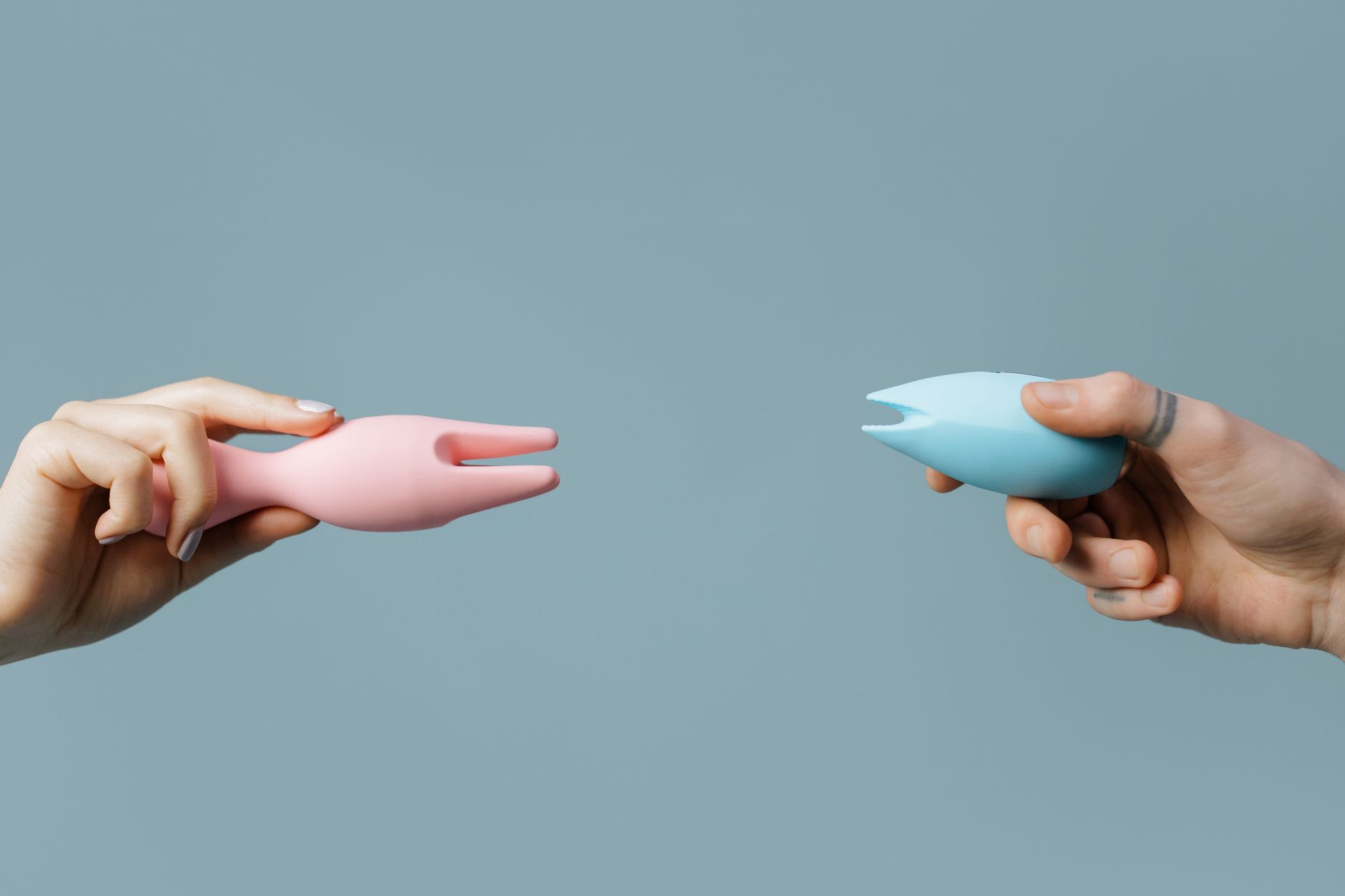
Photo by cottonbro studio on Pexels
Intensity and cycle phases
If you menstruate or have hormonal cycles, your tissue sensitivity changes throughout the month.
Right before your period, when estrogen is dropping and progesterone has bottomed out, tissue tends to be less sensitive. You might need higher intensity or longer warm-up time. Some people find that pattern 1 feels like nothing, so they jump to pattern 4.
Right after your period, when estrogen starts rising, sensitivity often climbs. You might find that pattern 2 suddenly feels amazing when pattern 3 was your go-to.
Around ovulation, when estrogen peaks, sensitivity is usually highest. This is when people often achieve orgasm fastest, with lowest intensity.
You don't need to track this obsessively. But paying attention means you're not confused when pattern 3 feels different on day 5 of your cycle versus day 20. Your body isn't broken. Your hormones are just doing their job.
Intensity with partners
If you're using a lemon clitoral vibrator with a partner, intensity gets more complicated because you're managing both your pleasure and their expectations.
Here's what I tell couples: start with intensity lower than you think you need. Your partner can watch what happens, feel the suction against them if they're inside you, and adjust based on your response, not your instructions. If you start at pattern 7 and need to back off, you've both overshot.
If you start at pattern 2 and your partner sees you respond, relaxes, and then you build up together, you're both learning your rhythm at the same time.
Also: your ideal solo intensity is probably not your ideal partnered intensity. When someone else is stimulating you externally, that's additional sensation. You might need lower intensity on the lemon because the overall input is already higher. This is normal.
Red flags that your intensity is wrong
If you're experiencing pain, numbness, or frustration, intensity is likely the culprit.
Pain during use means either you're too dry (add lubricant), or the intensity is too high for your current arousal level (back off a pattern). Sharp pain, burning, or persistent aching after use means stop and reassess. That's your body saying no.
Numbness is sneakier. You'll feel the vibrator, but not pleasure. It feels like you're going through the motions. This usually means intensity is too high for too long. Try lowering by one pattern. Try shorter sessions (5-10 minutes instead of 20). You're not numb forever. You're just overstimulated right now.
Frustration, like "why isn't this working," often means intensity is too low and you're expecting it to feel good without enough stimulus. Go up a pattern. Warm up longer. Both are valid fixes.
The truth about chasing intensity
There's a myth that "real" pleasure requires high intensity. That's wrong.
Some of the most satisfied people I work with do their best work on patterns 1-3. They've learned to notice nuance, to stay present, to let arousal build naturally. When you're not chasing sensation, pleasure deepens.
Higher intensity has its place. It's fast, it's focused, it gets you to orgasm quickly. Sometimes that's exactly what you want. But it's not inherently better than slower, lower-intensity pleasure. Different tools for different moods.
The goal isn't to find the highest intensity your body can handle. The goal is to find the intensity that makes you feel good, that you want to come back to, that fits your body on this day.
FAQ: Intensity and the lemon vibrator
What if pattern 1 feels like nothing?
Your tissue might need more warm-up time, or your baseline sensitivity is lower. Try spending 5 full minutes at pattern 1 with plenty of lube. If it still feels like nothing, jump to pattern 3 and work from there. Everyone's starting point is different.
Can I damage my tissue by using high intensity too much?
Not damage, exactly, but you can overtax your tissue. If you use pattern 7 for 30 minutes every day, you might notice that your tissue feels less responsive after a few weeks. This is temporary desensitization, not permanent damage. Back off for a week or two, return to lower intensity, and sensitivity usually bounces back.
Does intensity matter if I use a lemon vibrator with a partner inside me?
Absolutely. Lower intensity often feels better because the total stimulation is higher. Plus, your partner can feel the suction rhythmically, which is different from when you're using it solo. Start lower than you think you need.
My intensity preference changes from day to day. Is that normal?
Completely. Stress, sleep, hormones, hydration, and a dozen other factors change your sensitivity. A pattern that felt perfect last week might feel too intense today. That's not inconsistency. That's your body communicating what it needs right now.
What if my partner prefers higher intensity but I prefer lower?
You don't have to use the same setting. Use different patterns for solo sessions versus partnered sessions. Or use the lemon on yourself at your preferred intensity while your partner does something else. Pleasure isn't a team sport where you both have to be on the same page.
Does the lemon vibrator intensity feel different than other clitoral vibrators?
Yes. Suction feels fundamentally different from vibration. Because of that, your ideal intensity on a lemon vibrator might be completely different from your ideal intensity on a traditional vibrator. They're different tools. Test fresh.
Finding your intensity is self-knowledge
Choosing the right intensity for your lemon vibrator isn't a one-time fix. It's an ongoing conversation between you and your body. Some days you're pattern 2. Some days you're pattern 5. Some seasons, you're pattern 3 consistently.
The best intensity is the one that makes you feel like yourself. Pleasure should feel like permission, not performance. When you stop guessing and start listening, you find it.
If you're still figuring out what works for you, or if something isn't clicking with your current approach, we're here to help. Reach out to our team and let's talk through what might be off.