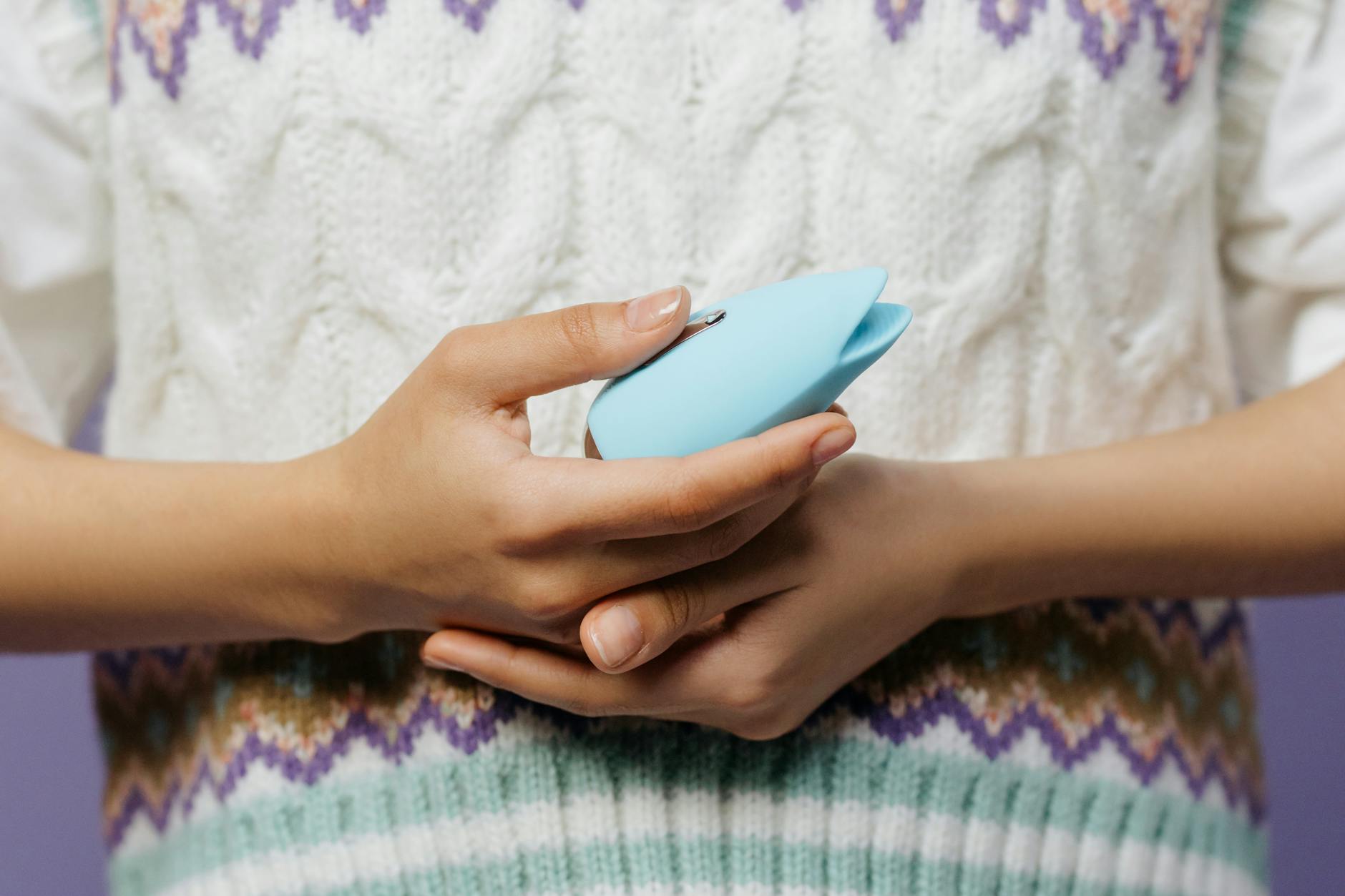
Let's start with the tension that everyone feels but nobody names
You want to use a lemon vibrator. You might already own one. But your partner doesn't know, and the silence is starting to feel heavy. You're not doing anything wrong. Your body, your pleasure, your solo time. And yet. The secrecy creates this low-grade anxiety that erodes both the experience and the relationship.
Here's what I've learned from a decade of couples therapy: the problem isn't the vibrator. It's the story you're telling yourself about what the vibrator means.
Why you might be keeping it quiet
There are real reasons. Some people grow up in relationships where solo sexuality is treated as a betrayal or a symptom of something broken. Some partners genuinely do respond badly to vibrators, turning the conversation into a referendum on the relationship's adequacy. Some people just value privacy the same way they value a locked bathroom door. That's legitimate.
But here's the thing that trips most couples up: you're probably not keeping it quiet because the vibrator is actually a problem. You're keeping it quiet because you're afraid of what revealing it will mean about you, about your partner, about the relationship.
Those are different conversations, and they need different handling.
The neuroscience of solo pleasure in a partnership
Using a lemon clitoral vibrator alone doesn't diminish your attraction to your partner. It doesn't mean the relationship is failing. It means your nervous system has discovered something that helps it feel good, and your brain isn't wired to stop wanting that just because you're coupled.
Clitoral suction toys like the Lem work by stimulating nerve endings in a way that's often more concentrated and controllable than partnered touch. It's a different experience entirely. Riding a bike feels different than swimming, but you don't stop swimming because you have a bike.
Here's the part that matters: when you use a vibrator solo, you're learning your own body. You're discovering what works, what rhythm builds arousal, what sensations translate into your partnered sex. That knowledge makes partnered sex better, not worse. Full stop.
The difference between privacy and secrecy
Privacy is healthy. It's knowing that your body belongs to you first. Secrecy is something else. It's the withholding that happens because you believe disclosure would cause harm.
If you're using a vibrator and choosing not to mention it because you value your solo time and your partner respects boundaries, that's privacy. That's fine.
If you're using a vibrator and hiding it because you're afraid your partner will feel inadequate, or angry, or betrayed, that's secrecy. And secrecy creates a little gap in the relationship that grows wider over time.
When to keep it private
Your solo sexual pleasure doesn't require your partner's permission or even their knowledge. This is true. You're an autonomous person. Your privacy matters.
If your partner has explicitly said they don't want to know about your solo practices, or if you've collectively decided that privacy around solo sexuality is a boundary you both respect, you're not being deceptive. You're honoring a mutual agreement.
If your partner has a history of using your sexual preferences as ammunition in arguments, or of shaming you for wanting solo time, keeping it private protects your wellbeing. That's not secrecy. That's self-preservation.
If you're simply not mentioning it because it hasn't come up naturally and you don't feel the need to announce every aspect of your private life, that's also fine. You don't owe anyone a full inventory of your sexuality.
When transparency actually strengthens the bond
Here's what I see in relationships that weather this well: the person using the vibrator eventually brings it up, or they get caught, or the silence just gets too heavy. And instead of it being a catastrophe, it becomes an opening.
Why? Because most partners aren't actually threatened by the vibrator. They're threatened by the secrecy. The hiding makes it feel like a betrayal. The vibrator itself is just plastic and suction.
When you say, "I've been using a vibrator solo and I didn't mention it because I wasn't sure how you'd react, but I'm telling you now because hiding it was worse than the thing itself," something shifts. Suddenly you're not a person who was being deceptive. You're a person who was managing anxiety and trying to protect the relationship by keeping quiet. That's human. That's fixable.
Most partners, when they get past the initial surprise, realize something true: your solo pleasure has nothing to do with them. You're not replacing them. You're not saying they're not enough. You're saying that your body sometimes wants something they can't provide, and that's not their failure. It's just physiology.
How to bring it up if you decide transparency matters
Don't ambush the conversation. Don't lead with the vibrator.
Lead with context. "I've been thinking about our sex life and I want to be more honest about what I need. I've been using a vibrator solo when I want to explore sensation at my own pace, and I didn't tell you because I was worried you'd feel hurt or like you weren't enough. I realize the hiding is probably worse than the thing, so I'm telling you now."
Then stop talking. Let them react. Don't defend, don't over-explain, don't try to make them feel better about it immediately. Just sit with their response.
If they're curious, answer questions. If they're hurt, don't minimize it. If they're angry, acknowledge that, and then set a boundary: "I understand this is surprising. I'm not asking for permission. I'm asking for understanding."
If they want to know specifics about the vibrator, you can share. If they want to incorporate it into partnered sex, that's a separate conversation. If they don't, that's also fine.
The middle ground that actually works
In the most resilient couples I've worked with, solo vibrator use exists in a space of mutual respect without needing to be a joint project. The person using the vibrator isn't hiding. They're not broadcasting either. They're just living their sexuality authentically, and their partner has moved past the moment of surprise into acceptance.
This takes time. It requires both people to separate "my partner using a vibrator solo" from "my partner not being satisfied with me." Those aren't the same thing, but they feel connected until you deliberately untangle them.
Sometimes it also means the partner gets curious. Not every time. But sometimes bringing lemon clitoral vibrators into partnered play opens up conversations about sensation, about rhythm, about what both people actually want from sex instead of what they think they should want.
That's not the goal of disclosure. But it's often a side effect.
What changes when you stop hiding
The interesting thing that happens after you've been honest is that the vibrator becomes ordinary. It's a tool. It's a toy. It's part of your sexuality the same way your fantasies are or the way you like your partner to touch you in certain ways.
The relief is real. The anxiety lifts. Your partnered sex might even improve because you're not carrying the weight of the secret into the bedroom.
But here's what doesn't change: you still get to have solo pleasure. You still get to use whatever lemon sexual toys work for your body. Your partner's feelings don't override your autonomy. The conversation just moves from "should I tell them" to "we both know this is happening and we're fine with it."
That's a healthier place to live.
FAQ: Privacy, vibrators, and partnership
Is using a vibrator without telling my partner considered cheating?
No. Cheating involves deception and typically a third party. Solo vibrator use is masturbation. It's part of your sexuality whether you're partnered or single. The secrecy can damage trust if it's part of a broader pattern of hiding, but the vibrator use itself isn't infidelity.
What if my partner finds my vibrator and I haven't told them?
Take responsibility. Don't make excuses. "I should have mentioned this. I was nervous about how you'd react, and I handled that badly by hiding it instead of talking about it. I'm sorry for the secrecy." Then answer whatever questions they have honestly.
Can using a vibrator solo actually improve our partnered sex?
Yes, often. When you know what turns you on and can communicate that to your partner, sex becomes more collaborative and less about guessing. That knowledge usually comes from solo exploration.
My partner wants to use a vibrator with me but I'm embarrassed. Does that change things?
Partner vibrator use is separate from solo vibrator use. You can absolutely say yes to partnered exploration and no to solo use, or vice versa. Those are different conversations with different comfort levels.
What if I want to use a lemon vibrator and my partner has explicitly said no?
Then you're at an impasse. You get to decide whether that boundary feels like respect or control. If it's respect (we mutually agree not to involve toys), that's a choice. If it's control (you're not allowed to use toys without my permission), that's worth examining in couples therapy.
Should I tell my partner I'm thinking about getting a vibrator before I buy one?
Not necessarily. You don't need permission. But if you think the conversation will go better if you frame it as "I'm considering this" rather than "I already did this," that might be worth the extra step. It signals respect for the partnership without requiring approval.
The real thing underneath all of this
Your body is yours. Your pleasure is yours. And your partnership also matters. Those things aren't in conflict unless you make them conflict by choosing secrecy over honesty.
Using a lemon vibrator, whether solo or with a partner, is a normal part of sexuality. It's not a referendum on your relationship. It's not a sign that something's broken. It's just your body discovering what works.
The conversation worth having isn't about whether vibrators are okay. It's about whether you can be honest with your partner about what you want, and whether they can hear that without making it about themselves. That's the real intimacy.
Everything else is logistics.