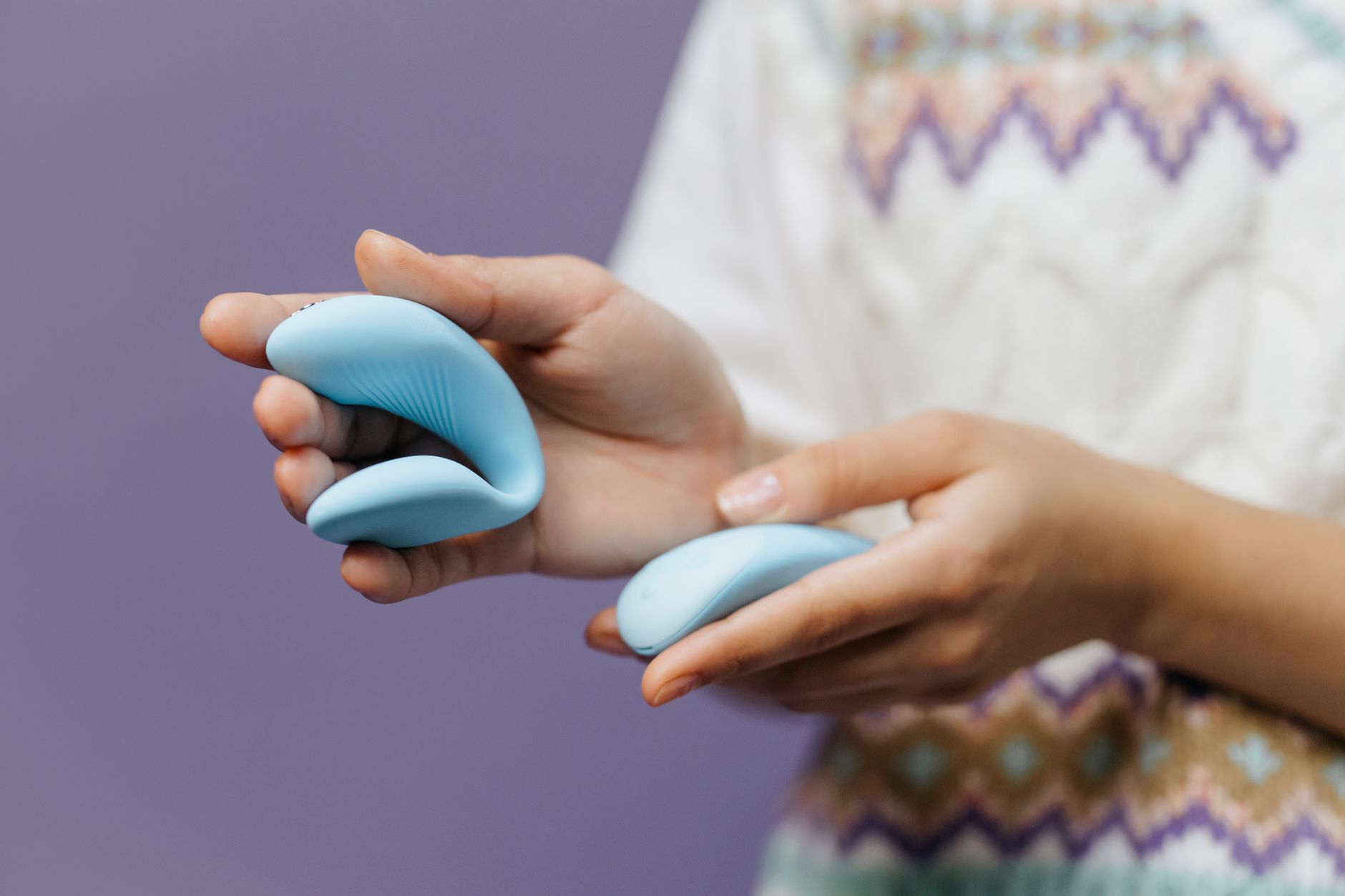
Here's what happens when pleasure becomes a checklist
Let's be real. Sex stops being fun the moment it becomes about "getting there." You're watching the clock. Your partner's watching your face. Everyone's thinking about logistics instead of sensation. The whole thing collapses into performance anxiety, and suddenly the thing that's supposed to feel good feels like work.
This is more common than you'd think, especially in long-term relationships or after kids or during high-stress seasons. The body tenses up. Your brain's narrating instead of present. And genuine pleasure? That gets filed away as a nice-to-have instead of an actual priority.
Why clitoral suction changes the game
The Lem and other lemon clitoral vibrators work differently than traditional vibrators because they use suction instead of just vibration. That's not just a gimmick. It's actually a complete shift in how your nervous system engages with pleasure.
Here's the neurology. Clitoral suction activates the parasympathetic nervous system (your body's "rest and digest" mode) rather than ramping up the sympathetic fight-or-flight response. That means your body physically relaxes instead of tensing. Your blood pressure comes down. You're not bracing for anything. You're settling into sensation.
That alone changes everything about the experience. When your nervous system isn't in overdrive, pleasure stops being a destination and becomes an actual present-tense experience.
Why speed becomes irrelevant with suction
Vibrators train your body to chase intensity. You turn it up. You expect results. It's fast, it's goal-oriented, it mirrors the performance dynamic that got you stuck in the first place.
Suction doesn't work that way. You can't rush it. The sensation builds slowly and differently. There's no "faster equals better." Instead, you're paying attention to subtle shifts in how the suction feels at different pressure levels, different positions, different moments.
That forced slowness is the whole point. Clients who switch to lemon vibrators often report that they stop checking their phone mid-session because the sensations actually demand their attention.
The rhythm that actually works
When you're trying to escape performance pressure, the rhythm matters more than intensity. Here's what I recommend.
Start at the lowest suction level. Spend five to ten minutes there. Not because you need to warm up (you might, but that's not the goal). But because you're teaching your nervous system that this isn't a sprint. There's no timer. There's no finish line to cross.
Then shift between two or three different patterns without any pressure to "graduate" to the next level. Some sessions, you stay at level one the whole time. That's not failure. That's the entire point.
Partners sometimes get anxious during this because it looks like nothing's happening. Explain it like this: "I'm learning to feel again instead of just chasing an outcome." That usually lands.
What happens when you stop performing
Two things shift physically. First, your clitoris receives consistent, gentle blood flow instead of the intense, chaotic rush from vibration. This means arousal actually builds in your whole body instead of just creating a localized buzz you're waiting to peak.
Second, your pelvic floor relaxes. When you're in performance mode, this muscle group usually tightens unconsciously. You're bracing. The moment the pressure shifts to sensation instead of outcome, that tension releases. Orgasms that follow tend to feel more integrated because you're not fighting your own body.
I've had clients say their orgasms with the Lem feel less intense than with their old vibrator but infinitely more satisfying. That's because satisfaction and intensity are completely different things.
The conversation with your partner
If you're using lemon vibrators with a partner, the narrative matters. "I want to slow down and feel more" is different from "I'm bored" or "You're not doing enough." One opens the door. The others close it.
You might also need to reframe what "done" looks like. Sometimes the goal isn't orgasm. Sometimes it's fifteen minutes of actually paying attention to your body. Sometimes it's noticing that you're present instead of dissociated.
Partners who understand this often feel less pressure too, which paradoxically makes partnered sex way better. When everyone stops performing, everyone actually enjoys it.
When to use this specifically
There are specific seasons when slowing down with lemon vibrators works best. High-stress periods (work deadlines, family chaos, relocations). Early in a new relationship when you want to really learn your own body before adding another person. After a long period of obligation-based sex where pleasure got buried under resentment.
Also: first thing in the morning on a lazy weekend, when there's genuinely no time pressure. The absence of urgency alone can feel radical after months or years of rushed sex.
The pleasure math that nobody talks about
Here's something therapists don't usually say out loud. Pleasure is actually easier to access when you're not trying to access it. The moment you make it a goal, your nervous system gets defensive. It's like trying to fall asleep by forcing it. The effort is the obstacle.
Clitoral suction lemon vibrators interrupt that pattern because they're so different from the performance-based stimulation you might be used to that your brain literally can't keep up with the old script. You can't perform during suction the way you can during vibration. The sensation is too weird, too specific, too demanding of actual attention.
That's not a limitation. That's the feature.
Building a sustainable rhythm
If you've been in performance mode for years, don't expect to flip a switch. Start with lemon vibrators once or twice a week in low-pressure moments. Solo is easiest. No partner watching. No stakes.
After a few sessions, you'll notice arousal feels different. Not necessarily better or worse, just different. Stick with it. Your body's learning a new way to experience pleasure, and that takes repetition.
Some people find that they want to alternate between the Lem and other toys. That's fine. You're not breaking anything by using both. The goal is reclaiming pleasure as something that belongs to you, not something you're trying to perform for someone else.
The ripple effect beyond sex
Honestly, the shift tends to extend beyond the bedroom. When you give yourself permission to slow down during sex, that permission bleeds into other parts of life. You start noticing sensation in your body during other activities. You're present instead of planning the next thing.
Clients have told me that using lemon clitoral vibrators helped them show up better in their relationships overall because they were actually inhabiting their own nervous system instead of operating on autopilot.
That's probably too big a claim for a sex toy. But it's also the thing I hear most consistently.
FAQ
Does using a lemon suction vibrator mean partnered sex will never feel good again?
Not at all. What often happens is the opposite. Once you learn what genuine, unhurried pleasure feels like solo, you bring that into partnered sex too. You're less desperate for an outcome, so you're more present. Your partner notices. The whole dynamic softens. Some couples find that solo time with lemon vibrators actually strengthens partnered sex because now both people know what pleasure actually feels like and can work toward that instead of a checklist.
How long does it take to feel the difference?
Some people notice within a session or two. The sensation of suction is so different from vibration that the shift happens immediately on a nervous system level. But the real change, where you stop defaulting to performance mode? That usually takes three to four weeks of regular use. Give it a month before deciding if it's working for you.
Can a partner use a lemon vibrator on me if I'm worried about them feeling excluded?
Absolutely. The Lem and other clitoral vibrators from Hell A Nancy Lem work beautifully in partnered scenarios. The difference is that because suction requires positioning and attention, it tends to slow the whole encounter down naturally. Your partner will need to be present instead of just hitting buttons. A lot of couples find that's exactly what they needed, even if they didn't know it.
What if I hate the sensation of suction?
Then you don't have to use it. Honestly. Not every tool works for every body, and that's completely fine. Suction isn't superior to vibration. It's just different. If you're returning to pleasure after years of performance pressure and suction doesn't resonate, try starting with a slower, gentler traditional vibrator instead. The goal is sensation and presence, not loyalty to a particular device.
Is there a difference between lemon vibrators and other clitoral suction toys?
The Lem is designed specifically for consistent suction without overwhelming intensity, which means you can actually stay in that slow, meditative space without your body forcing escalation. That said, what matters most is finding something that lets you slow down without performance pressure. Whether that's a lemon suction vibrator or another option entirely is less important than whether it gives you permission to feel without rushing.
How do I explain this to my partner without it sounding like criticism?
Try this: "I want to spend more time actually feeling instead of checking boxes, and I've noticed I can do that better with something new. Want to explore it together?" That frames it as expansion, not complaint. Most partners are relieved. They're probably also tired of performance pressure, they just didn't have words for it.
The bottom line
Performance pressure kills pleasure. Clitoral suction vibrators kill performance pressure by making it physically impossible to rush. That's not mystical. That's just how nervous systems work. When you make pleasure about sensation instead of outcomes, everything gets better. Your body responds. Your presence deepens. Your actual orgasms might feel different than what you're used to, but different usually means more real.
If you're curious about slowing down and reclaiming pleasure on your own terms, that's worth exploring. How to use lemon vibrators when you want to slow down and explore sensation offers more specific techniques. Or if partnership dynamics are the core issue, how lemon clitoral vibrators compare to traditional vibrators for couples might give you language for a conversation with someone you trust.
Your pleasure matters. It's not performance. It's not a checklist. And you deserve to feel the difference.